Precision lens manufacturer for machine vision, medical, and industrial imaging applications.

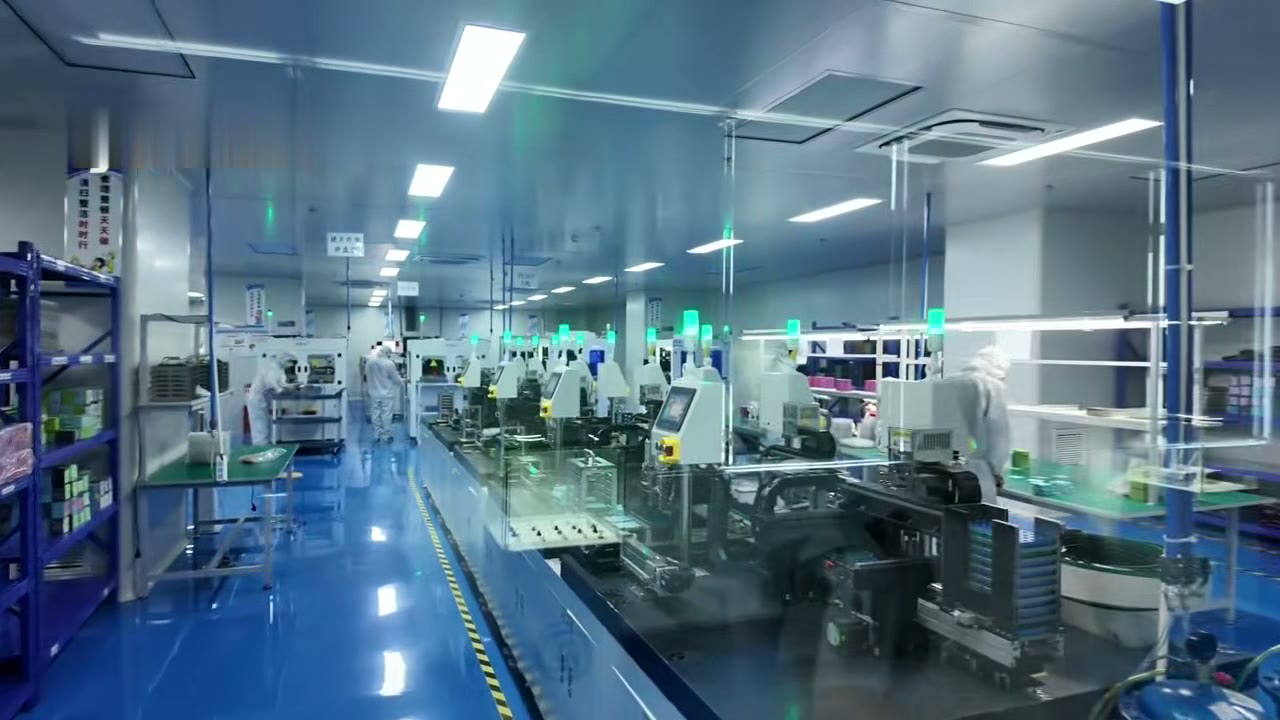
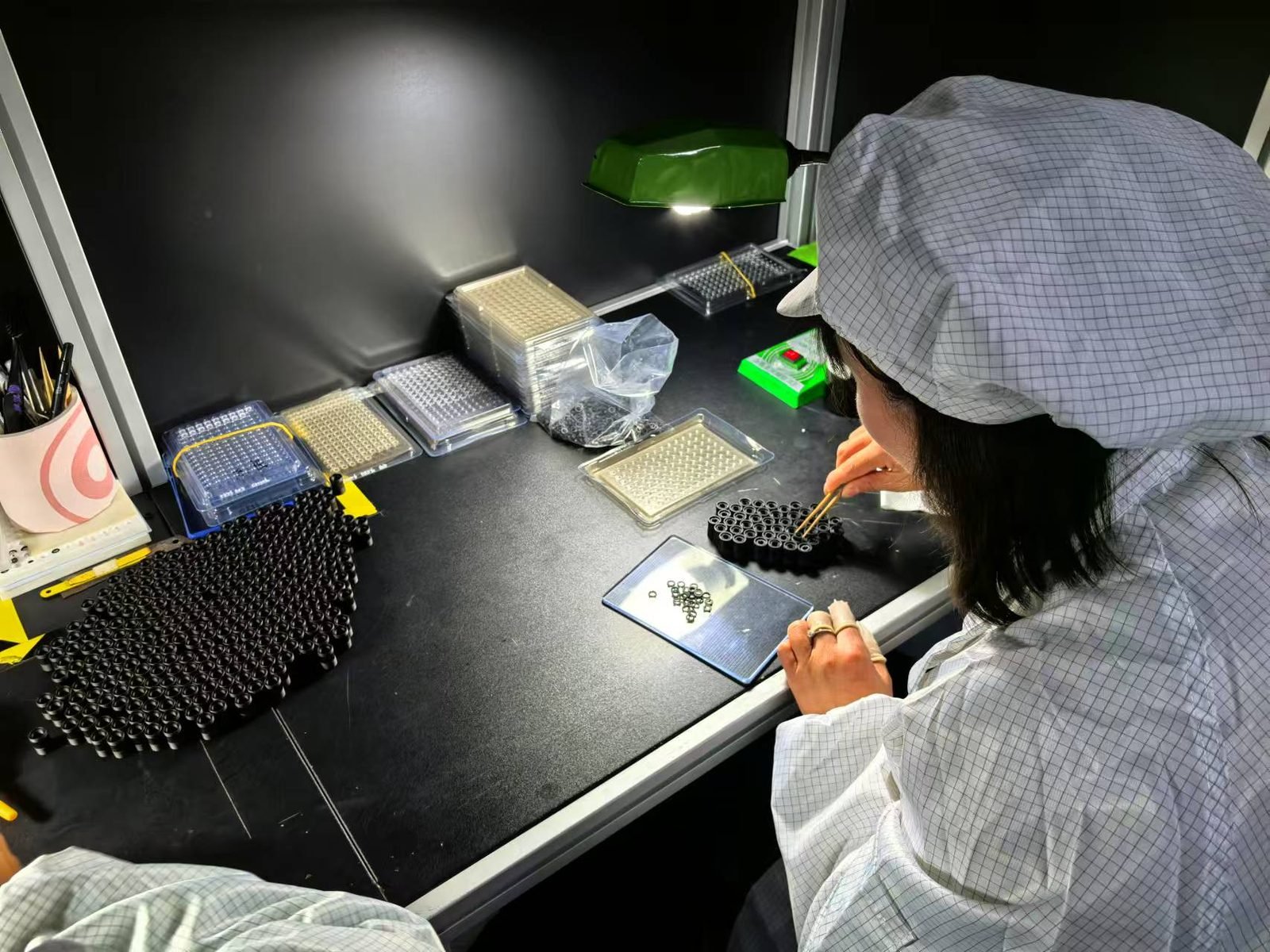
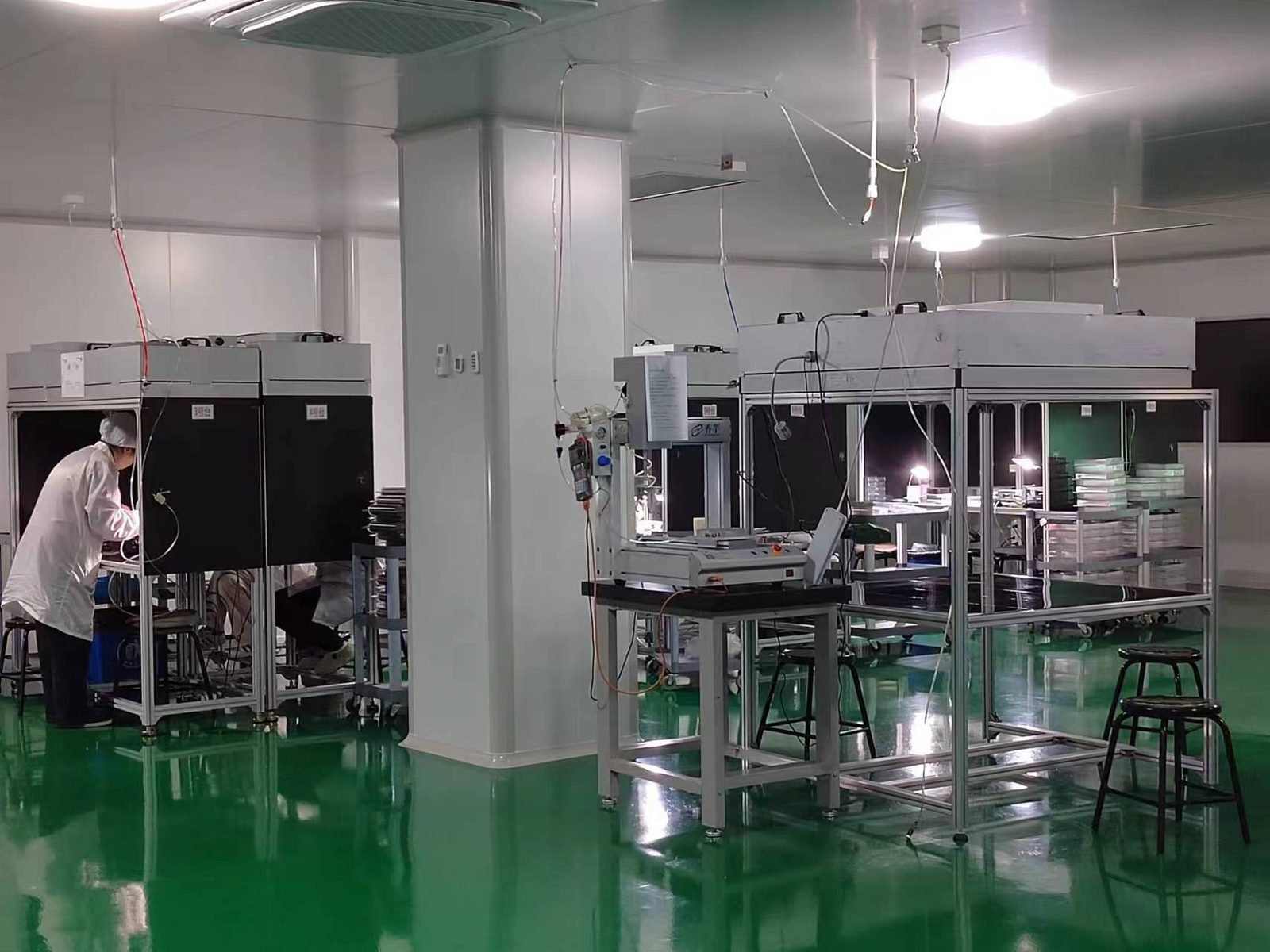
Lensmind Hangzhou cleanroom assembly booths where machine vision optics are built for inspection lines
Industry Solutions

Machine Vision Optics, Matched to Your Inspection Line

From AOI takt lines to semiconductor metrology, sterile medical devices to fisheye security modules — eight inspection worlds, nine optics lines, one engineering partner. Tell us what you need to see; we map the optical path that sees it.

The machine vision market is projected to grow from $21.12 billion in 2025 to $23.48 billion in 2026, an 11.2% CAGR (The Business Research Company) — and every one of those systems starts with optics.

ISO 9001certified 9optics lines 1 µmactive alignment IP67/IP68tested 60-dayproduction
The Cross Matrix

Eight Inspection Worlds, Nine Optics Lines — One Map

Most selection mistakes happen at the first step: choosing a lens family before choosing a product line. This matrix is that first step. • marks the primary lines for each industry; ˆ marks lines that serve specific tasks. Click any line to open its catalog page.

Industry FA M12 Telecentric Line Scan Liquid Endoscope Thermal Wide Angle Custom
Electronics & 3C ˆ ˆ ˆ
Battery & Energy Storage ˆ ˆ
Semiconductor ˆ
Medical
Logistics ˆ
Security ˆ ˆ
Food ˆ ˆ ˆ ˆ
Research ˆ ˆ ˆ ˆ ˆ

• primary     ˆ specific task     — not applicable

Industry Constraints

Pick the Line. Read the Optical Constraint.

Nine inspection worlds, one console. Each tab keeps the engineering copy — mapped product lines, specs, and tasks — inside the selected panel.

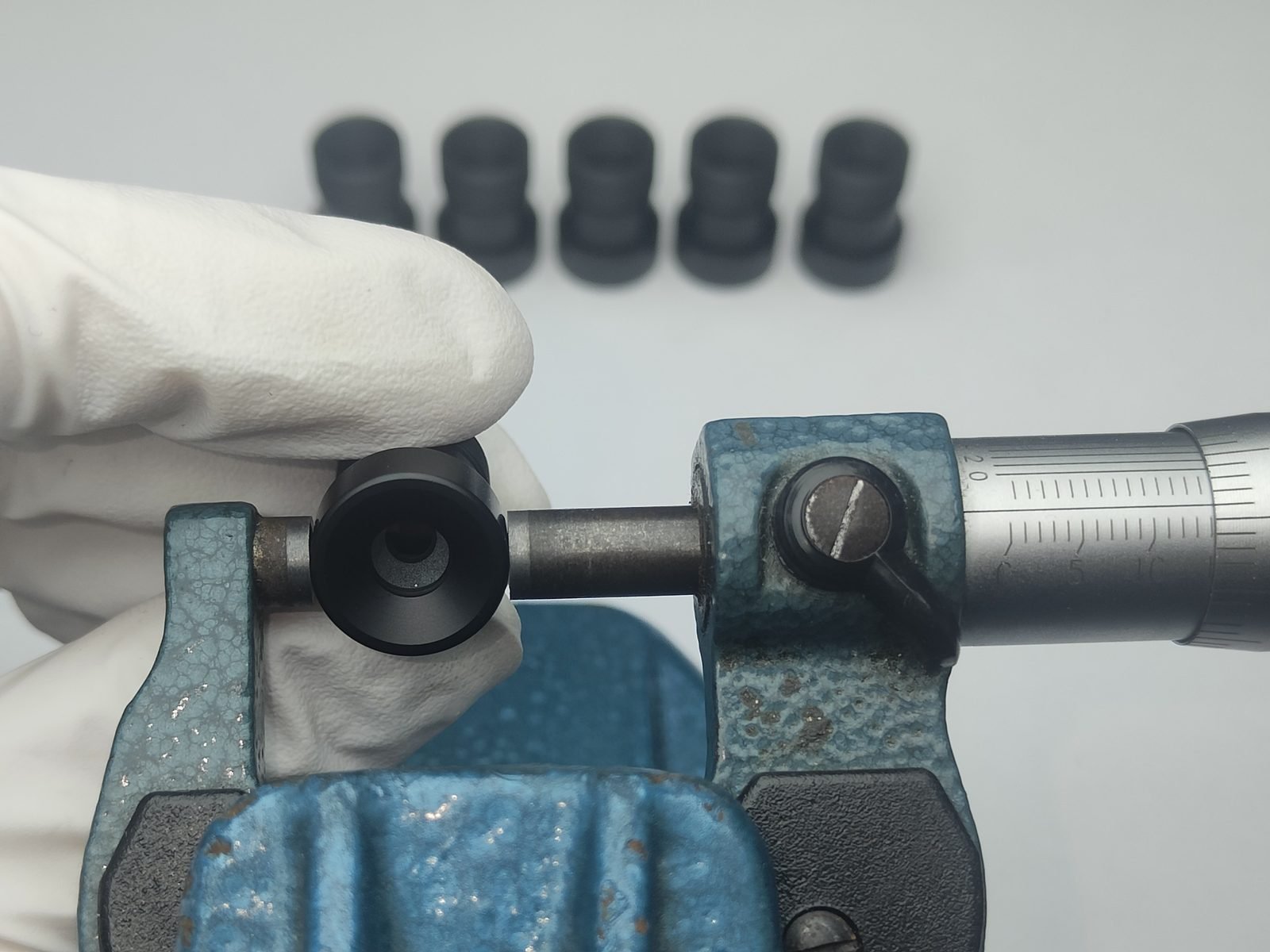
Gloved hand checking a compact Lensmind lens barrel on a micrometer, with five more barrels behind
Electronics & 3C

Electronics & 3C Inspection Optics: Small Parts, High Takt, Zero Escapes

3C inspection lives at the intersection of miniature geometry and brutal takt: 0201-and-smaller SMD parts, connector pin coplanarity, and high-density boards that must be covered without vignetting — all at AOI line speed. A lens that resolves the part but distorts the field turns good boards into false rejects.

Optical recipe & specs

Mapped Product Lines

M12/S-mount line

Embedded smart cameras and compact heads where board space is priced per square millimeter (H05–H16 focal range, NIR/VIS configurations, FT thread-locked focus against line vibration).

FA 2/3″–1.1″ line

Large-target AOI optics with distortion below 0.05% and 10K+ batch consistency.

Line scan 4K/8K

Panel-width boards and flexible circuits under continuous motion.

Custom OEM

Non-standard sensor formats and mechanical envelopes.

Key Specs
MetricValueSource Line
Distortion< 0.05%FA
Batch consistency10K+ batchesFA
Image circle2/3″ – 1.1″FA
Focus lock under vibrationFT full-threadM12
Typical Inspection Tasks
TaskOptical DriverRecommended Line
SMD presence & polarity (0201)Resolution at WDM12 / FA
Connector pin geometryLow distortionFA / Telecentric ˆ
Solder bridge on dense PCBContrast + DOFFA
Panel-width FPC scanWide line coverageLine scan
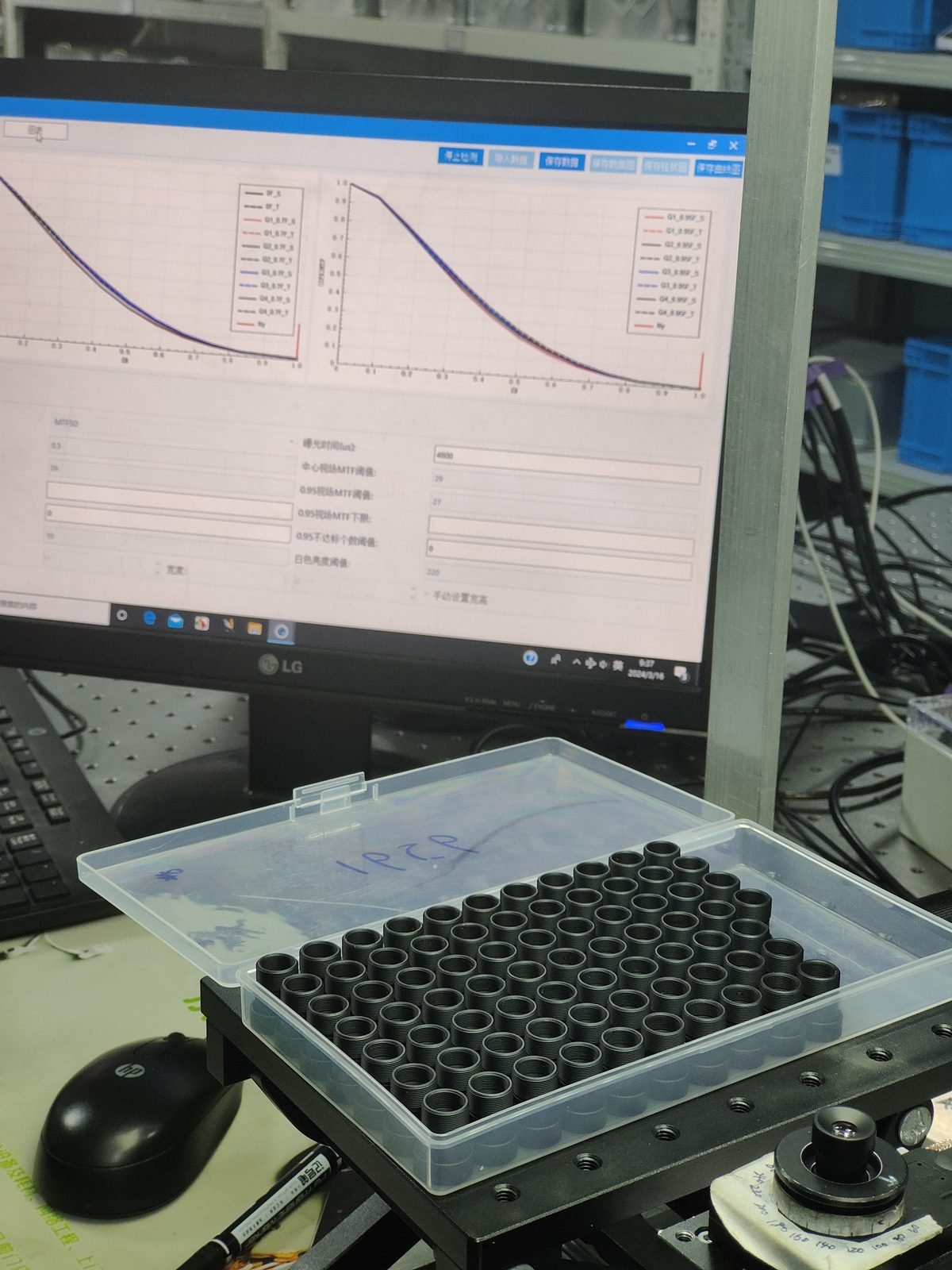
Tray of identical Lensmind lens barrels on an MTF bench with measured curves on the monitor
Battery & Energy Storage

Battery Inspection Optics: Cell Defects at Line Speed

Cell lines inspect tab welds, coating uniformity, seal pins, and surface scratches at gigafactory takt — on specular metal surfaces that punish ordinary illumination. The optical recipe pairs low-angle or coaxial lighting with distortion-controlled M12 or line scan optics, so a weld pore or coating skip reads as contrast, not glare. Missed defects here do not come back as warranty claims; they come back as recalls.

Optical recipe & specs

Mapped Product Lines

M12/S-mount line

Compact stations for tab weld and seal pin inspection where camera heads sit close to the cell, with FT thread-locked focus against conveyor vibration.

Line scan 4K/8K

Continuous electrode and coating webs scanned at full line speed, 8K 5 µm resolution across the web width.

FA 2/3″–1.1″ line

Area-scan coverage for prismatic and pouch cell surfaces with distortion below 0.05%.

Thermal imaging (8/12/17 µm)

Non-contact infrared screening for pack and module hot-spots, so a weakening cell shows up as a temperature rise long before it becomes a thermal-event narrative.

Custom OEM

Optics matched to station envelope, lighting geometry, and sensor format.

Key Specs
MetricValueSource Line
Web resolution8K, 5 µmLine scan
Distortion< 0.05%FA
Focus lock under vibrationFT full-threadM12
Specular-surface handlingLow-angle / coaxial pairingM12 / Line scan
Thermal detector pitches8 / 12 / 17 µmThermal
Typical Inspection Tasks
TaskOptical DriverRecommended Line
Tab weld pores & spatterContrast on metalM12
Electrode coating uniformityContinuous web scanLine scan
Seal pin / cap geometryLow distortion at WDFA
Cell surface scratches & dentsGlare suppressionM12 / FA
Pack / module hot-spot screeningNon-contact IR thermometryThermal
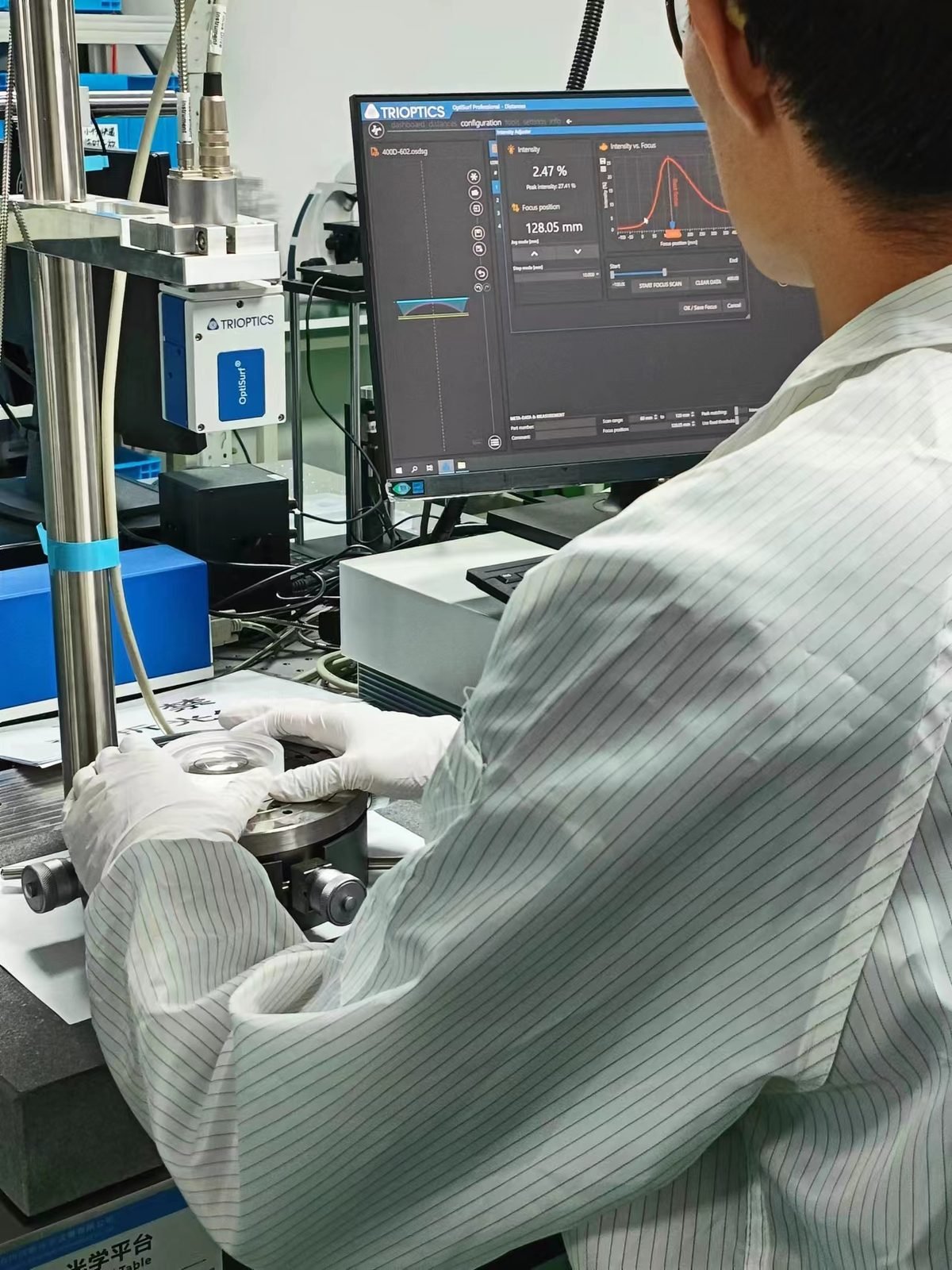
Lensmind engineer measuring an optic on a Trioptics OptiSurf station
Semiconductor

Semiconductor Inspection Optics: Micron Defects, Drift-Free Metrology

Semiconductor and display inspection punishes drift: a measurement system whose magnification shifts with working distance is not a measurement system. Wafer and panel lines need metrology-grade stability at micron scale, plus panel-width throughput that only line scan optics can feed.

Optical recipe & specs

Mapped Product Lines

Telecentric & bi-telecentric line

12 telecentric models (YT series) holding magnification constant across working distance.

Line scan 4K/8K

EK4032A / EK5028A: 8K 5 µm resolution, φ46 mm image circle, M42/M58/M72-F mounts.

Custom UV exposure objectives

0.5 µm-class optics from the custom program for exposure light paths.

Key Specs
MetricValueSource Line
Line resolution8K, 5 µmLine scan
Image circleφ46 mmLine scan
MountsM42 / M58 / M72-FLine scan
Custom UV objective0.5 µm classCustom
Typical Inspection Tasks
TaskOptical DriverRecommended Line
Die / feature dimensionMagnification stabilityTelecentric
Panel line defect scanWide line coverageLine scan
Display pixel inspectionResolution + contrastLine scan / Telecentric
UV exposure path365–405 nm opticsCustom
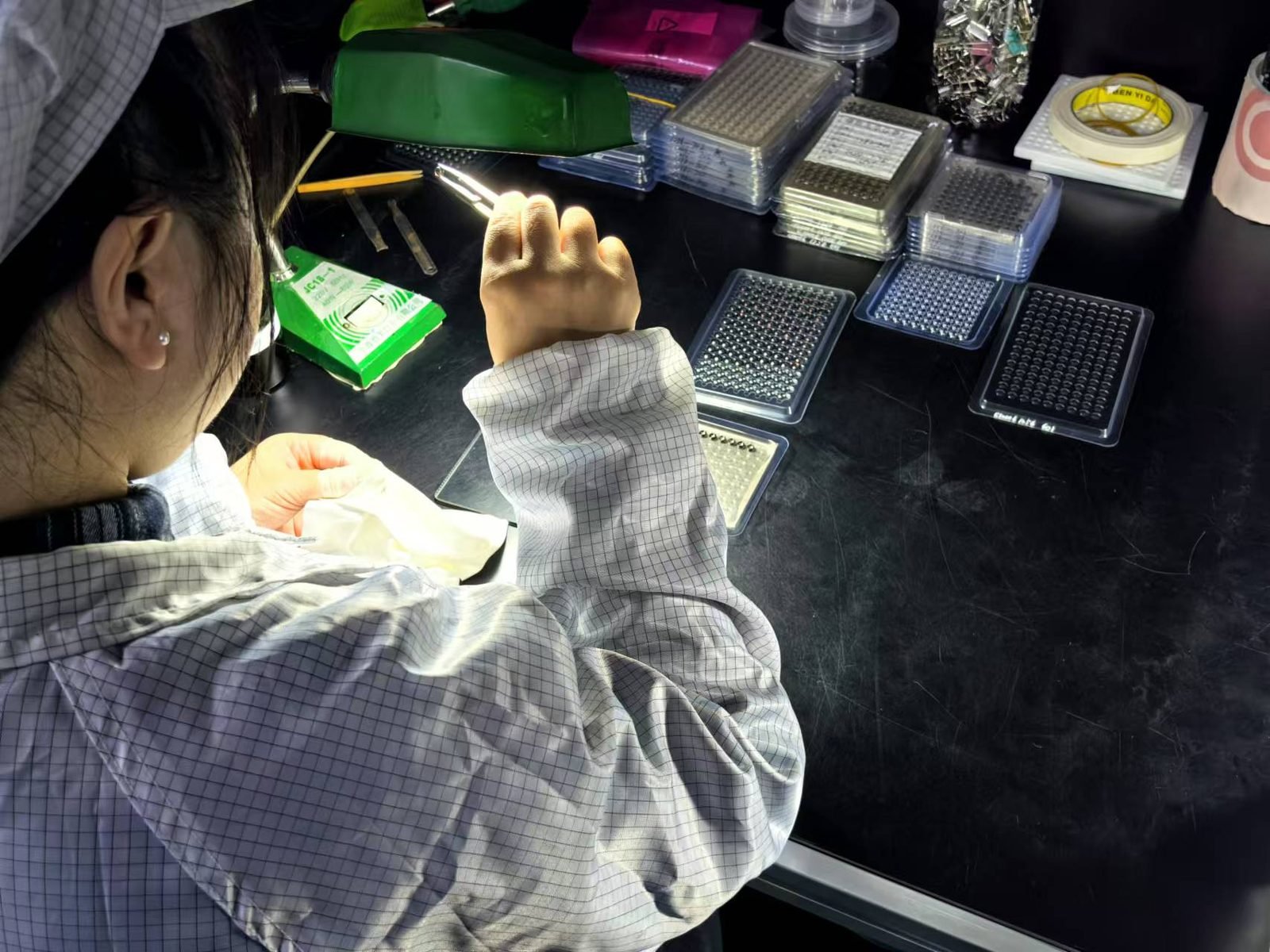
Technician assembling trays of miniature Lensmind optical elements at a clean bench
Medical

Medical Device Imaging: Sub-2 mm Optics That Survive Sterilization

Medical device imaging has two non-negotiables that consumer optics cannot answer: form factors below 2 mm OD for endoscopic front ends, and survival across repeated autoclave cycles for reusable devices. Between them sits a documentation burden — regulated programs need test records, not datasheet adjectives.

Optical recipe & specs

Mapped Product Lines

Endoscope line

14 catalog models, OD < 2.0 mm, FOV 80°–160°, pre-matched to OV9734/OV2740/ES101; hermetic sealing and autoclave-tolerant packaging.

360° panoramic line

Single-camera perimeter optics for vial cap and sidewall inspection.

Custom ODM

Device-level optical programs under NDA.

Key Specs
MetricValueSource Line
Outer diameter< 2.0 mmEndoscope
FOV range80°–160°Endoscope
Alignment1 µm-class activeEndoscope
SterilizationAutoclave-tolerant, hermeticEndoscope
Typical Inspection Tasks
TaskOptical DriverRecommended Line
Endoscope distal imagingSub-2 mm ODEndoscope
Vial cap / seal inspection360° single-camera360°
Catheter assembly checkMicro FOV + WDEndoscope / Custom
Device-level optics ODMProgram ownershipCustom
Lensmind cleanroom alignment line with operators in gowns at active-alignment stations
Logistics

Logistics & Sorting Optics: Every Parcel in Focus at Belt Speed

Sorting lines present parcels of different heights at belt speed — a fixed-focus lens forces a choice between blurred near fields and clipped far ones. Adding mechanical refocusing hardware per lane multiplies cost and failure points; the optical answer is focus that moves at electronic speed.

Optical recipe & specs

Mapped Product Lines

Liquid autofocus line

Electrowetting liquid lenses, 20 ms focus shift, zero mechanical wear, Z-axis stacking for extended depth of field (ZWA five models).

FA wide-coverage line

Large-target coverage for volume measurement and damage detection.

3D line

Stereo and laser profiling for parcel dimensioning.

Key Specs
MetricValueSource Line
Focus speed20 msLiquid
Wear mechanismNone (no moving parts)Liquid
DOF extensionZ-axis stackingLiquid
DimensioningStereo / laser profiler3D
Typical Inspection Tasks
TaskOptical DriverRecommended Line
Parcel face capture (height variance)Fast autofocusLiquid
Barcode / OCR at variable distanceExtended DOFLiquid
Volume measurementBaseline geometry3D / FA
Damage & spill detectionWide coverageFA
Cleanroom technician assembling compact Lensmind lens barrels and micro-elements at the bench
Security

Security & Surveillance Optics: Full-Coverage Modules for Device Makers

Security device makers fight two optical battles at once: covering maximum scene with minimum sensors, and holding image quality through day, night, and vibration. Fisheye coverage answers the first; NIR-corrected, vibration-locked builds answer the second. Retail cameras cannot be re-specified to do either at fleet scale.

Optical recipe & specs

Mapped Product Lines

M12/S-mount fisheye & wide-angle

S-mount modules with NIR/VIS dual configurations for day/night operation, five fixed-iris stops, FT thread-locked focus for vehicle and pole mount vibration.

360° panoramic line

Single-camera perimeter optics replacing multi-camera arrays.

Thermal imaging (8/12/17 µm)

Athermalized chalcogenide optics for day-and-night detection where visible-light sensors go blind: darkness, fog and backlight stop being coverage gaps.

Custom OEM

Non-standard coverage envelopes and mounts.

Key Specs
MetricValueSource Line
IR correctionNIR/VIS dual configM12
Iris options5 fixed stops (F4.0–F11)M12
Vibration lockFT full-thread focusM12
Array replacementSingle-camera 360°360°
Thermal detector formats256×192 → 1280×1024Thermal
Typical Inspection/Surveillance Tasks
TaskOptical DriverRecommended Line
Single-point full-room coverageFisheye FOVM12 fisheye
Vehicle / mobile monitoringVibration-locked focusM12 FT
Perimeter multi-direction view360° single camera360°
Detection in darkness, fog & glareLong-wave IR, no focus driftThermal
Non-standard coverageCustom envelopeCustom
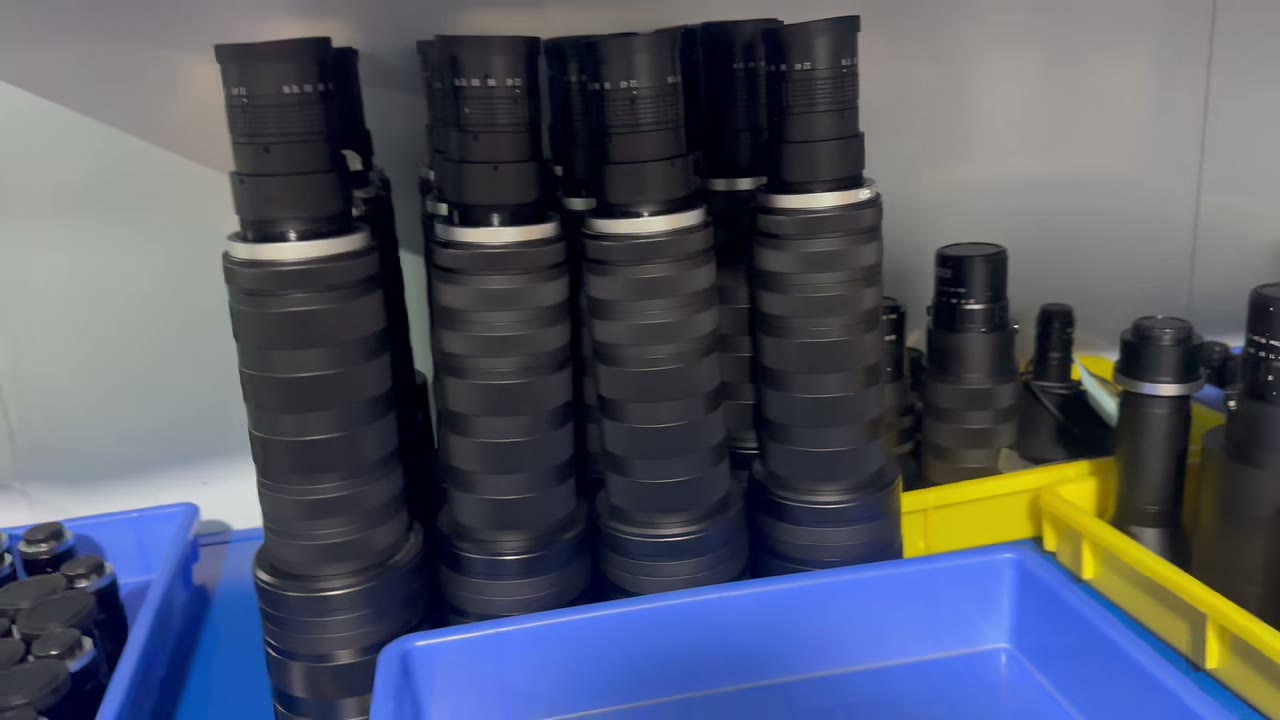
Finished Lensmind machine vision lenses stacked on the production shelf
Food

Food Inspection Optics: Wash-Down Zones, Mixed Packaging, Seal Integrity

Food lines inspect under wash-down: optics near the line face water, cleaning agents, and temperature swings, while the products themselves vary — film reflections, mixed heights, transparent windows, and seal integrity that decides both quality and safety recalls. The optics must be non-contact, environmentally sealed, and fast enough for mixed-format flow.

Optical recipe & specs

Mapped Product Lines

IP67/IP68-validated optics

Environmental sealing tested in-house for wash-down zones.

Liquid autofocus line

20 ms refocus across mixed package heights without per-lane hardware.

360° panoramic line

Single-camera inspection of vial, bottle, and can sidewalls and closures.

FA line

Distortion below 0.05% for dimensional checks on packaging.

Key Specs
MetricValueSource Line
Environmental ratingIP67 / IP68 testedCross-line
Focus speed20 msLiquid
Sidewall coverageSingle-camera 360°360°
Measurement distortion< 0.05%FA
Typical Inspection Tasks
TaskOptical DriverRecommended Line
Cap / seal integrity360° perimeter view360°
Label & date-code verifyResolution + DOFFA / Liquid
Mixed-height packagesFast autofocusLiquid
Package dimensionsLow distortionFA
lens metrology station with Trioptics centration system and laser Fizeau interferometer
Research

Scientific Research Imaging: 3D Metrology, Profiling, and Custom Spectral Optics

Research platforms are rebuilt every grant cycle: one bench needs stereo metrology this quarter, laser profiling the next, and a custom spectral path after that. Labs cannot afford per-instrument optical vendors — they need one source that covers 3D machine vision today and custom optics tomorrow, in sample-friendly quantities.

Optical recipe & specs

Mapped Product Lines

Telecentric line

LMJJ telecentric optics (0.14X–6X) for calibrated dimensional measurement and surface metrology stations.

M12 line

Breadboard-friendly S-mount optics across H05–H16 focal range for experiment cameras.

Custom program

Reflection & acousto-optic spectrometer assemblies and other one-off optical paths; calibration guidance available with stereo platforms.

Key Specs
MetricValueSource Line
Stereo modelsK3005A / Q13563D
Laser profilersK2540A / K2569A3D
Focal coverage5–30 mm (H05–H30)M12
Custom spectral assembliesReflection / acousto-opticCustom
Typical Research Tasks
TaskOptical DriverRecommended Line
3D reconstruction / metrologyStereo baseline3D
Surface profilingLaser line3D
Experiment camera opticsS-mount flexibilityM12
Spectral path prototypingCustom assemblyCustom
Lensmind LMXHG thermal imaging lens lineup, infrared optics for uncooled detectors
Thermal Imaging Optics

Where Thermal Imaging Lenses Go to Work: Six Field-Proven Scenarios

Visible-light optics stop working when the scene has no light, when the target is behind fog or glare, or when the defect is a temperature rather than a shape. That is where the LMXHG thermal line takes over: 41 standard models from 2.2 mm to 100 mm plus a 30–150 mm continuous zoom, matched to 8, 12 and 17 µm uncooled detectors from 256×192 up to 1280×1024.

Six scenarios, line map & specs

Six scenarios below are where these lenses are actually shipped to work. Thermal is a cross-line capability, not a ninth silo. On this page it carries the detection duty in Security (darkness, fog and backlight) and in Battery & Energy Storage (non-contact hot-spot screening of packs and modules); it appears as a secondary option in Electronics & 3C (early fault detection on powered boards) and Food (process-temperature checks beside seal inspection), and in Research, where a thermal path and a custom spectral path frequently start from the same drawing.

Application Scenarios

Perimeter & Surveillance

All-weather, day-and-night definition built on high-index chalcogenide glass in serialized grades, with athermalized designs that hold image quality without a premium on the bill of materials.

Athermalized · 24/7
Outdoor & Handheld

High-performance chalcogenide elements sized to take repeated, high-intensity mechanical shock and keep the picture stable across field scenarios rather than only on the bench.

Shock-hardened
UAV & Gimbal Payloads

Lightweight, low-distortion, stabilized builds. Molded aspherical surfaces keep unit-to-unit consistency, so the optical set scales with the airframe program instead of being rebuilt per camera.

Molded aspheres
Defense & Long Range

Zoom, athermalization, multi-spectrum fusion, irregular form factors and electric focus adjustment — detection at range with zoom ratios above 20×.

> 20× zoom
Automotive & Driver Assistance

Millisecond-scale perception of heat sources and obstacles ahead of the vehicle, produced under an IATF 16949 system with MES process control and full traceability.

IATF 16949 · MES
Online Temperature Measurement

High-accuracy non-contact infrared thermometry that catches equipment heat faults and production-line process temperature before they become scrap or shutdown.

Fault & process heat
Thermal Line at a Glance
MetricValueDetail
Standard models41 (LMXHG series)Tabulated by detector pixel pitch
Focal length range2.2–100 mmFixed-focal models
Continuous zoom30–150 mm, 5×LMXHG-066 · F0.86–1.2 · M45×1
Detector formats256×192 → 1280×1024Uncooled infrared cores
Pixel pitches8 / 12 / 17 µm7 / 31 / 3 models respectively
Mount interfaceM14–M45Per model on the thermal line page
Where to Start, by Task
TaskOptical DriverSuggested Model
Wide-area detection, close rangeShort EFL, wide FOVLMXHG-017 (2.2 mm, 82.8° H)
Long-range identificationNarrow FOV, tight F-numberLMXHG-012 (75 mm, 1280×1024)
Search wide, then identify far5× zoom on one mountLMXHG-066 (30–150 mm)
Handheld and gimbal payloadsCompact mount, small coreLMXHG-019 / 020 / 021 (M14–M18)
Line and equipment temperatureNon-contact IR readingThermal line — send the core format
Industry Solutions FAQ

Before You Pick an Industry

We do not fit neatly into one industry. Can you still help?

Yes. Industries are entry points, not silos. Describe the inspection problem and we map the optical recipe across all nine product lines, or start a custom design.

Can you supply optics only, or full optical-mechanical assemblies?

Both. Standard catalog lenses ship as optics; custom programs can include opto-mechanical integration under one responsible team.

How do I choose the right lens for my inspection line?

Start from the sensor and the defect you must resolve, then filter by working distance, FOV, and environment. The cross-industry matrix on this page narrows the product lines first; each line page then narrows models.

Do your lenses work with industry-standard machine vision cameras?

Yes. Our FA and line scan lines use C-mount class interfaces (M42/M58/M72-F on line scan), and M12/S-mount covers embedded platforms, so they pair with industry-standard industrial cameras.

Do you hold food-contact certifications for food industry optics?

Our optics are non-contact inspection components, not food-contact parts. Environmental ruggedness is covered by in-house IP67/IP68 validation for wash-down zones.

Do you sell security cameras to retail buyers?

No. Lensmind is a pure B2B optics manufacturer. We supply fisheye and wide-angle lens modules to security device makers, not retail cameras.

Can research labs order small quantities?

Catalog models support sampling for lab and research use.

What lead times apply?

Catalog items per standard terms; custom programs run on a prototype-to-mass-production schedule confirmed per project.

How do liquid lenses survive high-cycle sorting lines?

Electrowetting liquid lenses focus in 20 ms with no mechanical moving parts, so there is no wear path to fail; focus stacking extends depth of field without hardware changes.

Do you supply optics for uncooled thermal detectors?

Yes. The LMXHG thermal line covers 8, 12 and 17 µm pixel pitches on uncooled detectors from 256×192 up to 1280×1024, in 41 standard models from 2.2 mm to 100 mm plus a 30–150 mm continuous zoom. Chalcogenide glass and athermalized designs are used where focus drift across temperature is not acceptable.

Can optics survive repeated sterilization in medical programs?

Yes. Hermetic sealing and autoclave-tolerant designs are validated by repeated cycling tests. Model-level data lives on the endoscope line page.

What if my industry need is not covered by any catalog line?

That is what the custom optics program is for: send a drawing, a sample, or a target image, and receive a written feasibility read within 48 hours.

Where do the market figures on this page come from?

Public market data is cited with its source, such as The Business Research Company for machine vision market sizing. Company capability figures come from our own datasheets and test records.

Start with What You Must See

Tell Us the Defect, the Takt, and the Environment

Eight industries or none of the above — the entry point is the same sentence: “We need to see ___.” Our engineers reply within one business day with a product-line match or a custom path.