The Machine Vision Lens Selection Guide
Five inputs — sensor format, working distance, field of view, resolution target, environment — turned into a five-step method and a worked example from sensor to focal length.
Read the note →Four shelves — selection, technology, comparisons, and application notes — written by the engineers who design, align and test lenses on the Hangzhou line.
Sensor format, working distance, field of view, resolution and environment — turned into a focal length, an image circle check, and a honest “when not to buy the expensive option.”
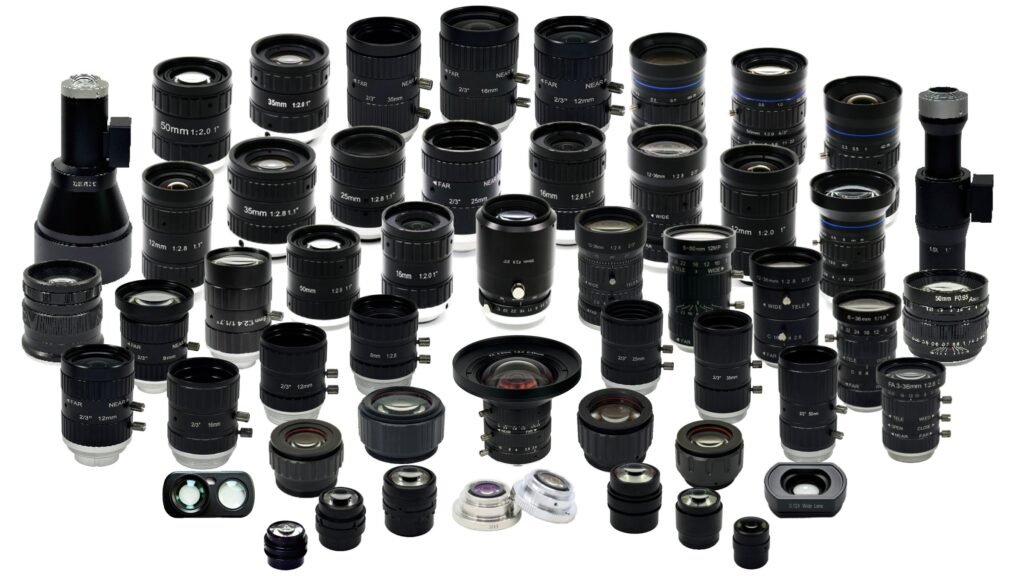
Five inputs — sensor format, working distance, field of view, resolution target, environment — turned into a five-step method and a worked example from sensor to focal length.
Read the note →
S-mount has no flange standard. This field guide covers M12x0.5 thread, FT/HT lock, 1/1.8 inch image circle, fixed stops, and when to switch to C-mount.
Read the note →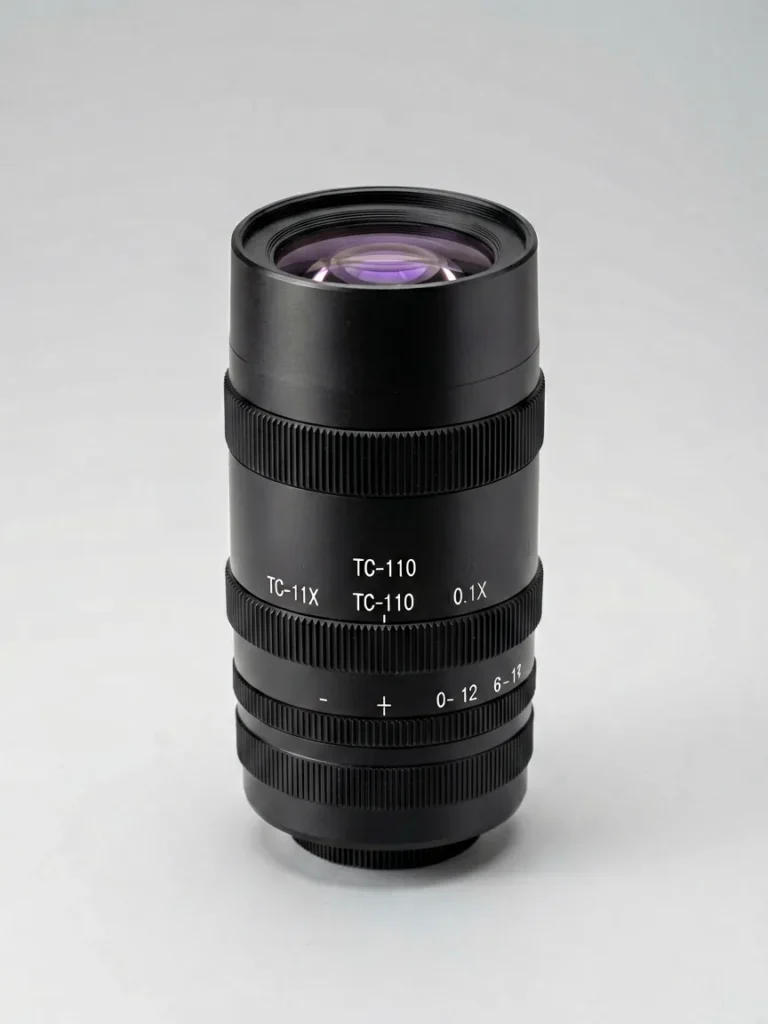
Telecentric optics lock magnification versus object depth. This audit tells you when that lock is worth the barrel, and when FA glass is the honest spend.
Read the note →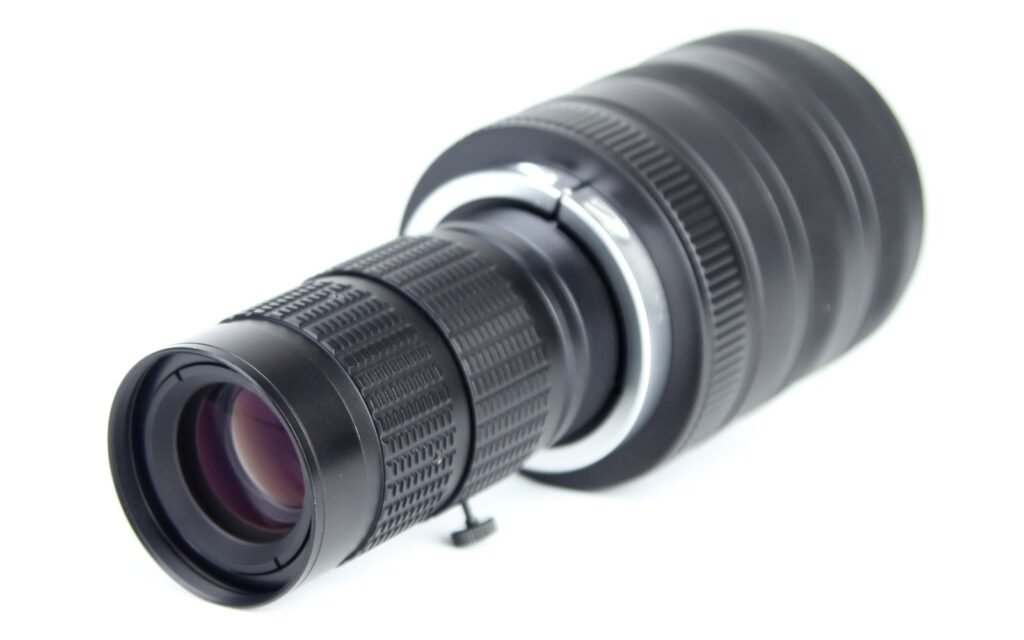
Line scan lens selection starts with pixels times pitch. Cover that millimetre length, then pick the mount. An 8K camera with a 29 mm circle is a 5K…
Read the note →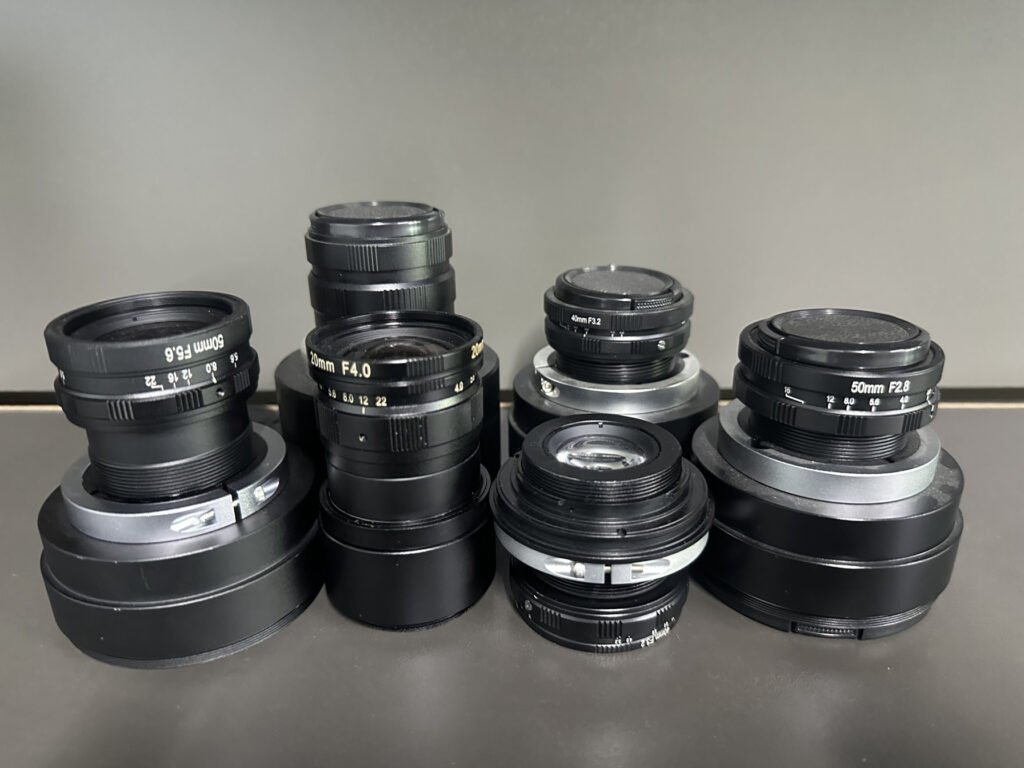
A C-mount thread is not a coverage spec. Size the image circle to the sensor, convert 0.05% distortion into millimetres, then pick focal length.
Read the note →
Pair the CMOS and the distal OD before you quote 1 MP. Sub-2 mm objectives and 1/9-inch modules are millimetre problems, not megapixel problems.
Read the note →
12 um times 640 is 7.68 mm. That is the silicon a thermal lens must cover. Visible FA glass will not pass the bolometer band.
Read the note →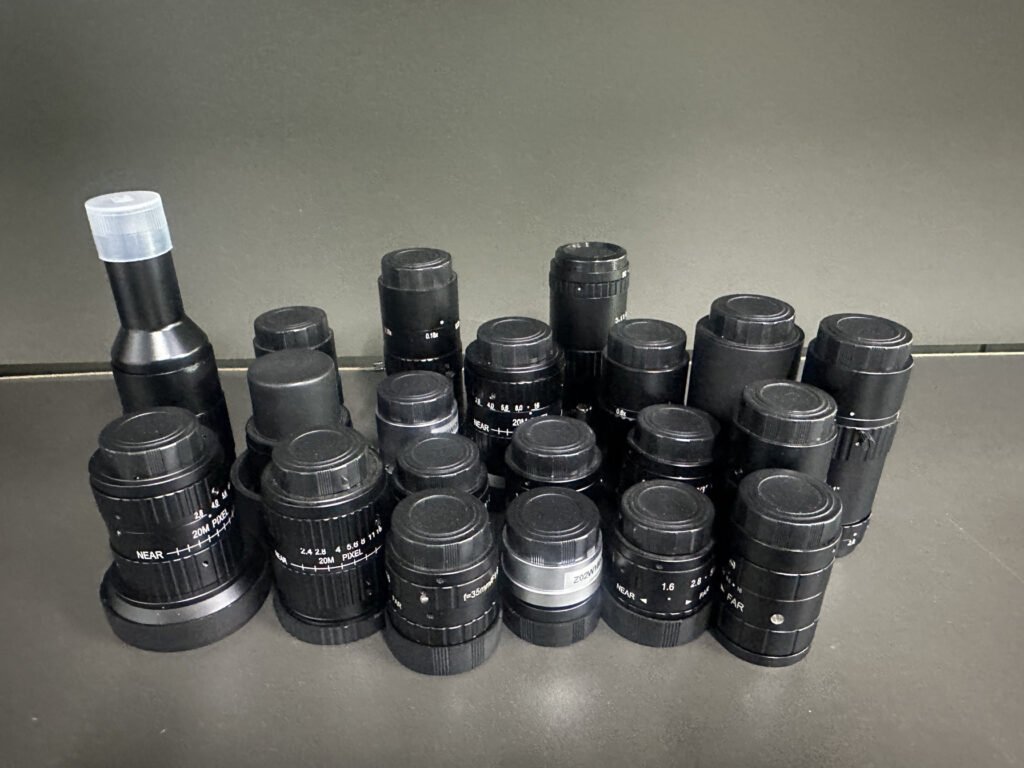
A lens calculator estimates focal length. It does not pick a SKU. Run the thin-lens pass, then image circle and mount.
Read the note →
Wide FOV covers the fixture. It does not print millimetres. Split presence and gauging, or the corners will lie.
Read the note →
Image circle must cover the sensor diagonal. A 2/3 in barrel on a 1.1 in chip is how corners go dark.
Read the note →Telecentric rays, electrowetting, MTF, distortion, flange distance and 1 μm active alignment — explained the way a metrology bench talks, not a brochure.
Telecentricity is a pupil at infinity, not a sharpness grade. Constant magnification versus depth, object-space vs bi-telecentric, and when an FA lens at under 0.05% distortion is the…
Read the note →
About 20 ms, no moving parts: Lensmind ZWA electrowetting models named, compared with VCM, and ruled out when working distance never moves.
Read the note →
How a metrology lead reads MTF: frequency, field, f/#, and measured batch curves — not a brochure that only looks good at 20 lp/mm.
Read the note →
0.05% geometric distortion is 5 μm on a 10 mm field. How to read FA-line specs without mixing TV percentages or blaming the camera for parallax.
Read the note →
17.526 mm is the C-mount register. Same 1-32 thread as CS, 5 mm longer. The adapter only works C-lens-on-CS-camera.
Read the note →
DOF is an MTF window, not bokeh. When height mix exceeds it, ZWA electrowetting in about 20 ms beats stopping down into diffraction.
Read the note →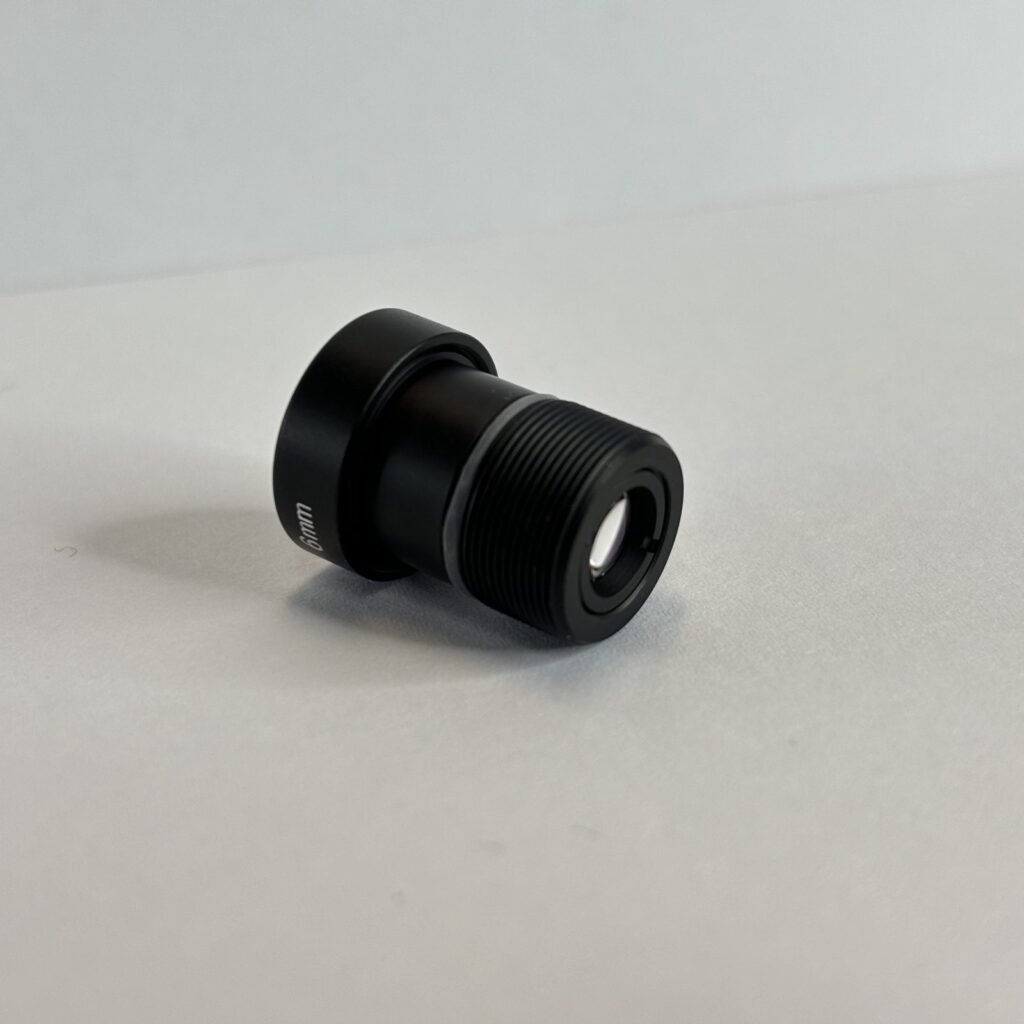
Robot-mounted M12 barrels back out under vibration. FT full-thread lock, HT compact mount, and five fixed stops on H05–H16.
Read the note →
The misconception: skip the IR-cut and you have a NIR lens. Match coating and filter to 850 nm, 940 nm or white light, and pull the batch spectrum.
Read the note →
1 μm-class closed-loop alignment in Hangzhou. Not every SKU, not a trading-company slide. 60 working days custom, reports default.
Read the note →
Stop writing bi-telecentric as a default. Object-space, image-space and bi-telecentric are three pupils. 52 LMJJ models plus 12 YT liquid-focus SKUs.
Read the note →C vs CS, M12 vs C-mount, line vs area scan, liquid vs VCM, telecentric vs FA. Side-by-side so you stop over-specifying.
C-mount is 17.526 mm. CS-mount is 12.526 mm. Same 1-32 UN thread. The 5 mm ring is one-way.
Read the note →
M12 is M12x0.5 with no flange standard. C-mount is 1-32 UN at 17.526 mm. Match the camera body first.
Read the note →
Line scan builds one pixel row with motion. Area scan takes a full frame. Size the lens to line length, not to a C-mount habit.
Read the note →
ZWA electrowetting is about 20 ms with no moving parts. VCM moves glass. If working distance is fixed, buy a locked FA lens.
Read the note →
Telecentric keeps magnification constant with depth. FA distortion below 0.05% is often enough. Do not put telecentric on every RFQ template.
Read the note →
Industrial RVI is a probe. OEM endoscope work is a sensor-plus-objective module. A consumer drain camera is neither.
Read the note →
Passive stereo needs texture. Specular metal has glare. A laser line puts the signal on the part. Size the lens to that line.
Read the note →
If working distance is one number, lock the lens. If min and max height differ, name electrowetting. Do not paste AF onto a nest.
Read the note →
200 degrees is coverage. Distortion below 0.05% is a gauge. A fisheye map is not a small residual you undistort later.
Read the note →
Catalog first when the published cell already fits. Custom is 60 working days, 30-day repeats, tooling free for 5 years. Do not pay NRE for a 25 mm…
Read the note →PCB, EV battery, food washdown, endoscope OEM, and how to send an RFQ that a Hangzhou factory can actually quote in 48 hours.
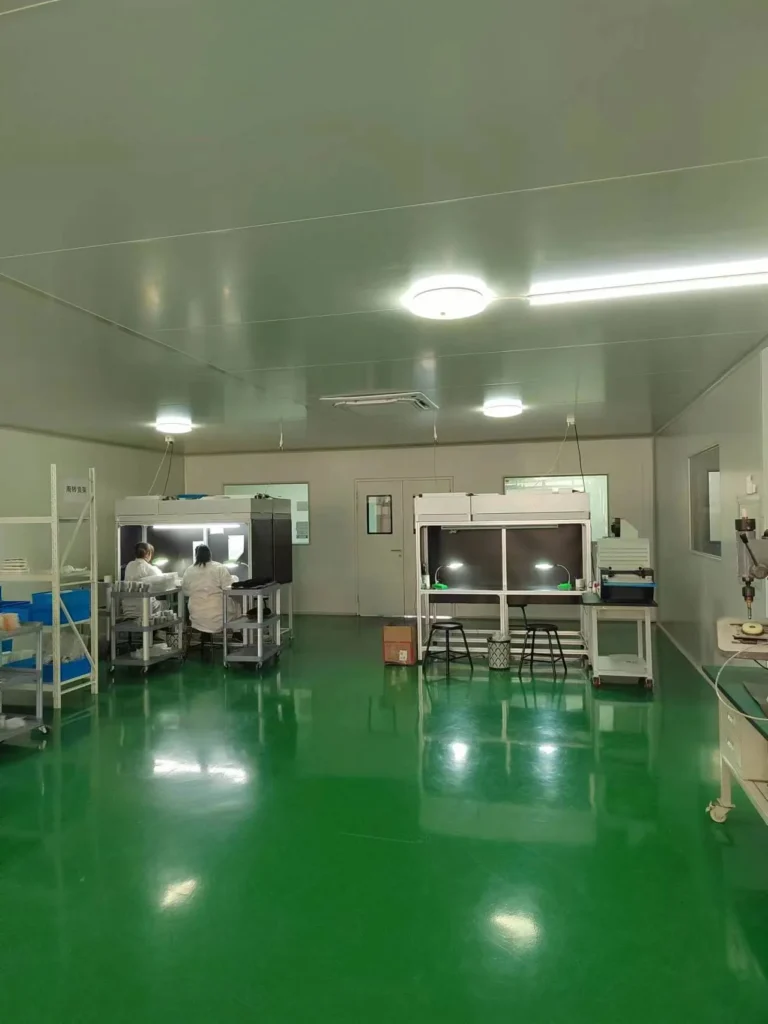
A buyer-side sequence for sourcing custom optics: factory vs trading desk, five RFQ inputs, NDA, 60 working days to MP, and batch MTF reports.
Read the note →
Field guide for AOI and SPI heads: glare that looks like a bridge, distortion on fiducials, 2/3 in to 1.1 in FA C-mount, and when not to buy…
Read the note →
Auditor walk-sheet for an optics OEM: street address, ISO 9001 2024, Class 10,000, named metrology benches, and commercial terms read aloud.
Read the note →
Number-first how-to: NDA, five inputs, mount, volume, and metrology so a 48-hour custom RFQ first-pass can actually start.
Read the note →
Pair OV9734, OV2740, or ES101 to a sub-2 mm objective. Autoclave and IP67 are duty claims. ISO 9001 2024 is the only badge.
Read the note →
Field note on tab-weld glare, coating webs, and seal pins: match 4K/8K/16K image circle, then lighting, then glass.
Read the note →
Washdown fogged the M12 thread, not the glass. Specify IP against the hose, lock focus, seal the assembly.
Read the note →
Number-first M12 reader spec: WD, height band, module size, lock-focus. 15416 grades ink; the lens delivers modulation.
Read the note →
Written clocks, not a 16-week blob: 48 hours, 60 working days, 30-day repeats, MOQ per volume, 50/50, NDA first.
Read the note →
IP68 is not a better IP67. Match jets vs immersion, test the housing, skip swimming-pool ratings on dry cabinets.
Read the note →