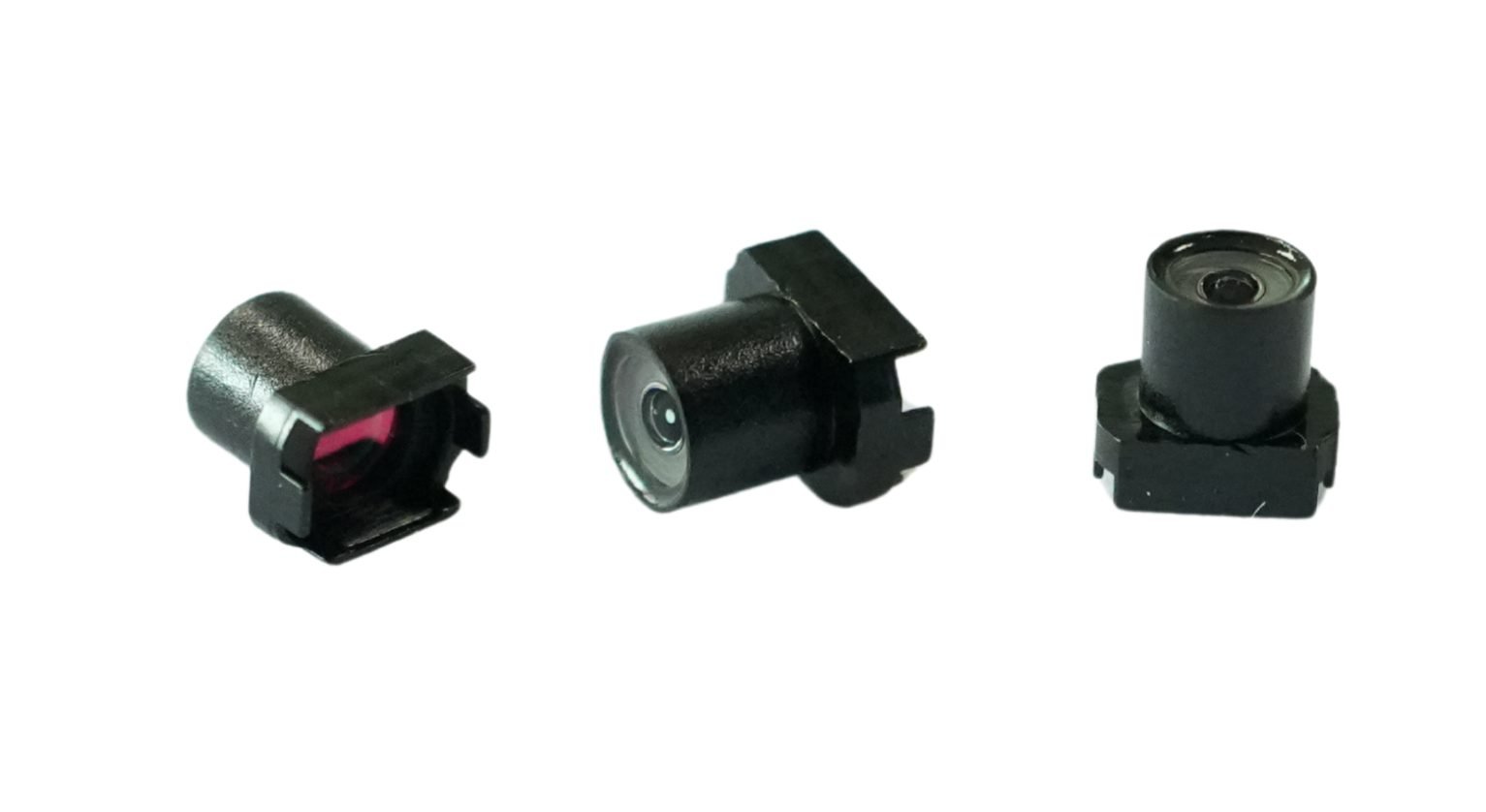
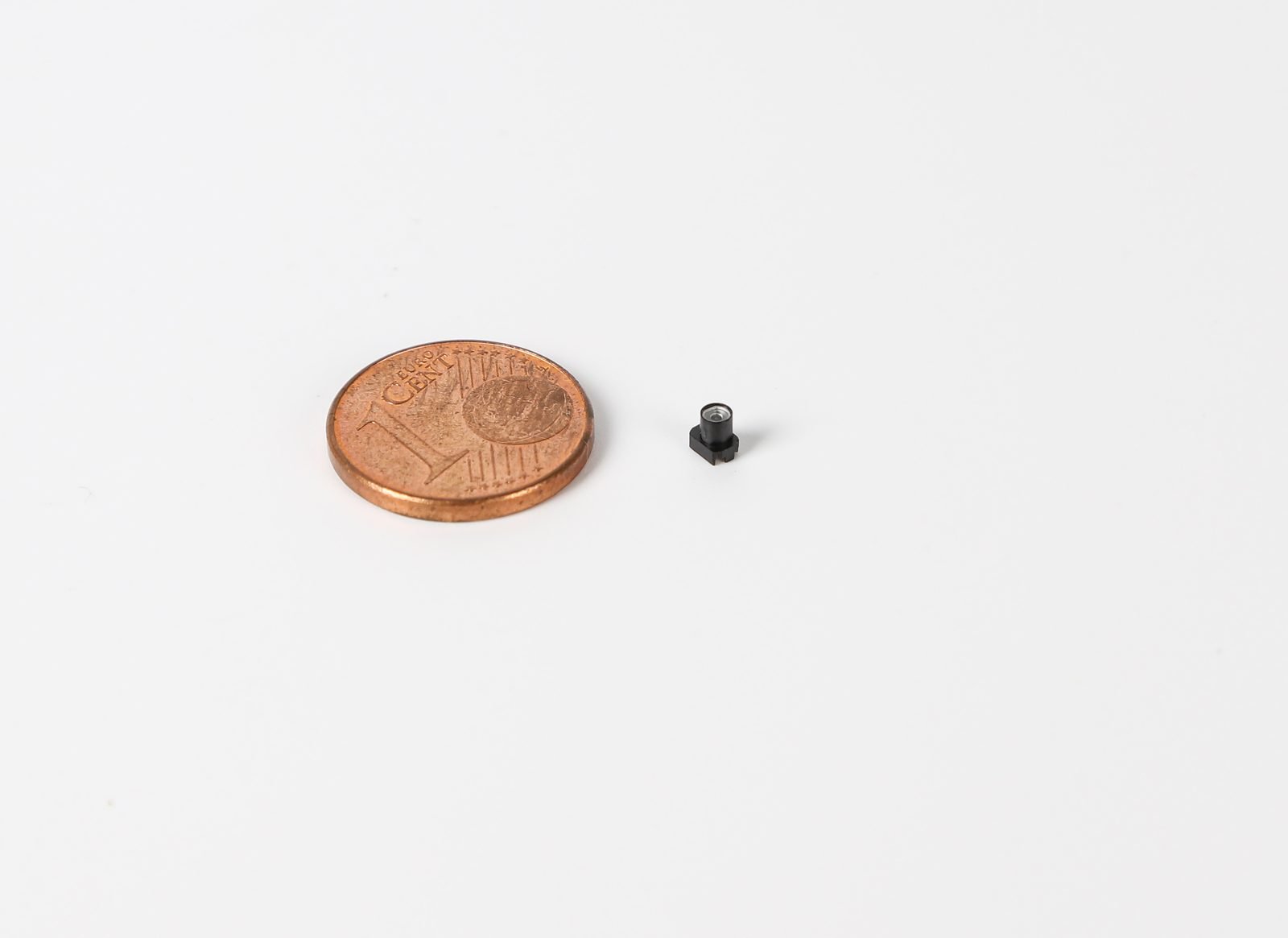
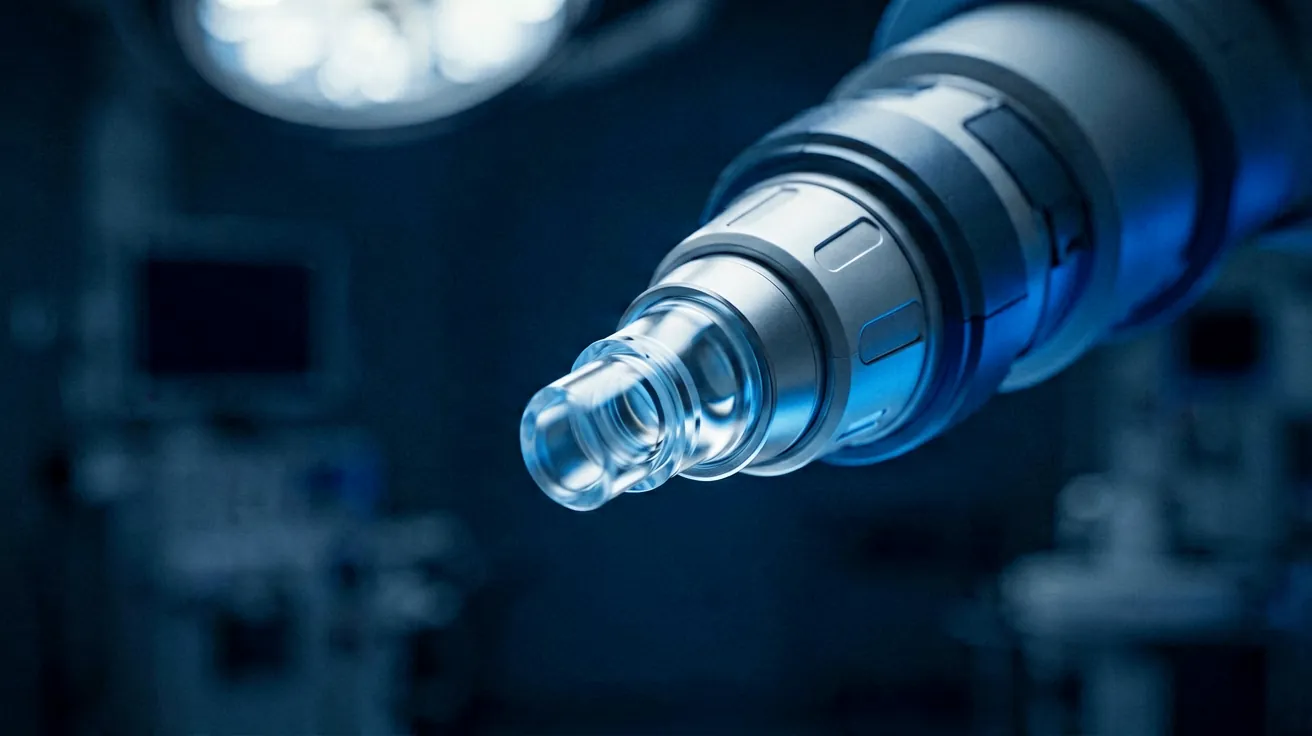
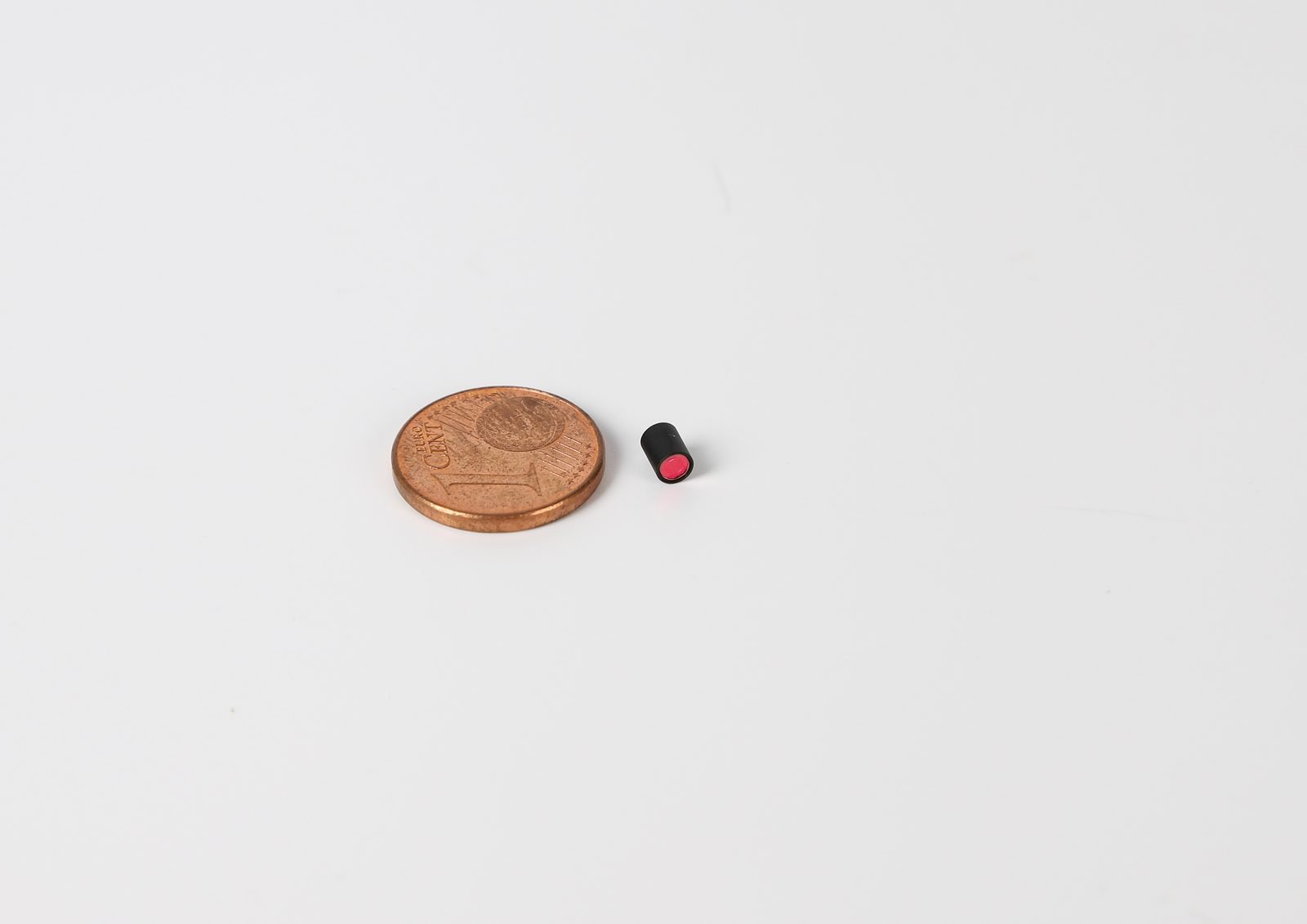
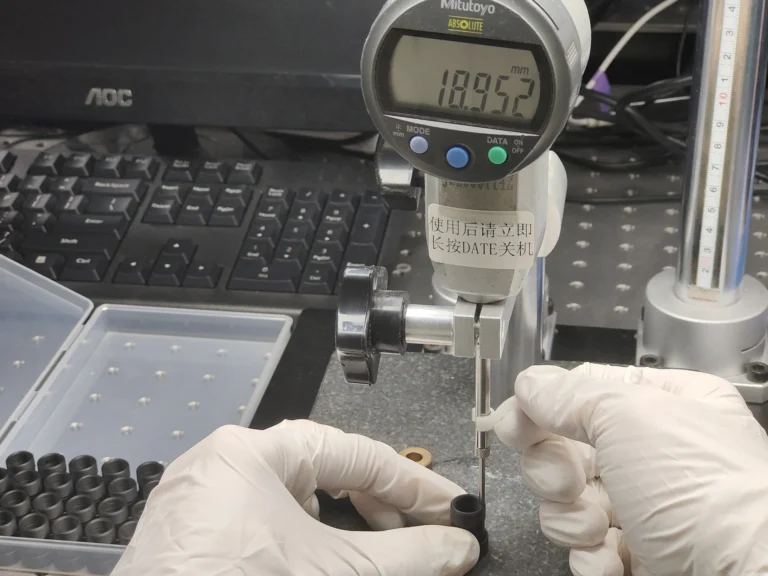
The distal tube is 2.0 mm. The sensor on the bench is a 1/9-inch OV9734. The objective in the tray is a 2.4 mm OD barrel that will not enter the sheath. That is the usual endoscope camera module miss: a 1 MP headline with no outer diameter, no sensor diagonal, and no sterilization path. Pairing starts at the millimetre of silicon and the millimetre of steel, not at a megapixel count.
Key Takeaways
Name the sensor (OV9734, OV2740, ES101 and the like), the optical format (often 1/9-inch on OV9734-class modules), and the distal OD. Sub-2 mm objectives are a mechanical envelope, not a marketing line.
OV9734 modules are commonly 1280×720 on a 1/9-inch format. Image area on published modules is about 1.8 mm × 1.0 mm class — the objective must cover that diagonal inside the tube.
Medical and industrial paths split on sterilization and sealing. Lensmind does not claim ISO 13485, FDA, or CE here. The plant claim is ISO 9001 (2024), hermetic packaging, and IP67/IP68 when specified.
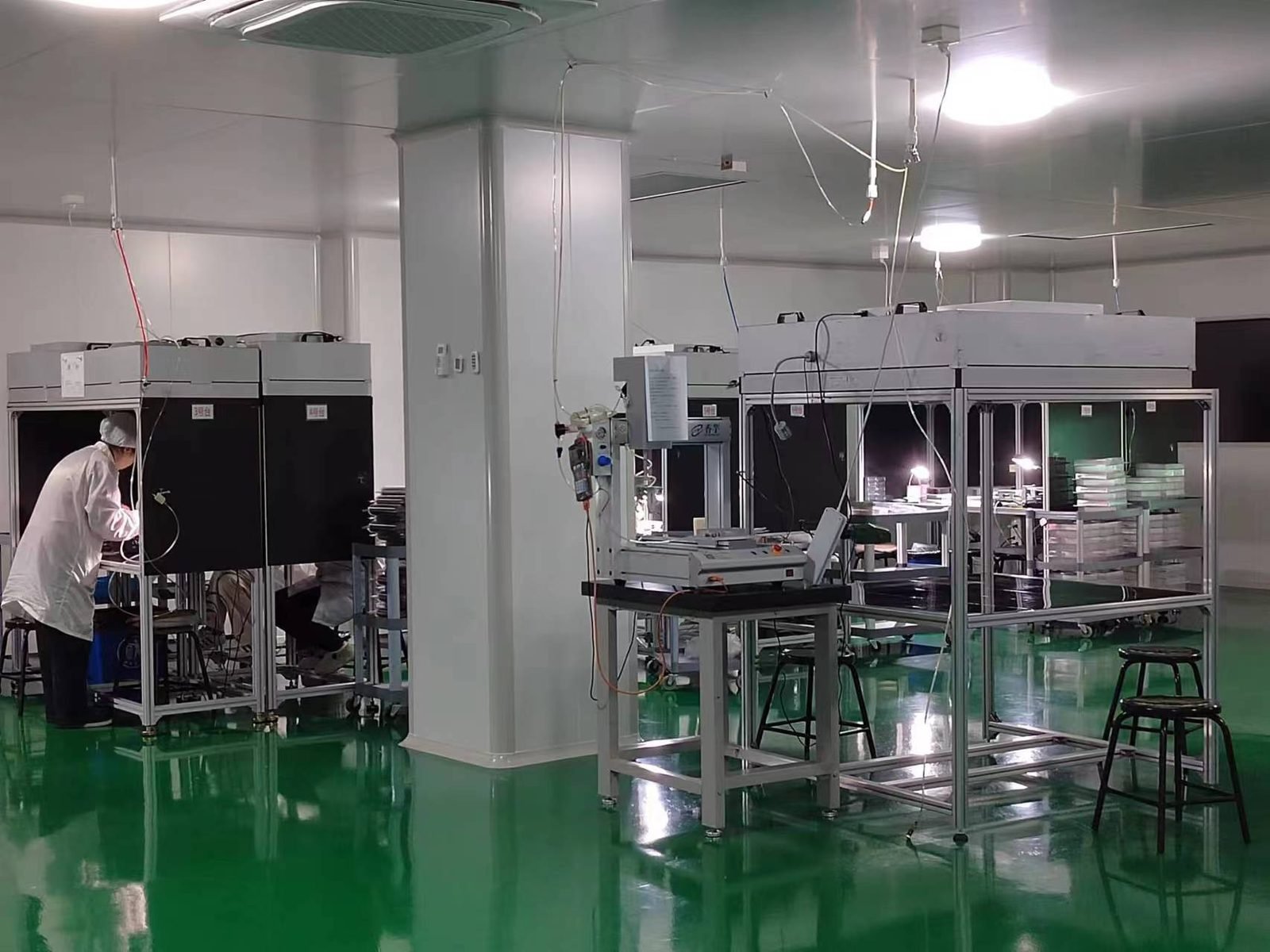
1 μm-class active alignment is used on units that demand it. Class 10,000 (ISO Class 7 equivalent) cells are zoned for medical and harsh-environment builds.
A drain camera is not an industrial RVI module. If the insertion tube, oil, and vibration budget are industrial, say so in the RFQ.
This page is the buyer-advocate checklist for that bench. The five inputs in the machine vision lens selection guide still apply; here “format” is often 1/9-inch and “environment” is autoclave, oil, or IP. Requirements vary by device class and market — confirm current medical or NDT rules with the relevant authority, not with a lens datasheet.
Pair the Sensor to the Distal OD
An endoscope camera module is a sensor plus an objective plus a distal mechanical stack. The lens image circle must cover the sensor diagonal. The objective outer diameter must clear the tube, the LEDs, and the adhesive fillet. Either miss fails the build. Lensmind pairs named sensors — OV9734, OV2740, ES101 — to sub-2 mm objectives and 1/9-inch endoscope modules. That pairing is the RFQ, not “1 MP medical camera.”
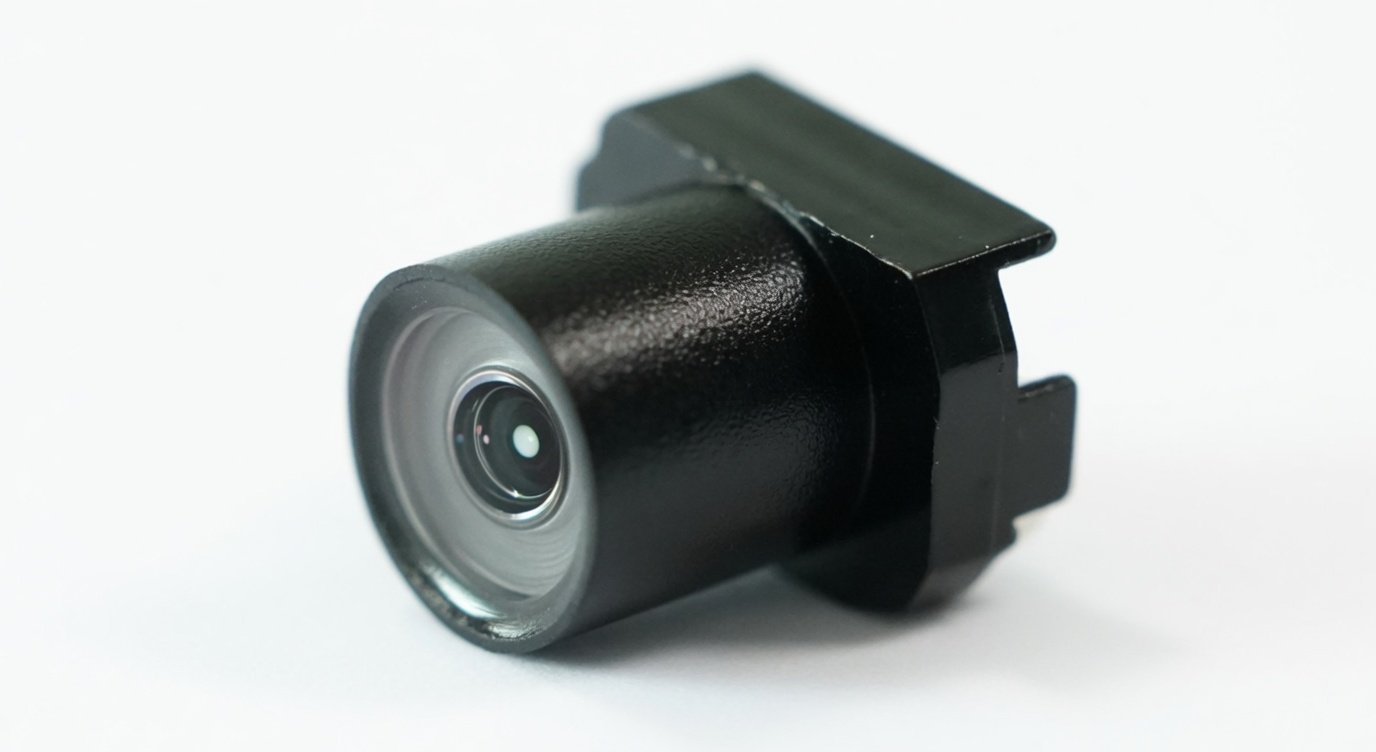
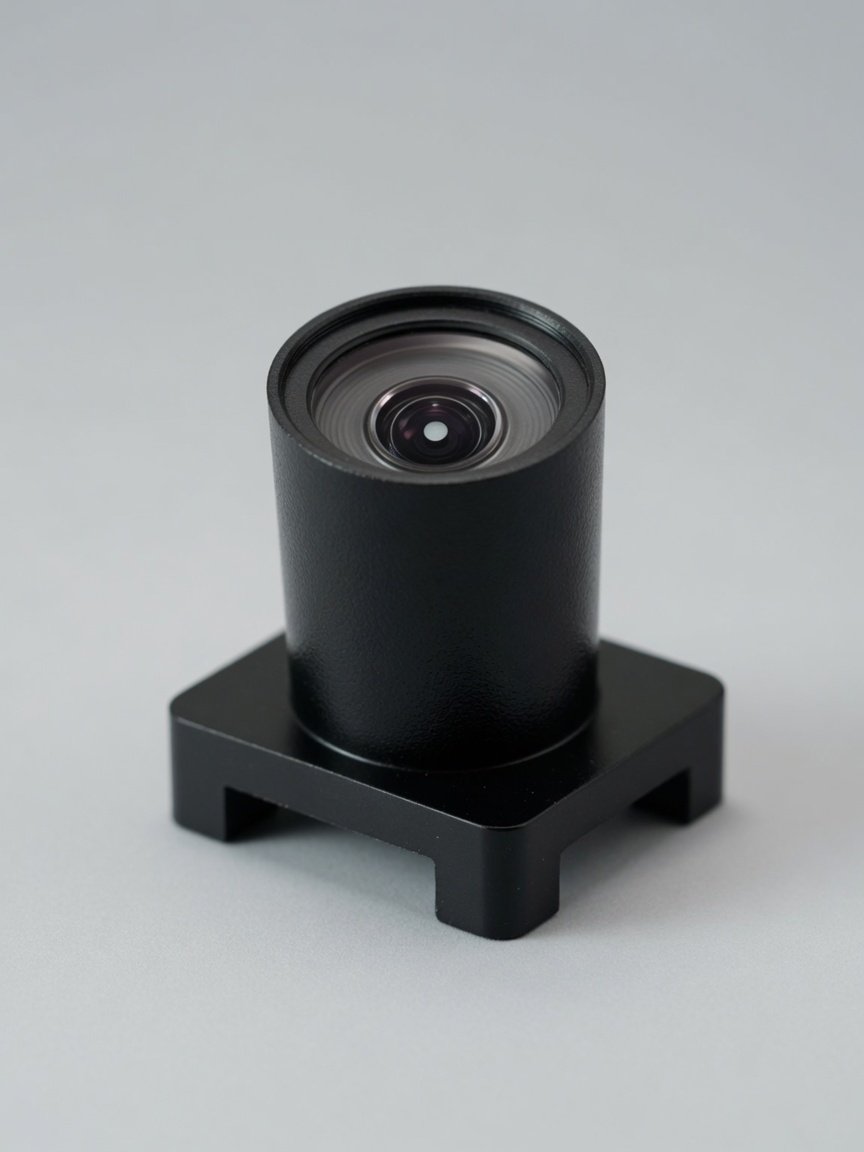
The endoscope lens family is the catalog after those two millimetres are written down. A standing cover such as LMQX6101A is a distal optic, not a USB inspection toy.
OV9734, OV2740, and ES101: What to Write Down
Published OV9734 modules are typically 1280×720 on a 1/9-inch optical format (fractional-inch formats are vidicon-era labels, not millimetres), with pixel sizes in the 1.4–1.75 µm class depending on the board vendor. Image areas around 1.8 mm × 1.0 mm appear on those sheets. That diagonal is what the objective must cover. OV2740-class 1080p modules are often 1/6-inch; they need a larger circle and usually a larger distal OD. ES101 shows up on 720p/1000p miniature lists. Do not mix a 1/6-inch objective onto a 1/9-inch chip and call it a drop-in.
Write the exact sensor part number, the cover-glass stack, and the chief-ray angle if the vendor publishes one. Miniature CMOS chips are unforgiving of CRA mismatch: corners go dark or coloured. Ask for the module drawing, not a marketing photo.
Sub-2 mm Objectives Are an Envelope
Sub-2 mm is the glass diameter plus coating plus barrel, not a “less than 2 mm camera.” The tube ID must also hold illumination fibres or LEDs. A 1.8 mm objective in a 2.0 mm tube with four 0402 LEDs is a stacking problem. If the RFQ only says OD < 2 mm, the first sample will fight the light.
1 μm-class active alignment exists for units that demand it. At these diameters, a few micrometres of decenter is a field of view that is no longer round. That is a factory step, not a set-screw on an M12 holder.
Medical Versus Industrial RVI
Medical device optics may need biocompatible materials, hermetic packaging, and a sterilization method the OEM validates — autoclave, H2O2, or something else depending on the device and the market. Endoscope as a device class is not a lens SKU; the distal objective is. Lensmind does not claim ISO 13485, FDA, or CE on this site. The quality system on record is ISO 9001 certified in 2024. Registration and labeling obligations sit with the device maker. Confirm them with a regulatory specialist.
Industrial remote visual inspection cares about oil, vibration, IP67/IP68 when specified, and a working distance inside a bore. A consumer drain camera is the wrong spend. If the job is a gearbox or a turbine, write RVI, not “borescope for home use.”
FOV, Depth of Field, and Distal Light
Wide distal fields (often 80–160° in this class) are how you see a lumen without steering. They also distort. Measurement inside a bore is not a telecentric job. If you need millimetres, you need a different architecture. Depth of field on a 1 mm EFL objective is short; published modules often quote bands such as 5–50 mm or 10–100 mm. Match that band to the inspection distance, then size the LEDs so the near wall does not bloom.
Send the sensor and the tube OD, not “1 MP medical”
Sub-2 mm objectives paired to OV9734, OV2740, and ES101, 1/9-inch modules, hermetic packaging, and IP67/IP68 when specified. ISO 9001 only — no invented medical badges. First-pass feasibility in 48 hours under NDA.
Hangzhou assembly cells are Class 10,000 (ISO Class 7 equivalent), zoned for medical and harsh-environment builds. Hermetic packaging is in the process list. IP67 / IP68 duty is quoted when specified — it is not a default badge on every SKU. Fog after sterilization is usually a seal or a material stack, not “the coating.” Ask for the packaging method on the drawing.
Do not invent ISO 13485, IATF, CE, or FDA on a Lensmind quote. If your file needs those, the device maker owns the gap. The factory will support drawings under NDA and batch reports (MTF, distortion, BFL, DOF as agreed).
What We Check Before an Endoscope RFQ
Sensor: OV9734 / OV2740 / ES101 or the exact CMOS, format, cover glass.
Tube: inner diameter, wall, LED count, target distal OD.
View: FOV, working distance band, direction (forward or side).
Duty: medical sterilization path or industrial oil/IP. No assumed certificates.
Volume: sample now, annual quantity later. 48-hour first pass, 60 working days prototype to mass production, 30 days repeats, 50/50 payment.
Worked Scene: 3.9 mm Tube, OV9734
Illustrative path: 1/9-inch OV9734, 3.9 mm steel sheath, four LEDs, 5–50 mm working distance, industrial pipe, IP67 requested. The objective must cover the ~2 mm-class diagonal and still leave ring space for LEDs. A sub-2 mm barrel is plausible. A 6 mm USB module is not. If the next revision is OV2740 1080p, the circle and the OD both grow — do not reuse the first barrel.
Company registered 2019. Founding-team practice is 26 years; that is not company age. Custom tooling is stored free for 5 years.
Conclusion
An endoscope camera module is a sensor-to-tube stack. Cover the chip, clear the OD, then talk FOV and sealing. Named sensors (OV9734, OV2740, ES101) and sub-2 mm objectives are the pairing language. ISO 9001 is the plant badge. Medical market access is the OEM’s file.
Key takeaways
Write sensor + format + distal OD. “1 MP” is not a spec.
OV9734 is commonly 1/9-inch 1280×720. OV2740-class 1080p is often 1/6-inch and larger.
IP67/IP68 and hermetic packaging when specified. No ISO 13485 / FDA claim here.
1 μm-class alignment and Class 10,000 cells are the miniature-build process, not a consumer camera line.
If you already have the CMOS part number and the tube drawing, send those two. Hangzhou will map them to a distal objective or say the OD cannot hold the chip and the LEDs. First-pass feasibility is 48 hours under NDA.
Written by the Lensmind Optics team — Hangzhou factory (Lin’an) and Zhongshan office, company registered 2019, ISO 9001 certified 2024. Founder on this site: Baker Zhao.
Frequently Asked Questions
What sensors do Lensmind endoscope modules pair to?
Named pairings on site include OV9734, OV2740, and ES101, down to sub-2 mm objectives and 1/9-inch modules. Send the exact CMOS part number.
Is OV9734 always 1/9 inch?
Published medical/industrial modules commonly list OV9734 as 1/9-inch, 1280×720. Confirm the vendor datasheet; do not assume a 1/6-inch 1080p chip is a drop-in.
Does Lensmind have ISO 13485 or FDA?
No. The certification claimed on the site is ISO 9001 (2024). Medical market access stays with the device maker. Confirm current rules with the relevant authority.
What does sub-2 mm actually include?
The objective envelope. The tube must still hold LEDs or fibres. Write tube ID and illumination, not only “OD < 2 mm.”
Can these modules be IP67?
IP67 / IP68 duty is available when specified. It is not a default on every SKU. Hermetic packaging is part of the Hangzhou process list.
Is a USB drain camera the same as an industrial endoscope module?
No. Industrial RVI needs a named sensor, a tube drawing, and a sealing spec. Consumer drain cameras are a different product class.
Baker Zhao
Founder, Lensmind Optics
Baker Zhao is the founder of Lensmind Optics, with 26 years of experience in the optical industry — including Vice President of Sales at Sunny Optical (Zhongshan) and earlier roles at Foxconn, LG and Sintai Optical. He leads Lensmind with a mission to help customers find reliable, application-specific optical solutions from development to volume production.
A short-working-distance large-FOV feasibility input pack is the maker-ready file that states part size, stand-off, pixel budget, and which image costs the buyer will...
Turning a 50 micrometre defect at 200 millimetres into a lens commitment means locking pixel pitch, image height, and a verification target before anyone...