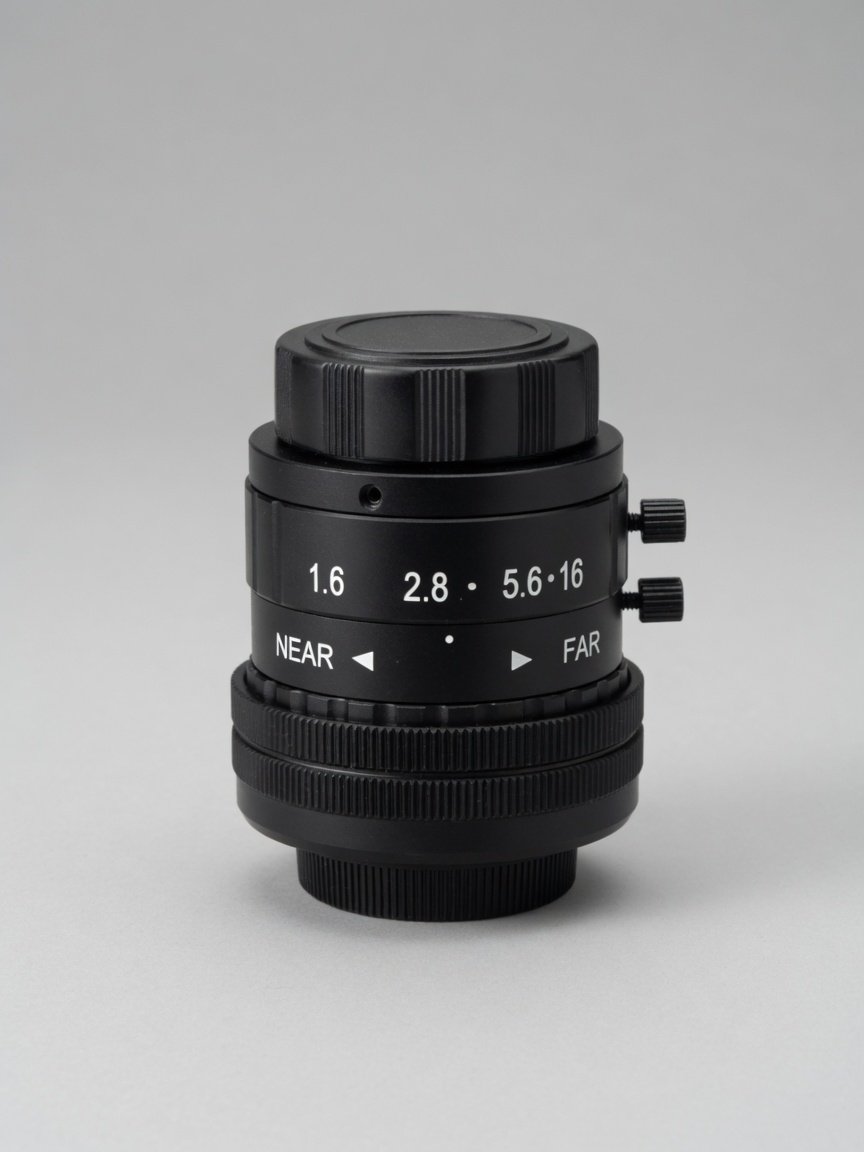
The AOI station was rejecting good boards for “solder bridges” that were glare. The pcb inspection lens was a 12 mm C-mount pulled from a spare drawer, stopped wide open, sitting 40 mm too close to a shiny QFN. Fiducials at the field edge walked by more than a pad width. The camera was fine. The lens and the lighting were not.
Key Takeaways
AOI placement and fiducial work needs low distortion across the field. Lensmind’s FA line holds distortion below 0.05% with 10K+ batch consistency — that is the control to ask for, not a slogan.
Write sensor format, not megapixels. FA C-mount families cover 2/3″ to 1.1″. A 2/3″ lens on a 1.1″ chip vignettes the corners where many components sit.
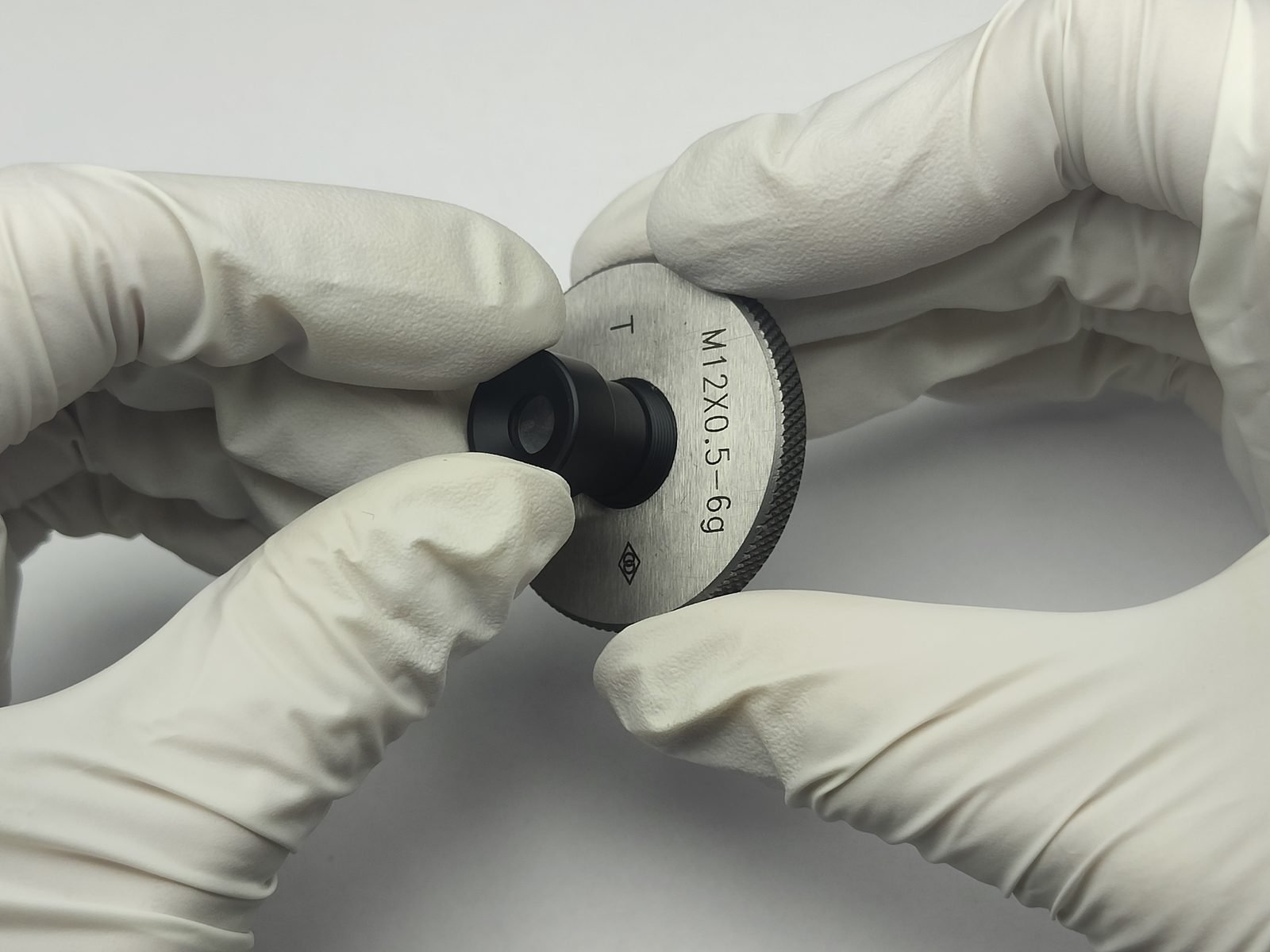
C-mount flange distance is 17.526 mm (1″-32 UN). Confirm the camera is C, not CS, before you blame back-focus.
SPI paste-height is a 3D problem. The lens still needs DOF and a matched image circle; it does not replace a structured-light or moiré projector.
Stop down for DOF on tall connectors; do not buy telecentric for a flat SMT panel unless you are measuring size versus depth.
Glare is lighting geometry. A better MTF chart will not kill a specular fillet if the ring light sits on-axis with the joint.
Every FA production batch ships with MTF, distortion, BFL, and DOF reports. Use those on incoming inspection of the AOI head, not a brochure plot.
This page is the field fix: pick an FA C-mount that covers the sensor, holds distortion on the fiducials, and leaves enough DOF for the tallest part you still inspect in the same frame. Then stop asking the lens to do the illuminator’s job.
The Failed Line: Glare That Looks Like a Bridge
False bridges and missed opens cluster in the same two places: field corners and specular fillets. Distortion displaces a fiducial at the edge, so the placement map is already wrong before the classifier runs. On-axis lighting turns a good concave fillet into a white blob. Operators then open the aperture “for more light,” which thins DOF until a 12 mm connector is mush.
Fix order on a failed line is boring and correct: confirm image circle, confirm flange, stop down, move the light off the specular, then change glass. Buying a higher-megapixel camera first is how you keep the same glare at finer sampling.
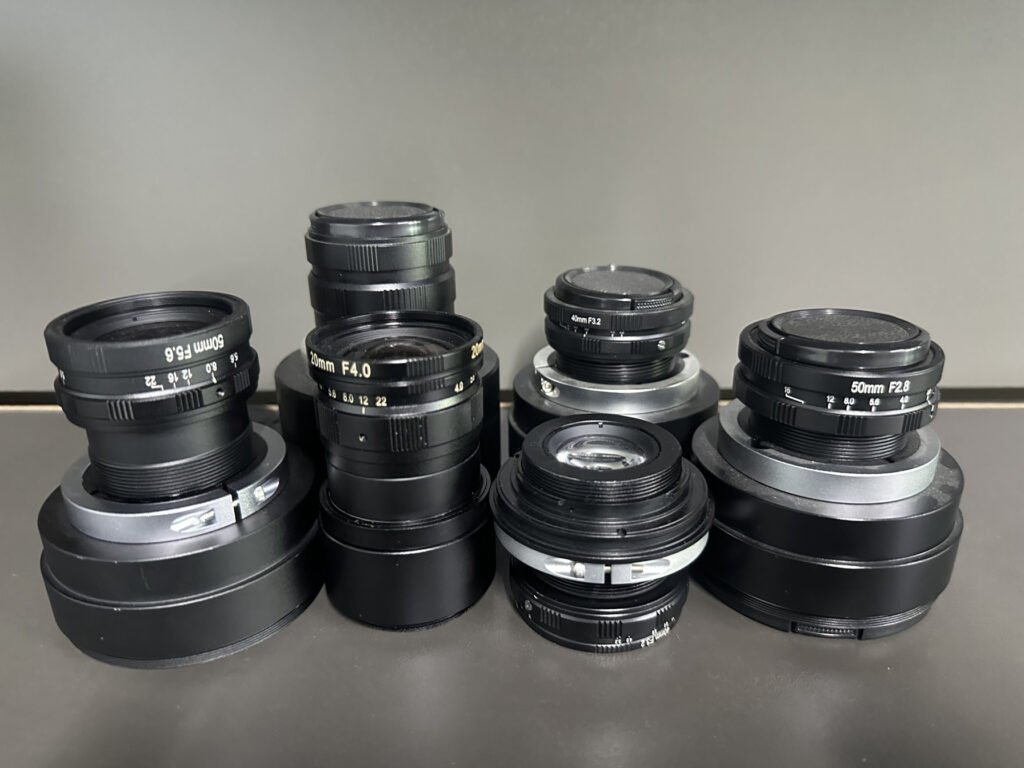
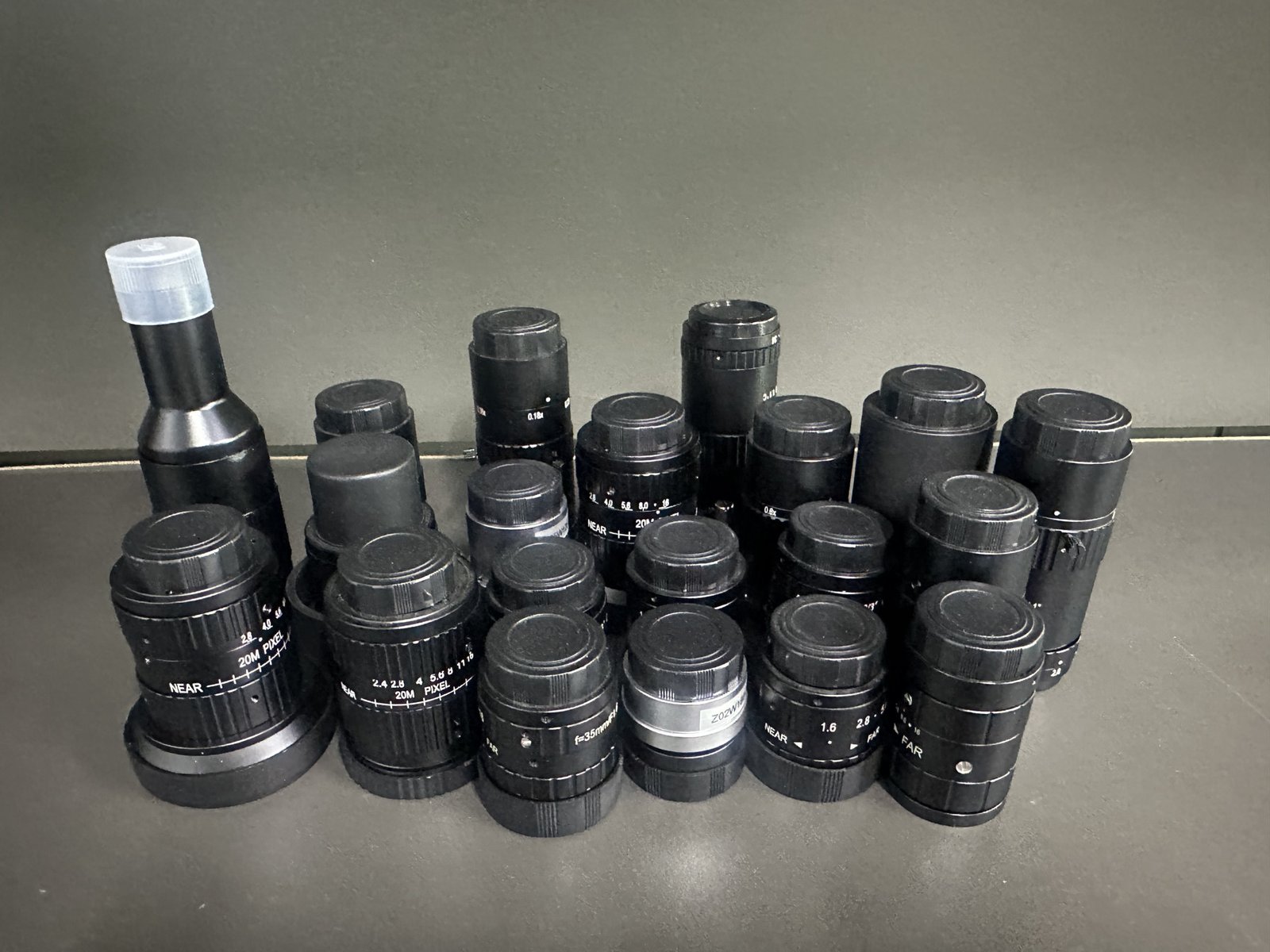
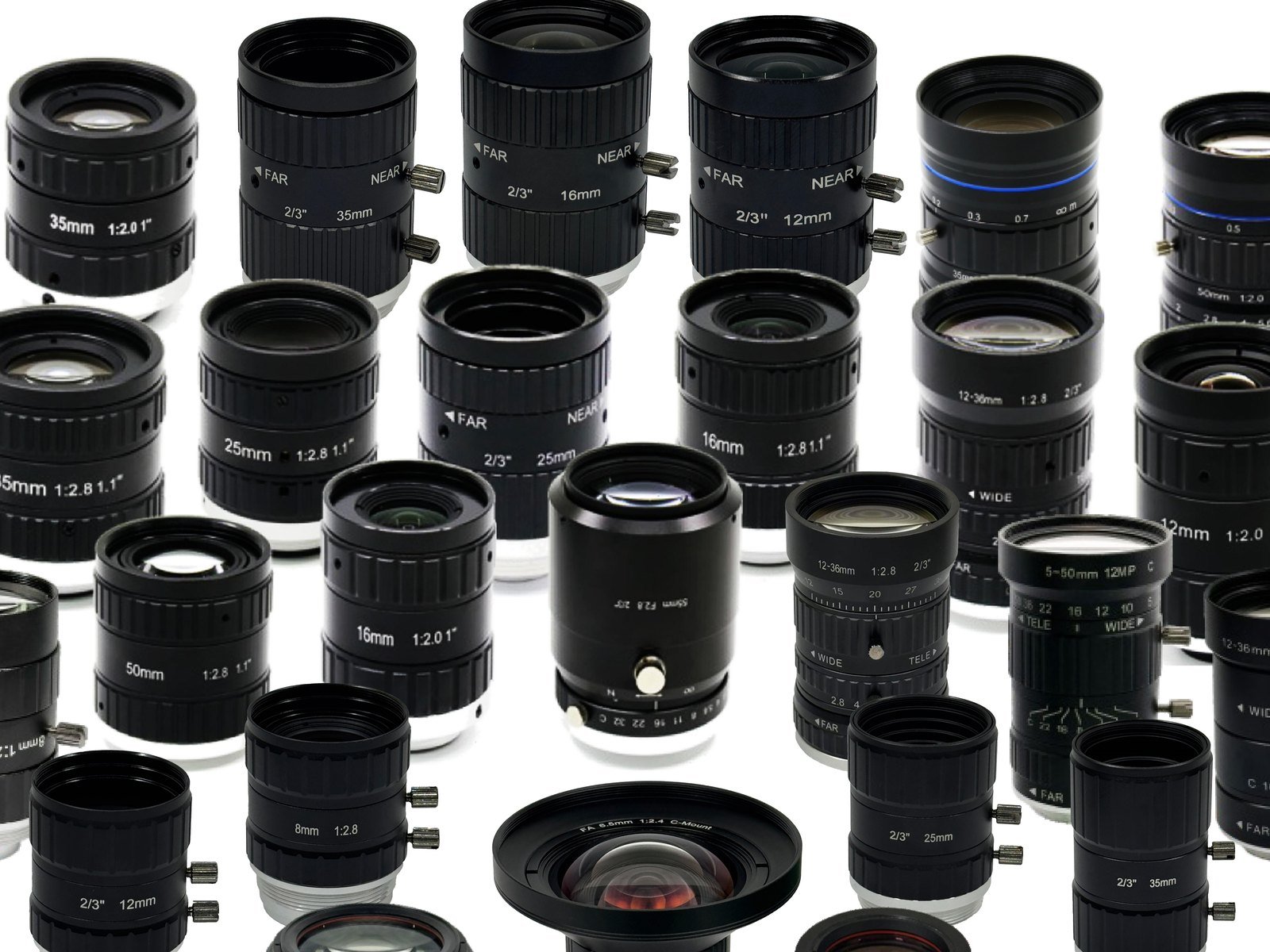
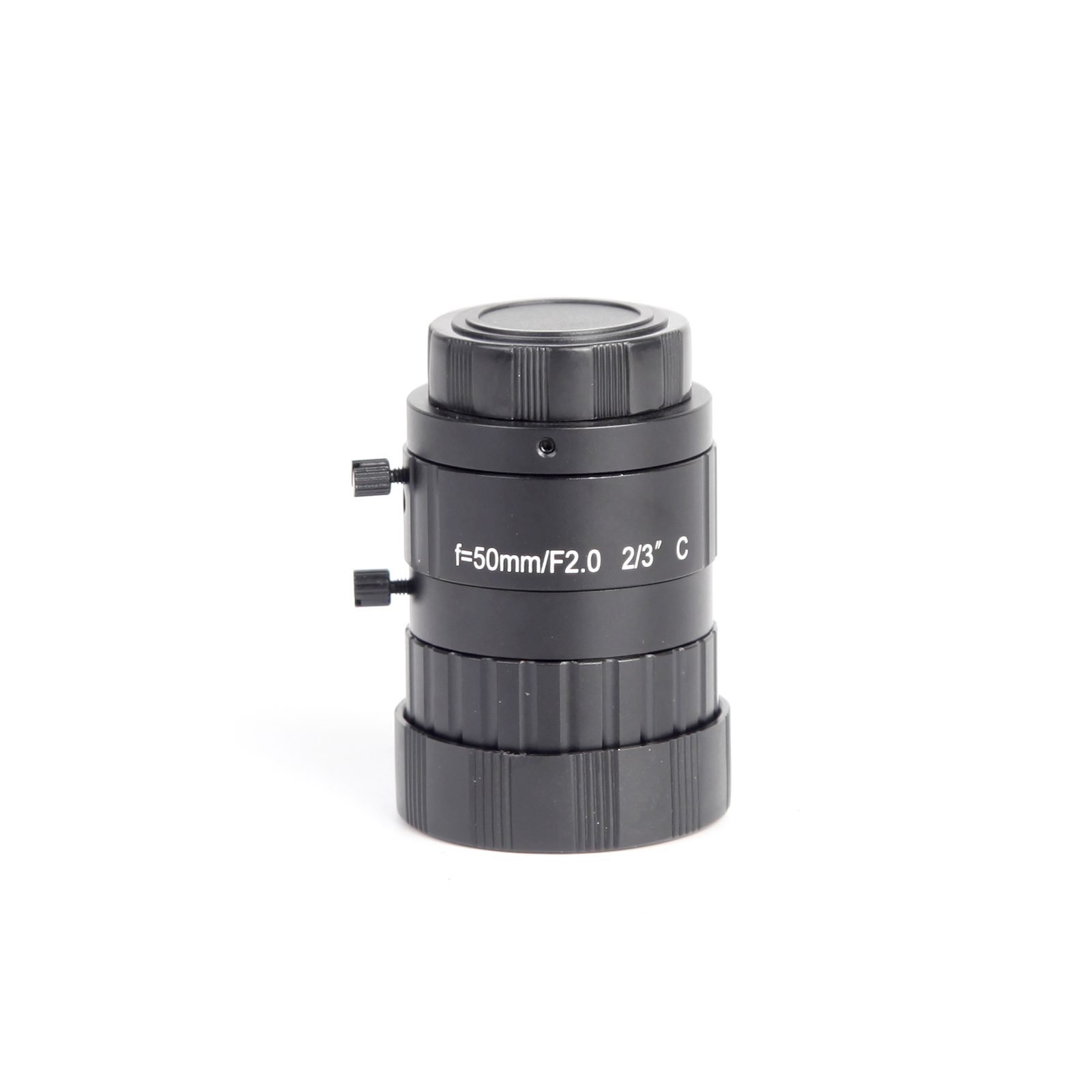
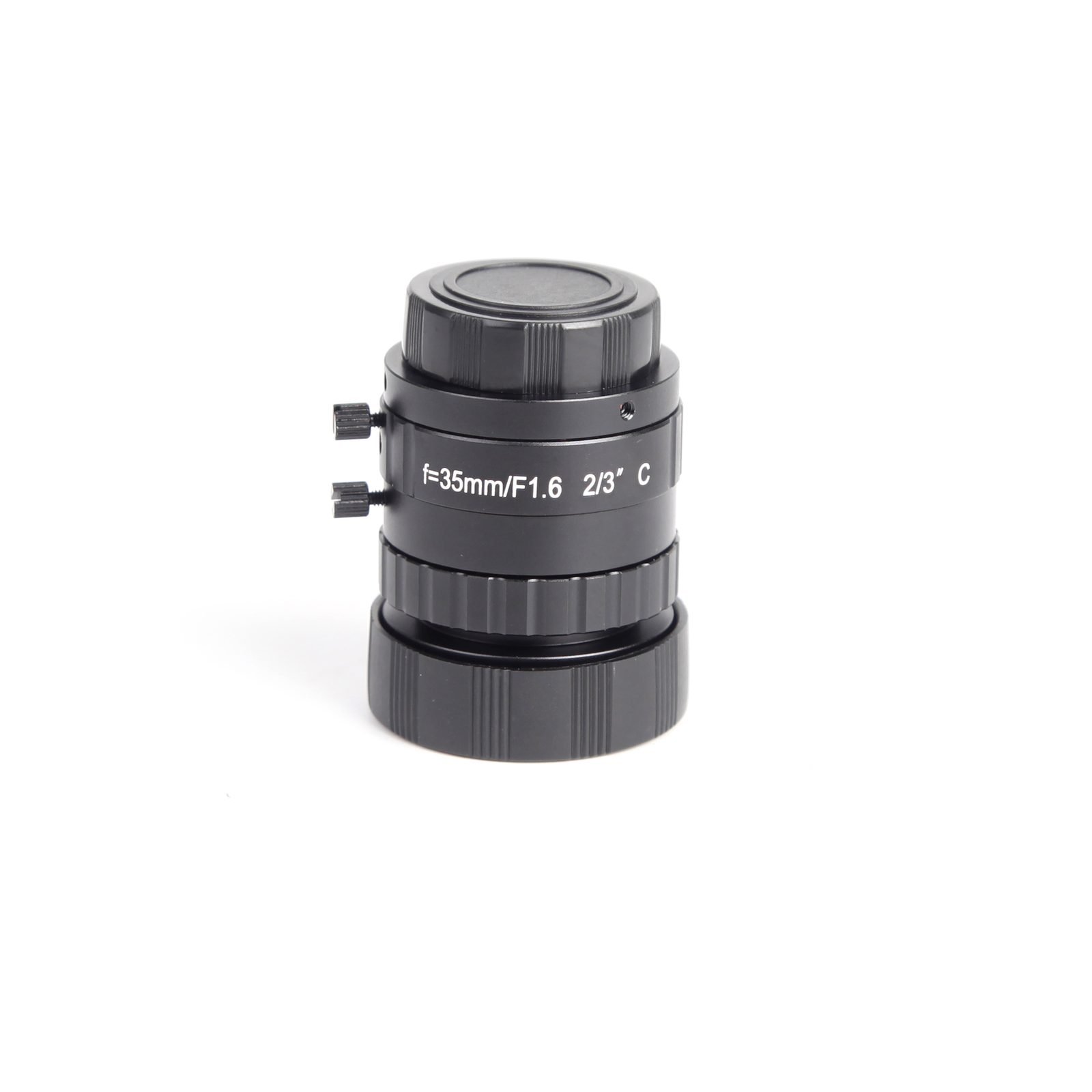
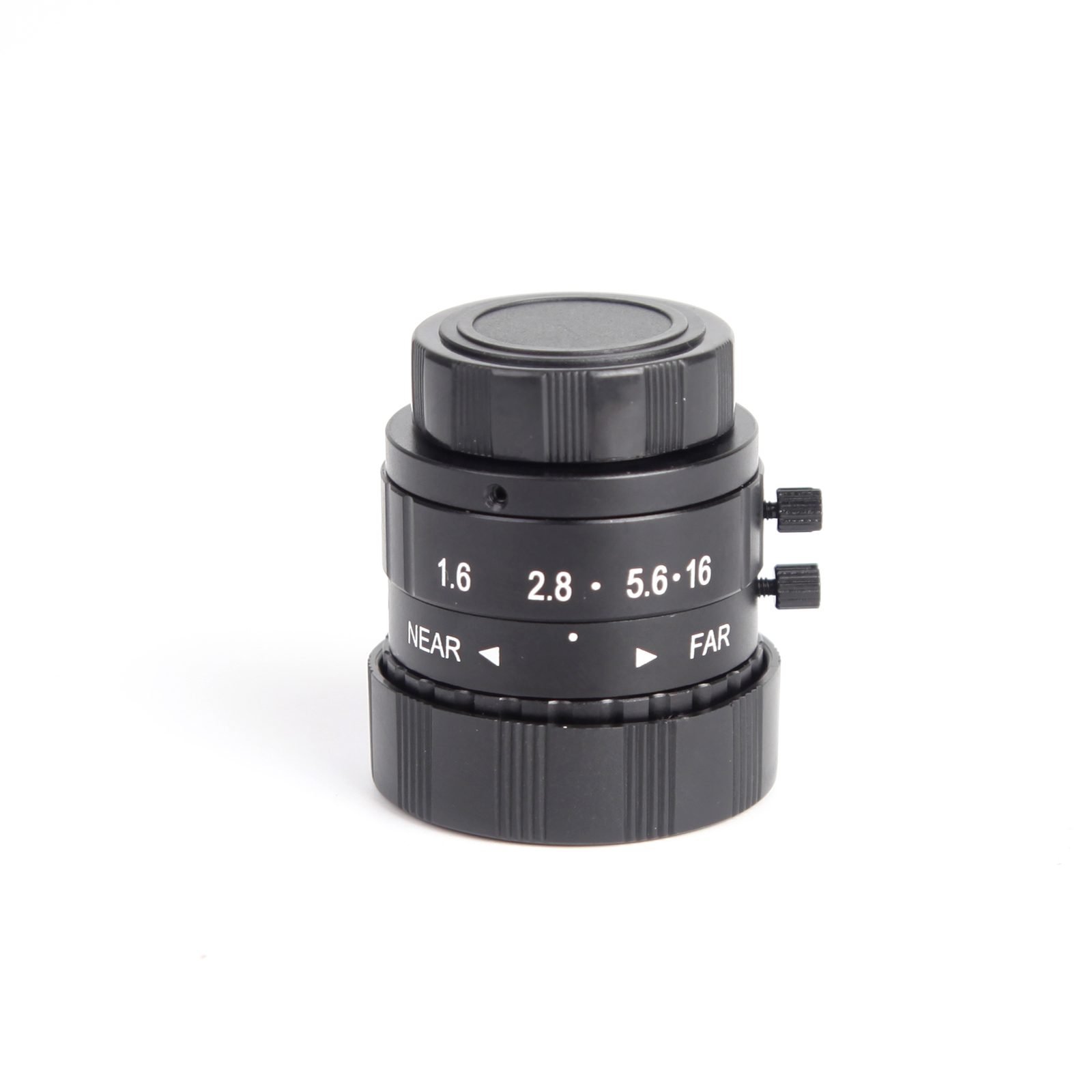
Named FA models on the quality schema include FA3505W, FA5005W, FA2520W, FA3520W, FA5020W, and FA7520W. Additional catalog models include FA0410A through FA5017A and the LMHS-MH series. Start there before a custom barrel. The FA machine vision lenses family is the money page for this station class.
AOI Versus SPI: What the Lens Must Do
AOI (automated optical inspection) after reflow looks at presence, polarity, offset, and solder-joint shape. SPI (solder-paste inspection) before reflow looks at paste area and, on 3D systems, height and volume. Both need a lens that covers the sensor and does not warp pad geometry. Only SPI height needs a projector or laser. Do not specify a “3D lens.” Specify image circle, distortion, and DOF, then pick the projector separately.
Station
Optical job
Lens pressure
Wrong spend
Pre-reflow SPI 2D
Paste area / bridging on stencil print
Contrast, low distortion, even illumination
Telecentric for a flat stencil
Pre-reflow SPI 3D
Height / volume via fringe or laser
DOF, matched circle, stable BFL
A “taller MP” camera with the same projector
Post-reflow AOI
Fiducials, offset, polarity, joints
Distortion at field edge, DOF on mixed height
Wide-open aperture to “get more light”
If the board has 15–30 mm of height from SMT pads to electrolytic cans, one FA lens at one working distance will not keep both in the same DOF. Zone the head, stop down, or use a liquid lens on mixed-height SKUs. Do not pretend one 8 mm wide-open shot covers a USB stack and a chip resistor.
Sensor Format and Image Circle on a PCB Station
Write the sensor as 2/3″, 1″, or 1.1″ (or the diagonal in millimetres). “5 MP AOI camera” is not an optical spec. Lensmind FA C-mount lenses are built for 2/3″ to 1.1″ formats. Put a 2/3″ image circle on a 1.1″ chip and the corners — where fiducials and tall connectors often sit — go dark and soft.
Pixel size still matters for sampling. If the smallest pad you must resolve is 0.2 mm, you need enough pixels on that pad after the FOV is set, not a marketing megapixel count. The five-input method on the machine vision lens selection guide is the same math: format, working distance, FOV, resolution target, environment.
Macro FA variants exist for close-distance gauging. If the head is jammed 80 mm above a small coupon, a general 25 mm at that distance may not be the right prescription. Say the working distance in the RFQ. Do not send “close-up PCB lens.”
Distortion Budget for Fiducials and Pads
AOI registers the board to fiducials, then measures component offset against that frame. Distortion moves apparent position most at the field edge. A lens that “looks sharp” in the center can still throw a corner pad by more than your placement tolerance. Lensmind holds FA-line distortion below 0.05% with 10K+ batch consistency. Ask for the batch distortion number at the image height you use, not a center-only MTF.
Software undistort is a backup, not a license to buy a fisheye. Undistort interpolates pixels and fights a model that drifts if BFL or working distance changes. For a production AOI head, buy the distortion in glass. Keep the software map for residual, not for 3% barrels.
If the vendor will not ship a distortion number with the lot, you do not have a metrology lens. You have a CCTV leftover on a C-mount thread.
Working Distance, FOV, and Focal Length
Thin-lens first pass: focal length ≈ (sensor width × working distance) / (field width + sensor width). Use active sensor width, not the marketing diagonal. Working distance is object-to-front-of-lens, not object-to-camera-back. Treat the result as a starting catalog value — 16 mm, 25 mm, 35 mm, 50 mm — then confirm on a drawing.
A 2/3″ sensor is 8.8 mm × 6.6 mm active. At 200 mm working distance with a 40 mm-wide inspection window (44 mm with margin), f ≈ 33 mm. 25 mm gives placement margin. 35 mm samples the pads harder. If the smallest feature is 0.1 mm on a 5 MP 2/3″ chip, 35 mm is the better first sample; if board location varies, 25 mm is safer. That is the same worked example the selection guide already uses — reuse it, do not invent a new formula.
Conveyor clearance is an environment input. A 50 mm lens that wants 300 mm of WD will not fit under a hood that only allows 180 mm. Measure the hood before you order glass.
HANGZHOU FACTORY · ISO 9001
FA C-mount glass for AOI and SPI heads
2/3″ to 1.1″ formats, distortion held below 0.05%, 10K+ batch consistency. Every production lot ships MTF, distortion, BFL and DOF reports. Send sensor, WD, FOV, and the smallest pad you must resolve.
Solder is a mirror. A coaxial or poorly aimed ring light returns a hot spot that a classifier reads as a bridge or a void. Move the light, add a polarizer pair, or drop the angle. Then stop the lens down. Opening the iris to outrun glare just destroys DOF on the next connector.
Coatings are environment, not magic. VIS is the default for white LED AOI. If you inspect with 850 nm through a solder-mask window, say NIR in the RFQ. A VIS-only coating will not “kind of work” on IR. Lensmind M12 families offer NIR/VIS options; FA RFQs should name the illuminator the same way.
Do not send “anti-glare lens” as a spec. Send the illuminator type, the joint alloy, and a photo of the false reject. The plant can pick a coating and an iris recommendation. It cannot invent a lighting geometry from a blank email.
Telecentric Versus FA on PCB Work
Telecentric optics keep magnification constant with object depth. That is the right spend when a 1 mm height change would move a measured size outside tolerance — pin length, connector true position, some SPI height proxies. It is the wrong spend for presence/absence on a flat SMT panel at a fixed working distance. Opto Engineering’s telecentric tutorial and Sill Optics’ machine-vision note both put constant magnification at the center of the definition. Use that test, not the price.
Object-side telecentric also helps when you are looking down holes or at tall stacks and perspective would hide a wall. Most SMT AOI is not that job. Buy FA, lock WD, stop down. Keep telecentric money for the metrology cell at the end of the line.
Lock focus after you set WD. AOI heads vibrate. A C-mount with a loose focus ring will walk across a shift the same way an unlocked M12 walks on a robot. Set screw or thread locker on the ring once the BFL is proven on the first board of the SKU.
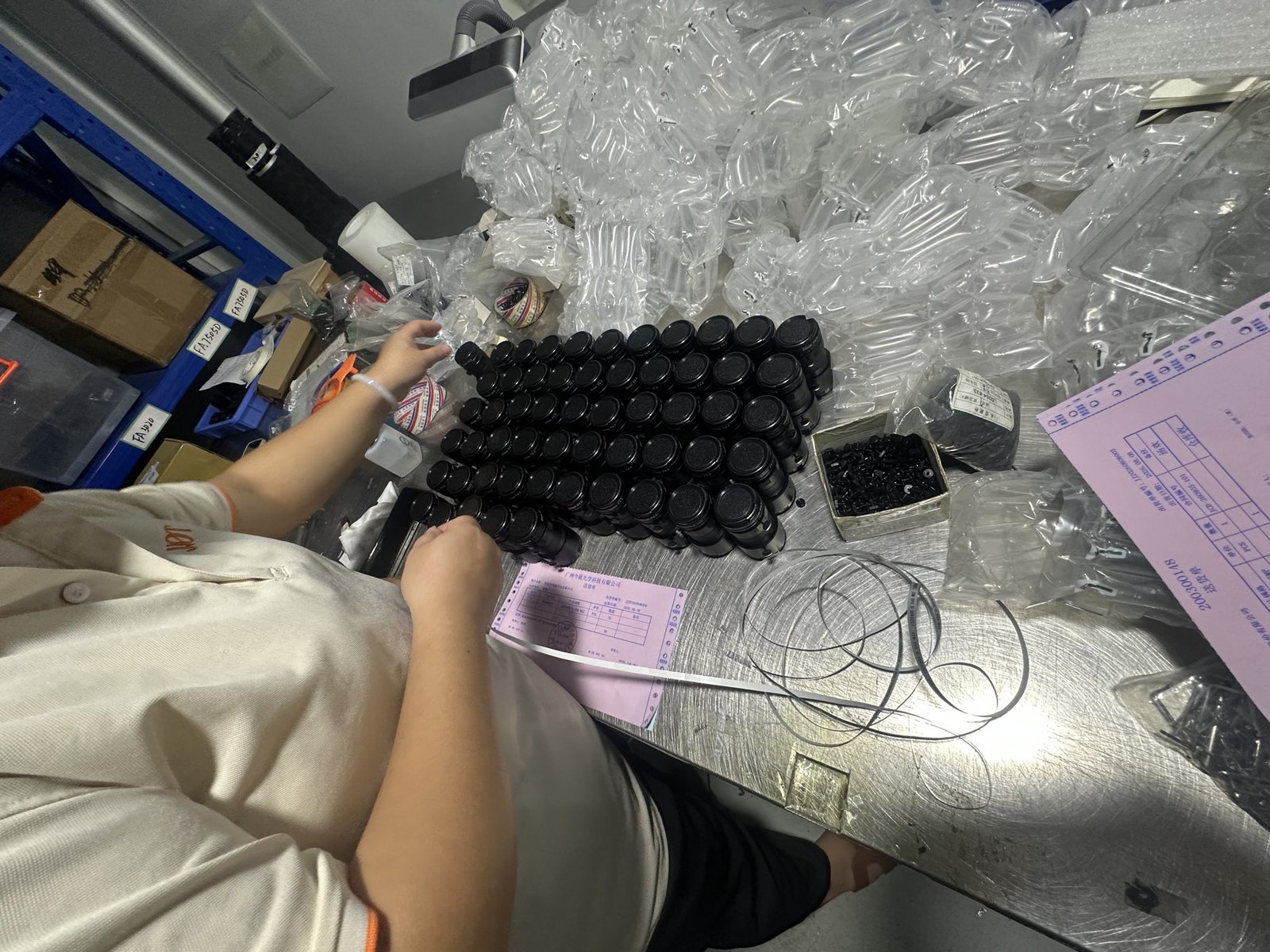
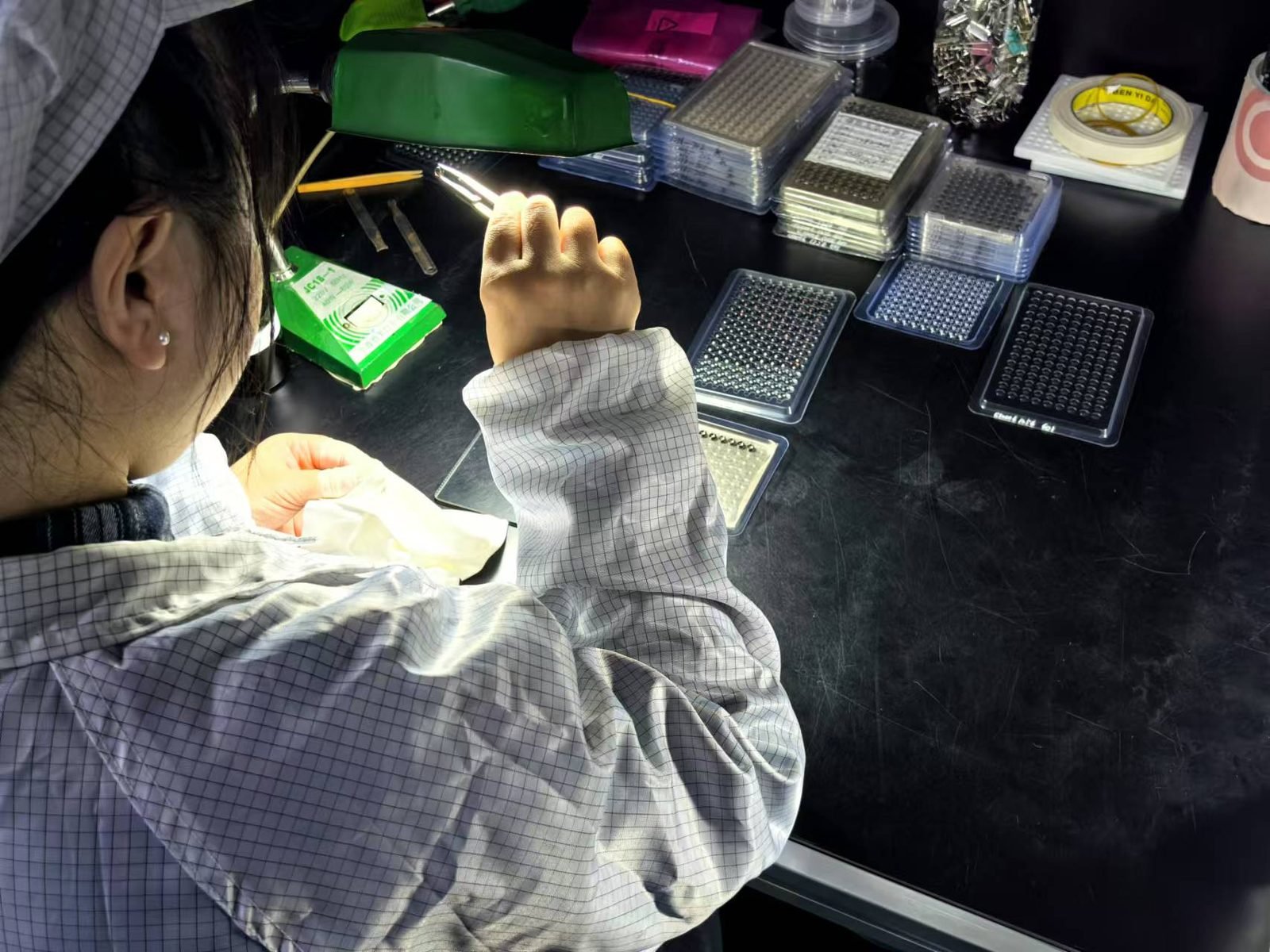
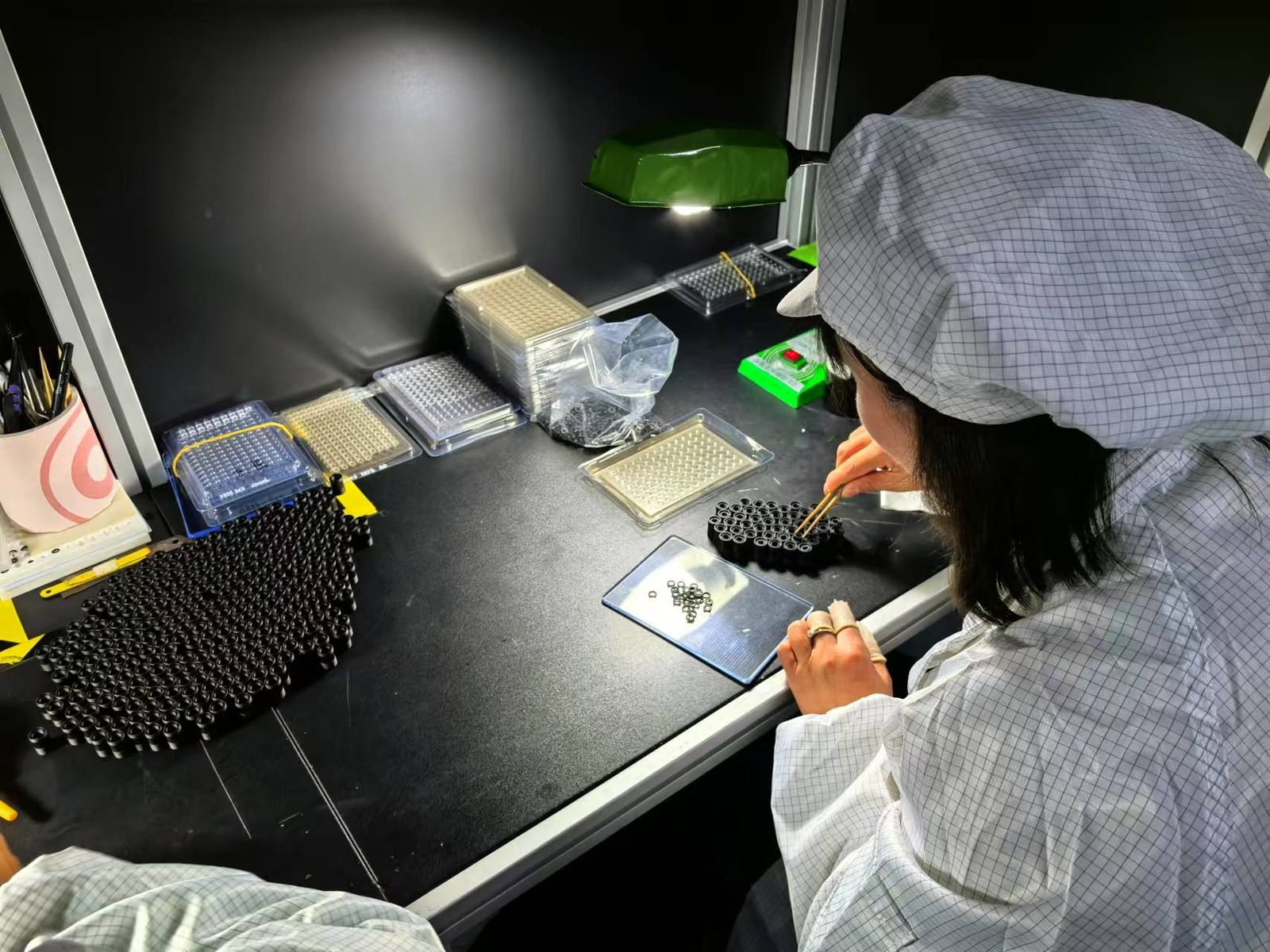
Incoming inspection: BFL against the camera, distortion at field edge, MTF at the working frequency, DOF against the tallest component in that recipe. Lensmind ships those reports with the batch. Keep them in the station folder next to the lighting recipe.
Fiducial and pad geometry that needs distortion below 0.05%
Size vs depth on tall pins — that is telecentric
Discrete SMT panels with a locked lighting recipe
Continuous web or cylinder work — look at line scan
Close-distance gauging with a macro FA variant
Washdown food lines that need a sealed M12 housing
If the camera is already a board module in a tight hood, do not force C-mount. Use M12 with FT/HT focus lock. If the part is a moving web of flex, look at line scan. FA is the default for a discrete board on a stop-and-shoot or short-index conveyor.
Worked Example: 2/3-Inch Head at 200 mm
Illustrative station. 2/3″ 5 MP camera, C-mount, 200 mm WD, 40 mm inspection window on a 0.4 mm-pitch QFN field. Smallest feature 0.1 mm. White LED ring, polarizer available. Hood clearance 220 mm.
Focal-length first pass lands near 33 mm. Sample FA3520W or a 35 mm FA first for sampling; keep a 25 mm on the bench if board location varies by a few millimetres. Confirm image circle on 2/3″. Set iris for DOF across the QFN and the nearest 8 mm connector; do not run wide open. Check distortion at the fiducials against the FA-line 0.05% control. If the classifier still flags bridges, move the ring off-axis before you change glass.
RFQ to Sales@lensmindpro.com: sensor format and pixel size, 200 mm WD, 40 mm FOV, 0.1 mm feature, white LED, C-mount, annual head count. Ask for the batch report pack with the sample. 48-hour first-pass applies to custom; catalog FA samples are stock or a short slot.
Conclusion
A pcb inspection lens is a C-mount FA choice until the job proves otherwise. Cover the sensor, hold distortion on the fiducials, stop down for the tallest part in the frame, and fix glare in the light. Telecentric and extra megapixels are later spends.
Key takeaways
FA C-mount: 2/3″ to 1.1″, distortion below 0.05%, 10K+ batch consistency, reports with every lot.
C-mount flange is 17.526 mm. CS is 5 mm shorter. Thread match is not optical match.
SPI height needs a projector; the lens still needs DOF and image circle.
Failed-line order: circle, flange, iris, lighting, then glass.
If you are specifying an AOI or SPI head on a 2/3″ to 1.1″ C-mount camera, send the five inputs and the smallest pad you must resolve. If the station is a board camera in a tight cover, switch to M12. If measured size changes with part height, then — and only then — look at telecentric.
Written by Baker Zhao, Founder at Lensmind Optics. Hangzhou factory, ISO 9001 certified 2024. FA C-mount line with distortion held below 0.05% and batch MTF/distortion/BFL/DOF reports. Sales@lensmindpro.com · +86 181 2524 5828.
Frequently Asked Questions
What distortion should a PCB AOI lens hold?
Lensmind’s FA line holds distortion below 0.05% with 10K+ batch consistency. Ask for that number at the field height of your fiducials.
Do I need a telecentric lens for SMT inspection?
No, not for presence and offset on a flat panel at fixed WD. Use telecentric when measured size must not change with depth.
What is the C-mount flange distance on an AOI camera?
17.526 mm, 1″-32 UN thread. CS-mount is 12.5 mm. A CS lens will thread on a C camera and will not focus at the sensor.
Can one lens cover SPI paste height and AOI joints?
It can share image circle and distortion rules. SPI height still needs its projector. Do not treat the lens as a 3D sensor.
Which FA models are a reasonable first sample?
For a 2/3″ head near 200 mm WD, start at 25 mm or 35 mm class — FA2520W / FA3520W or the matching FA catalog focal length — then confirm FOV on a drawing.
Baker Zhao
Founder, Lensmind Optics
Baker Zhao is the founder of Lensmind Optics, with 26 years of experience in the optical industry — including Vice President of Sales at Sunny Optical (Zhongshan) and earlier roles at Foxconn, LG and Sintai Optical. He leads Lensmind with a mission to help customers find reliable, application-specific optical solutions from development to volume production.
“Low distortion” without a distortion map is a claim without evidence. Require maps, measurement conditions, and accept limits on the PO before buy-off. Generic...
A conveyor redesign that changes working distance is a lens re-check trigger, not a same-lens assumption. Recalculate magnification, DOF, and resolution before the next...
An orderable-subcomponent pack is the maker-backed boundary list that states which caps, clamps, front windows, and similar parts can be purchased alone, which fields...