Spacer Rings, Varifocal or Custom Focal Length: Choosing and Documenting an Exact FOV
Answer the field of view question with the error budget, not with whichever option is easiest to buy. If a catalog lens already produces...
read more…
The usual C/CS mount lens mistake is not a bad drawing. It is a thread that looks identical. C-mount and CS-mount both use 1″-32 UN, so a CS lens screws onto a C-mount camera without protest. Focus never lands on the sensor. The integrator then blames back focus, the sensor cover glass, or the wrong focal length.
Key Takeaways
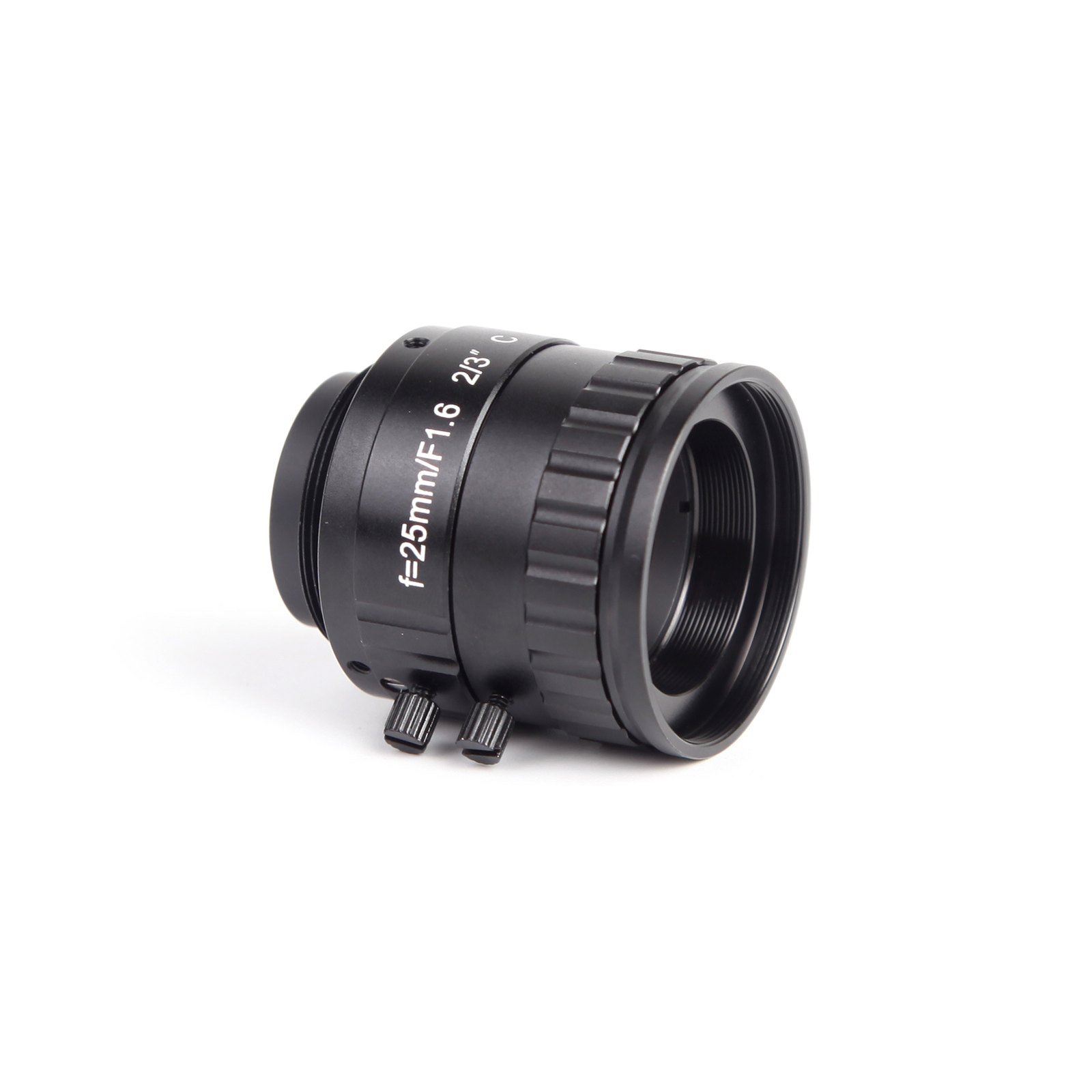
C-mount is a 1 inch diameter thread with 32 threads per inch. CS-mount uses that same 1″-32 UN thread. Edmund Optics states the C-mount flange distance as 17.526 mm and the CS-mount flange as 12.526 mm. Wikipedia records the same 17.526 mm C-mount figure. The numbers are not house style. They are the mount standard.
Flange focal distance is the gap from the camera’s mounting shoulder to the sensor plane. A C-mount lens is designed so infinity focus sits 17.526 mm behind that shoulder. A CS-mount lens is designed for 12.526 mm. Five millimetres is not a rounding error. It is a full spacer thickness.
Catalogs disagree on how they print CS. Thorlabs and Edmund publish 12.526 mm. Some camera makers print 12.5 mm. Lensmind site copy uses 12.5 mm for the same 5 mm ring. Treat 12.5 mm as a rounded CS figure, not a third standard. If a drawing shows 12.500 mm versus 12.526 mm, you are still looking at CS versus C, not a custom flange.
If the lens threaded on and the image will not collimate, stop changing focal length. Measure flange distance first.
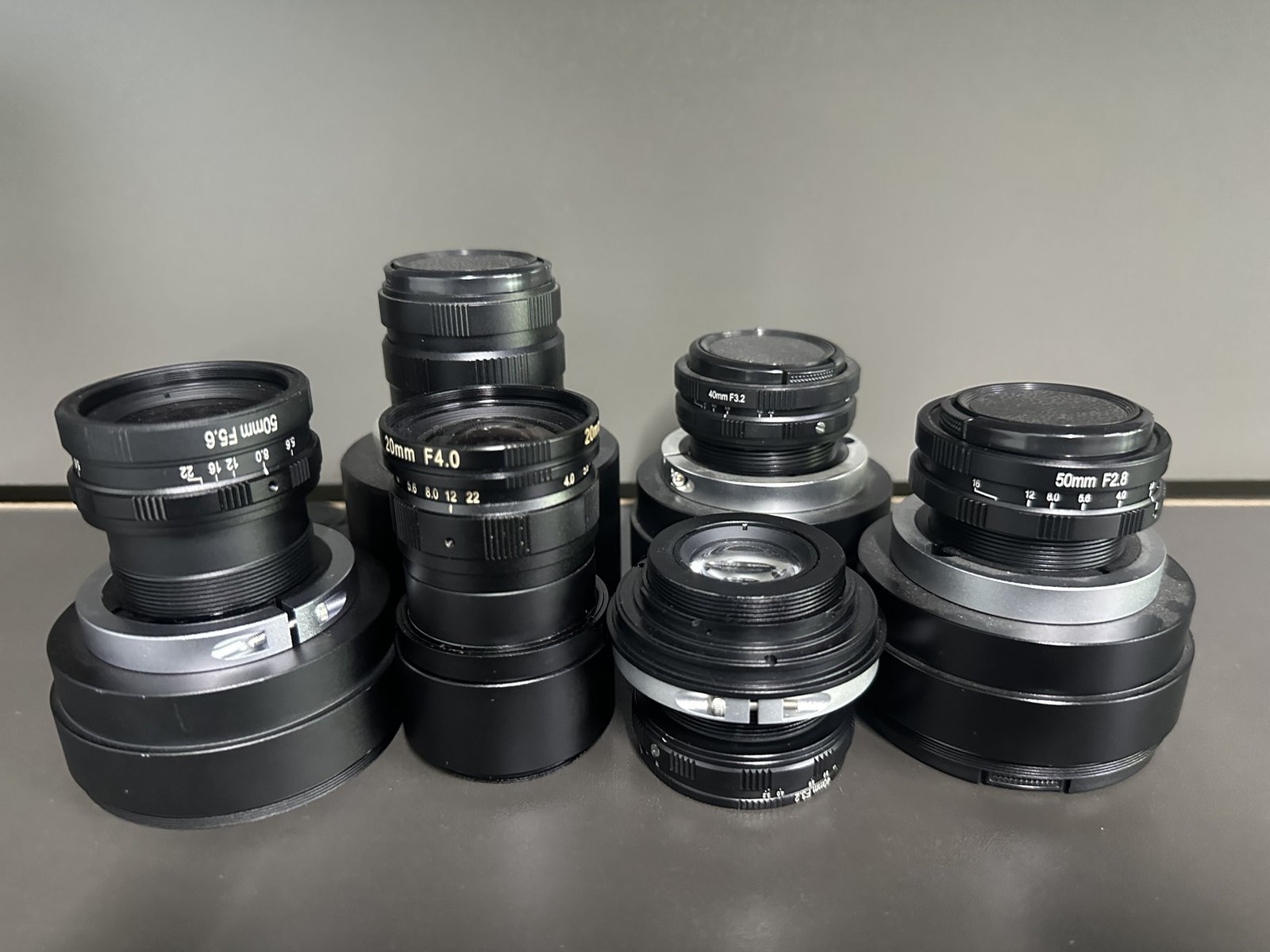
The comparison that matters is flange, not barrel diameter. Both mounts accept the same thread. Only one of them places the image on a C-mount industrial camera. For FA work on 2/3″ to 1.1″ sensors, that mount is C. CS exists for shorter camera bodies, mostly compact CCTV-style housings.
| Parameter | C-mount | CS-mount |
|---|---|---|
| Thread | 1″-32 UN (25.4 mm) | 1″-32 UN (25.4 mm) |
| Flange focal distance | 17.526 mm | 12.526 mm (often 12.5 mm) |
| 5 mm ring | Needed on a CS camera | Does not rescue a C camera |
| Typical industrial use | FA 2/3″ to 1.1″ cameras | Compact CS bodies, CCTV-style |
| Focus hardware | Focus ring; flange is fixed | Focus ring; flange is fixed |
Basler’s C-mount note matches the same thread and 17.526 mm flange. That is the number a C-mount industrial camera is machined to. If your camera data sheet says C-mount, the lens must be a C-mount design, not a CS barrel that happens to screw in.
Verdict — C-mount: Use it on industrial area-scan cameras when you need a real FA catalog, extension tubes, and a flange you can audit. Lensmind FA lines are C-mount for that reason.
Verdict — CS-mount: Use it only when the camera body is CS. Do not treat CS as a cheaper C-mount. It is a shorter register, not a discount thread.

Thorlabs is blunt: C-mount and CS-mount are not directly interchangeable. An adapter that adds 5.0 mm lets a C-mount lens sit at 17.526 mm on a CS-mount camera. A CS-mount lens on a C-mount camera sits 5 mm too far from the sensor. No spacer can move the lens closer. The housings stop it.
| Lens | Camera | Hardware | Focus result |
|---|---|---|---|
| C-mount | C-mount | Direct | Correct |
| CS-mount | CS-mount | Direct | Correct |
| C-mount | CS-mount | 5 mm ring | Correct |
| CS-mount | C-mount | None exists | Never collimates |
The ring is not a quality upgrade. It is a register correction. Buy a ring with a true 5.0 mm thickness and 1″-32 UN, then confirm infinity focus on a collimator if the station has one. A cheap ring that is 4.6 mm or 5.4 mm will leave you hunting back focus on every camera.
Do not stack a 5 mm ring on a C-mount camera “just in case.” That pushes a C-mount lens to 22.526 mm and takes infinity out of reach. The only legal stack is C-mount lens + 5 mm ring + CS-mount camera.
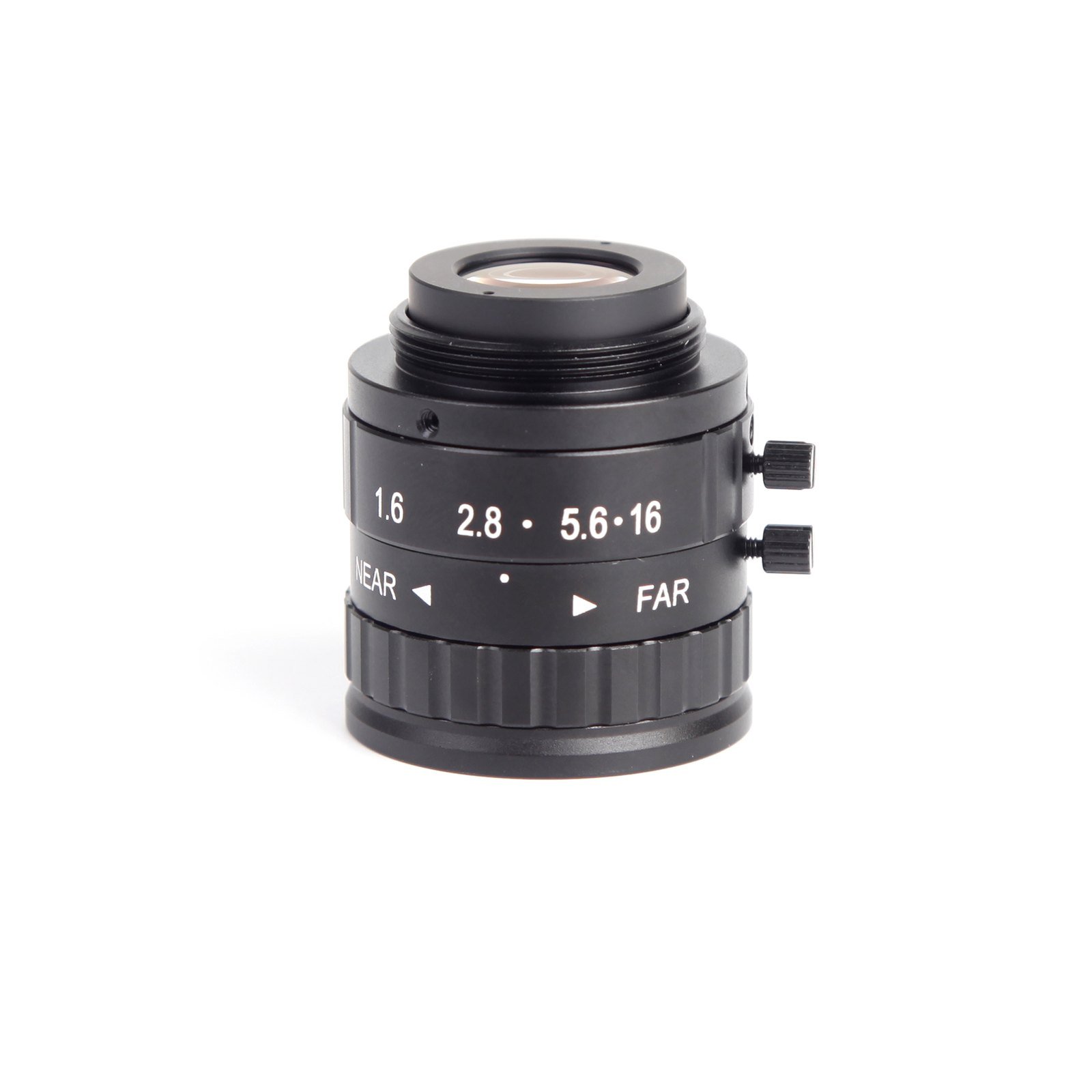
Mount follows the camera, not the shopping cart. Read the camera flange first. Then match image circle to sensor format. A C-mount FA lens that covers 2/3″ will vignette on a 1.1″ chip even if the thread is perfect. The machine vision lens selection guide starts from five inputs — sensor format, working distance, field of view, resolution target, environment — then converts format plus FOV into focal length. Flange is a sixth gate, not a substitute for that math.
| Best for | Not ideal for |
|---|---|
| C-mount FA on 2/3″ to 1.1″ industrial cameras | Board-level cameras that need M12 vibration lock |
| CS camera + 5 mm ring + C-mount FA lens | CS lens on a C-mount industrial body |
| Stations that swap lenses, tubes, or filters | RFQs that only say “C/CS compatible” |
Lensmind’s position is simple. If you are building a gauging or inspection station on a 2/3″ to 1.1″ camera, buy FA C-mount machine vision lenses. Named FA models on the catalog include FA3505W, FA5005W, FA2520W, FA3520W, FA5020W and FA7520W, plus the LMHS-MH series for larger formats. Do not specify CS to “keep options open.” You keep the wrong option open.
M12 (S-mount) is a different decision. It uses M12×0.5 and has no standardized flange. That is the right mount for board cameras under vibration, not a substitute C-mount. Mixing M12 into a C-mount RFQ is a second class of error. The C versus CS error is the one this page exists to stop.
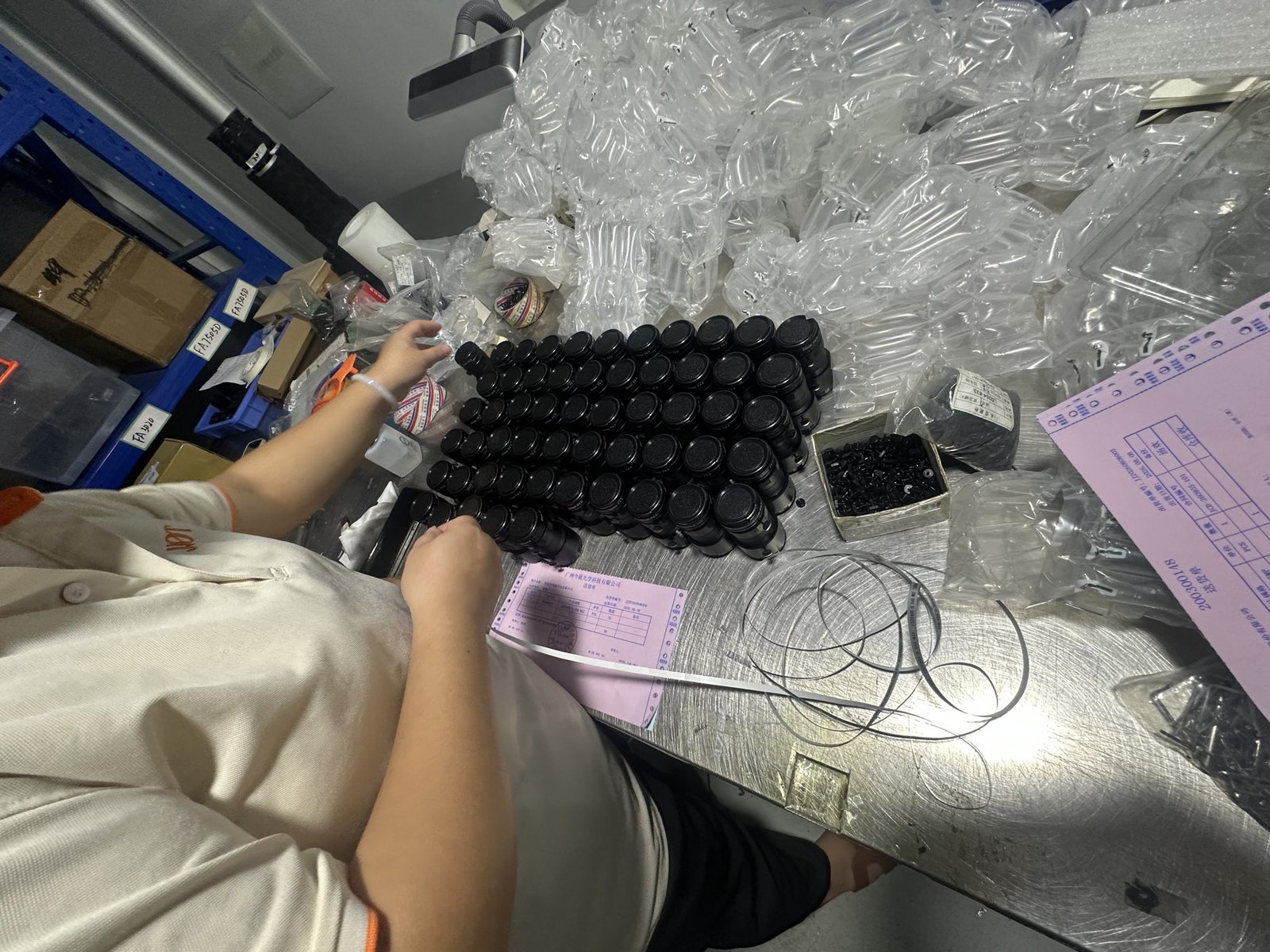
The Hangzhou factory machines, coats, cements and assembles in house. Assembly cells are Class 10,000 (ISO Class 7 equivalent). Units that need it go through closed-loop 1 μm-class active alignment. ISO 9001 certification is from 2024. The company registered in 2019. Those two dates are not the same claim as the founding team’s 26 years of practice.
Before a C-mount FA lot leaves, the checks that actually catch a flange mismatch are mechanical and optical, not a marketing label on the box.
Metrology named on the line includes Trioptics centration / OptiSurf, a laser Fizeau interferometer, reflective centering, a precision air-bearing stage, UV spectrophotometer and collimation systems. BFL on that report is the number that tells you the lens was built to the C-mount register, not a CS barrel relabelled.
Custom RFQ feasibility still returns within 48 hours after NDA if you need it. Standard prototype-to-mass-production commitment is 60 working days. Repeat orders are 30 days. None of those dates fix a CS lens on a C camera. They only matter after the mount is right.

Illustrative station, not a named customer. A 2/3″ C-mount area-scan camera is mounted over a connector pitch gauge. The RFQ said “C/CS lens, 25 mm.” Purchasing received a CS-mount 25 mm because the thread matched the photo on the distributor site. The lens seated fully. At working distance the image stayed soft. Closing the iris hid some of the blur and created a false “maybe it is depth of field” story.
The integrator then ordered a 16 mm, then a 35 mm, then a back-focus shim set. None of those parts change a 12.526 mm register into 17.526 mm. The sensor never sat at the designed image plane. False rejects climbed because edges used for the gauge were not repeatable from part to part.
The fix is one mechanical check. Confirm the camera is C-mount. Fit a C-mount FA 25 mm. If the only lens on the shelf is C-mount and the camera is CS, add the 5 mm ring and stop there. If the camera is C-mount and the lens is CS, scrap that pairing. There is no ring for it.
C-mount and CS-mount share a thread and split a flange. 17.526 mm versus 12.526 mm is the whole argument. The 5 mm ring is a one-way adapter: C-mount lens onto CS-mount camera. For industrial FA on 2/3″ to 1.1″ sensors, specify C-mount and drop “C/CS” from the RFQ line.
Key Takeaways
If you are locking a 2/3″ to 1.1″ industrial camera and you need distortion held below 0.05% with batch paperwork, the FA C-mount catalog is the starting point. Send sensor format, working distance and FOV with the RFQ. First-pass feasibility still comes back within 48 hours. Do not send a CS barrel and hope the 5 mm ring will invent a C-mount camera.
Written by Baker Zhao, Founder at Lensmind Optics. Hangzhou factory in the Lin’an optics cluster; ISO 9001 certified 2024. Company registered 2019.
No. CS-mount flange is 5 mm too short. The lens threads on, then focuses in front of the sensor. No adapter can close that gap.
Yes, with a 5 mm C-to-CS adapter ring. That restores the 17.526 mm register the C-mount lens was designed for.
Yes. Both use 1″-32 UN (25.4 mm diameter). That shared thread is why the wrong lens still installs.
Edmund and Thorlabs publish 12.526 mm. Some catalogs round to 12.5 mm. Both describe the same 5 mm gap versus C-mount 17.526 mm.
Specify C-mount for 2/3″ to 1.1″ FA cameras. CS is for compact CS bodies. Do not write “C/CS compatible” on the RFQ.
No. It only restores flange distance. Image circle and distortion stay properties of the lens, not of the spacer.

Answer the field of view question with the error budget, not with whichever option is easiest to buy. If a catalog lens already produces...
read more…
Settle one question before you touch the CAD template: who moves focus, the camera or the lens. If each of the eight positions must...
read more…
M12 is M12x0.5 with no flange standard. C-mount is 1-32 UN at 17.526 mm. Match the camera body first.
read more…