
Spacer Rings, Varifocal or Custom Focal Length: Choosing and Documenting an Exact FOV
Answer the field of view question with the error budget, not with whichever option is easiest to buy. If a catalog lens already produces...
read more…
The M12 vs C-mount argument usually starts after a line is already down. A board camera on a robot or a vehicle loses focus over a weekend. Someone “upgrades” it to a C-mount FA barrel because the photo looks more industrial. The holder is still an M12x0.5 hole. The new lens never seats. Or the reverse: an M12 barrel is jammed into a C-mount 2/3″ camera with a cheap step ring, and corners go dark on day one.
Key Takeaways
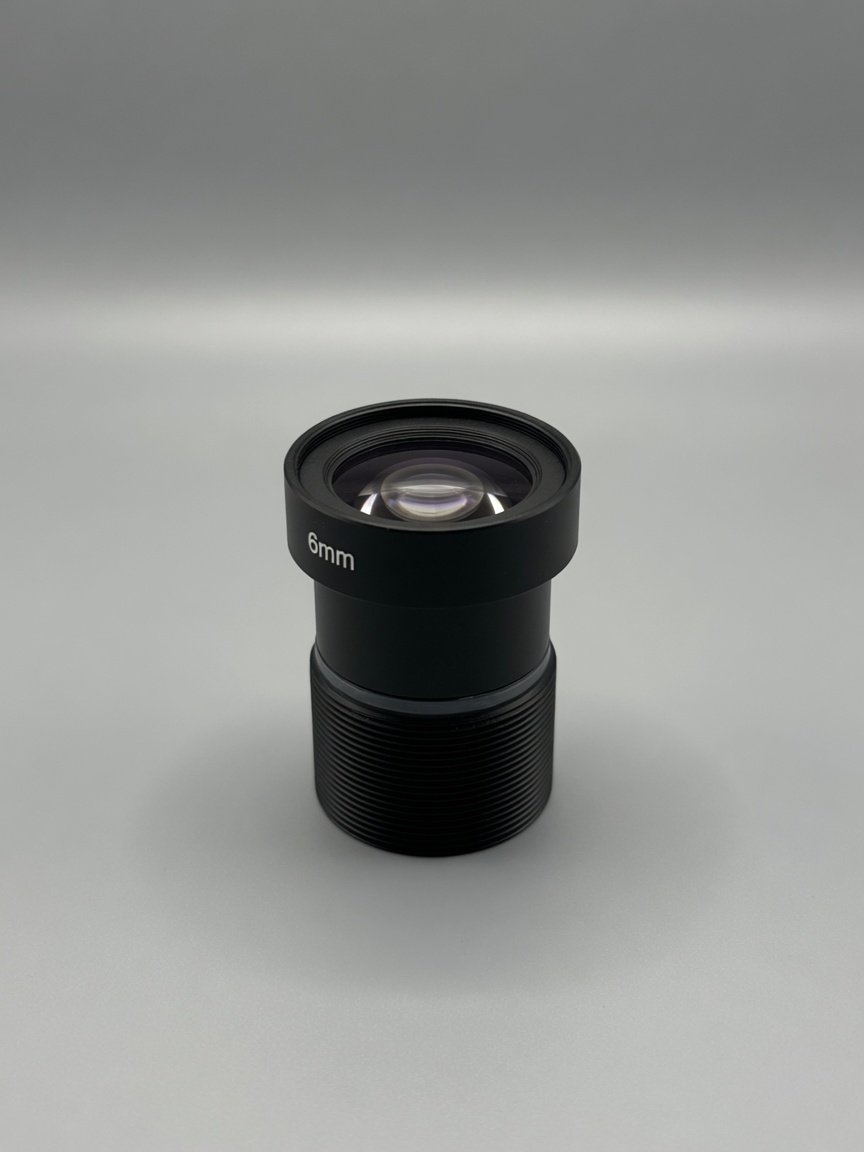
Illustrative station. An M12 board camera reads a 2D code on a robot-mounted reader. Focus was set on the bench with a lock ring that was never tightened. After a week of vibration the thread backed off a fraction of a turn. Decodes dropped. The field tech ordered a C-mount 16 mm because “machine vision lenses are C-mount.” The C-mount barrel does not fit the board holder. Production stayed down while purchasing argued about the PO.
The failure was not resolution. It was mount. Edmund Optics describes S-mount as M12×0.5 with no standardized flange distance. That is the whole design: you screw the lens to focus, then you lock it. If you skip the lock, the line invents its own flange every shift.
A C-mount FA lens is the wrong spare part for an M12 board camera, no matter how sharp the datasheet looks.
Commonlands puts the same split on one table: M12 thread M12×0.5, flange not standardized; C-mount 1″-32 UN, flange 17.526 mm. CS-mount is a third register on the C thread. Do not drag CS into an M12 decision. You are choosing a board mount versus an FA mount.
| Parameter | M12 / S-mount | C-mount |
|---|---|---|
| Thread | M12×0.5 | 1″-32 UN |
| Flange | Not standardized | 17.526 mm |
| Focus | Thread in/out, then lock | Focus ring; flange is fixed |
| Typical camera | Board-level, embedded | 2/3″ to 1.1″ FA bodies |
| Vibration | FT/HT lock required | Lock screws on the ring |
Verdict — M12: Use it when the camera is a board and the holder is M12. Specify focus lock. Do not “upgrade” that station to C-mount without changing the camera.
Verdict — C-mount: Use it when the camera already has a 17.526 mm register and you need FA accessories. Putting an M12 lens on that body through a step ring is how you clip the image circle.
Commonlands notes typical M12 coverage up to 1/1.8″, with selected designs to 2/3″. C-mount FA is built for 2/3″ to 1.1″ on the Lensmind line. That coverage gap is why a step-ringed M12 looks sharp in the centre of a 1.1″ chip and then dies in the corners. Image circle is a prescription, not a thread size.
| Need | M12 | C-mount FA |
|---|---|---|
| Adjustable iris | Rare; usually fixed | Common; lock the ring |
| Front filters / tubes | In-lens or none | Standard C accessories |
| Mass on a robot | Low; intended use | Higher; needs a real C body |
| IR illumination | Specify NIR coating | Specify NIR coating |
Iris is a design choice, not a flange consequence. Most M12 cells are fixed aperture because there is no room for a ring. If your station must stop down after lighting is locked, you are already in C-mount territory. Do not order an M12 and plan to “add an iris later.”

M12 focus is a mechanical travel, not a helicoid hidden in a C-mount barrel. Every fraction of a turn changes working distance. On a still bench that is convenient. On a robot flange, a vehicle, or a vibrating feeder, that same thread is a loosening screw. Lensmind M12 barrels use FT/HT focus lock and anti-vibration hardware so the set position stays put.
If a supplier ships M12 without a lock ring or a thread locker spec, you will reset focus after every transport. That is not a coating problem. It is a missing lock. Ask for the lock method on the RFQ the same way you ask for focal length.
NIR versus VIS is a coating choice on the same mount, not a reason to jump to C-mount. Lensmind M12 families offer NIR/VIS options on the H and M series. Wrong coating kills IR illumination. Wrong mount kills the mechanical stack. Fix them separately.
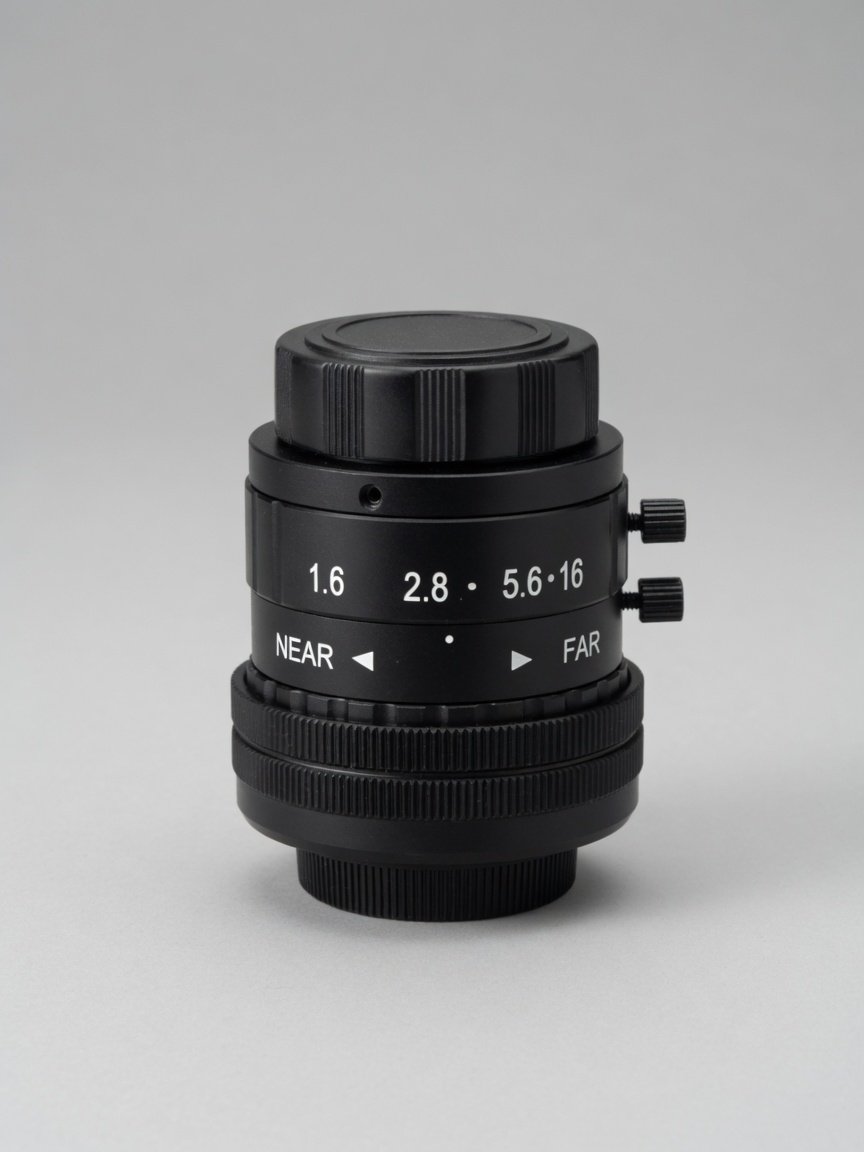
Lensmind’s site rule is the one to follow. Board-level and embedded cameras with vibration → M12 with thread-locked focus. 2/3″ to 1.1″ cameras that need accessory flexibility → C-mount. The machine vision lens selection guide still applies after that: sensor format, working distance, FOV, resolution, environment. Mount is decided by the camera body, not by which datasheet PDF is prettier.
| Best for | Not ideal for |
|---|---|
| M12 on embedded readers, robots, vehicles | M12 forced onto a 1.1″ FA camera |
| C-mount FA on 2/3″ to 1.1″ gauging stations | C-mount FA as a spare for a board holder |
| Stations that must swap filters and tubes | M12 without a documented focus lock |
If the camera is a board, start from M12 lenses in the H05–H16 and M12–M35 families. T045 and T54 sit in the same S-mount world when the drawing calls for those cells. If the camera is a C-mount FA body, stay on the FA catalog. Mixing them through a step ring is how you buy a second lens six weeks later.
CS-mount is not a middle ground between M12 and C. CS still uses 1″-32 UN. It only shortens the C flange from 17.526 mm to 12.526 mm. An M12 holder will not accept CS. A CS camera will not accept M12 without the same dishonest step ring. If someone writes “M12/CS/C compatible” on an RFQ, send it back. Three mounts are three drawings.
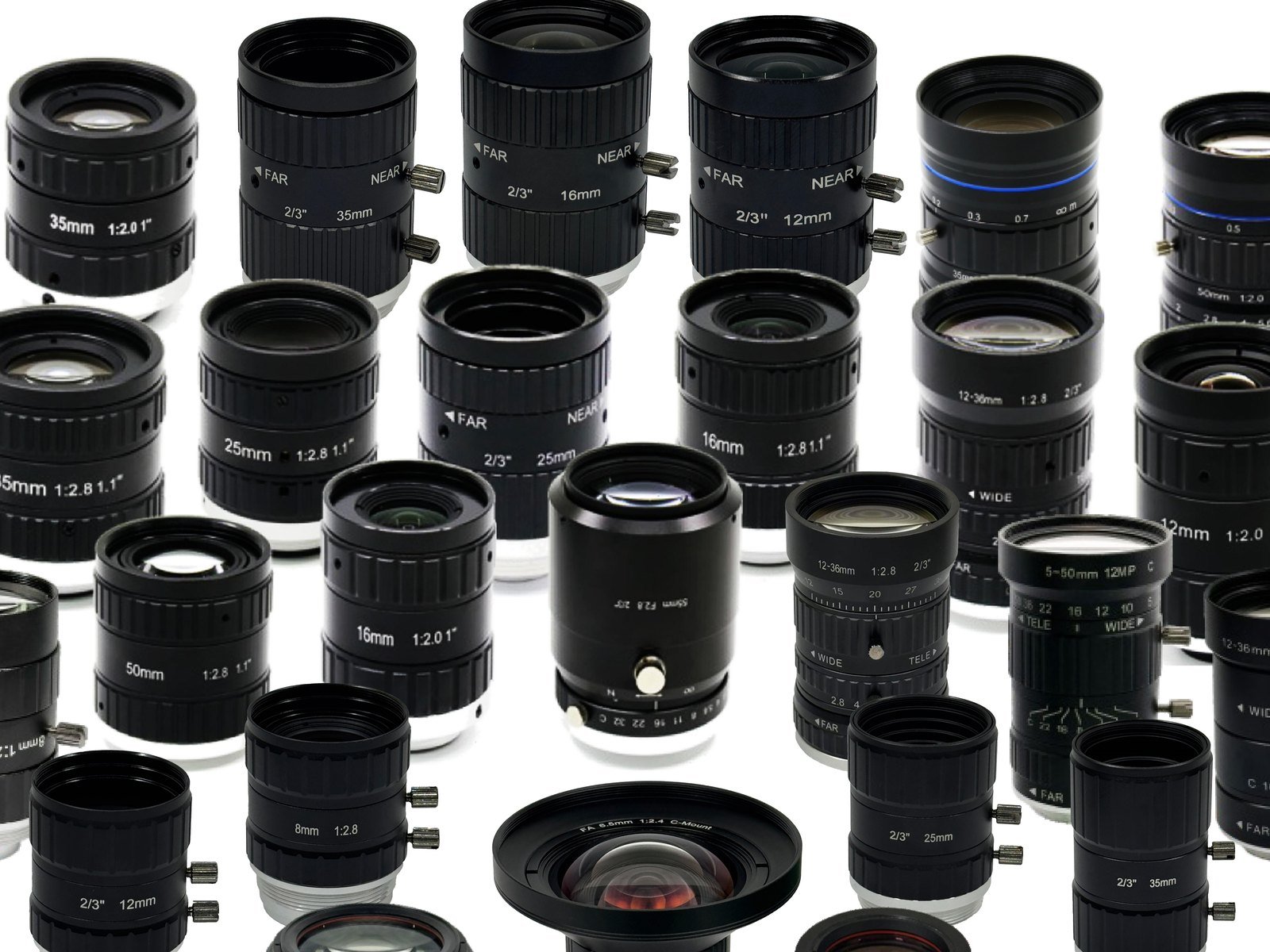
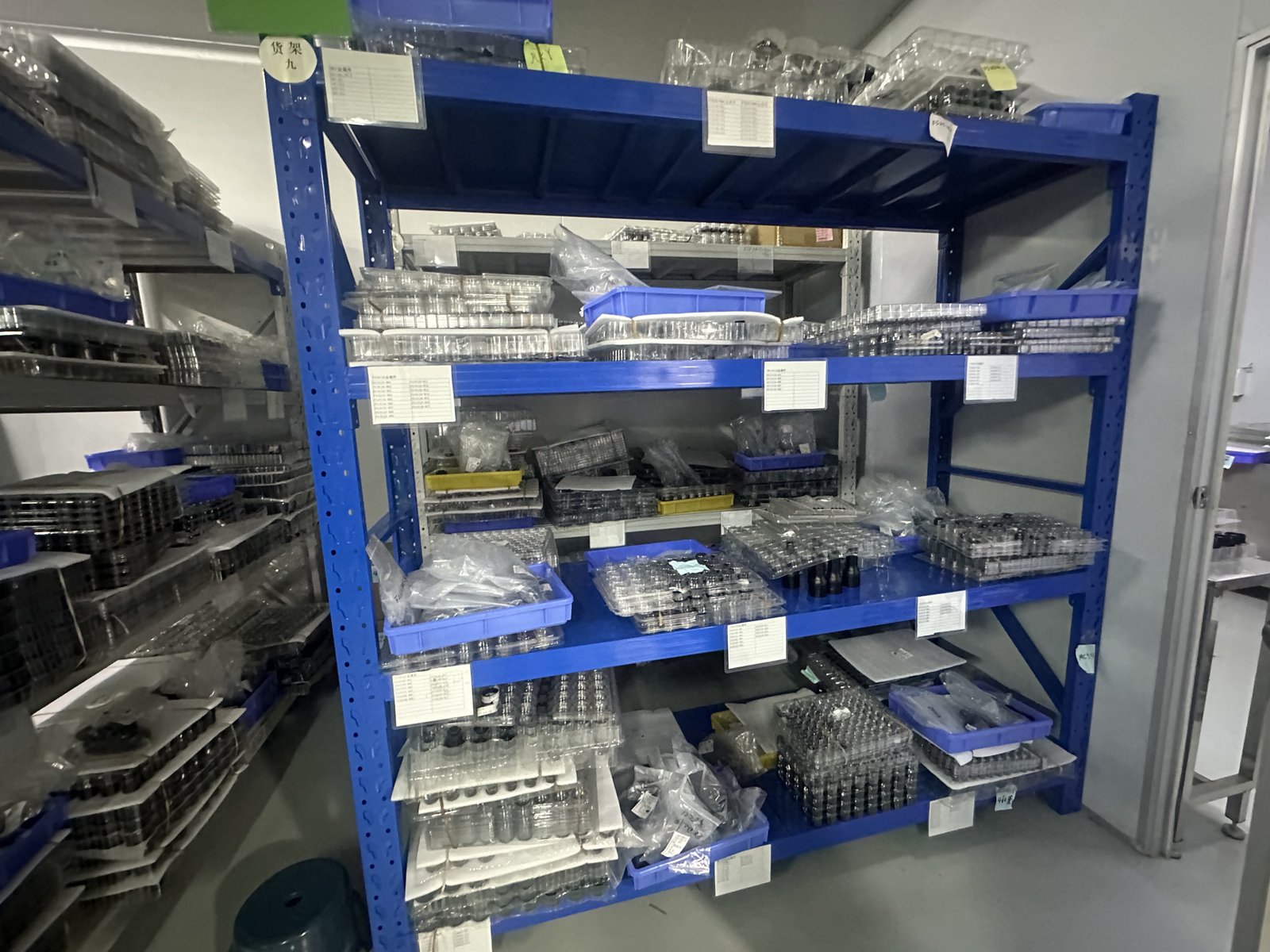
Hangzhou builds both families in the same quality system: machining, coating, cementing, Class 10,000 assembly, 1 μm-class active alignment when the unit needs it. ISO 9001 is from 2024. The check list changes with the thread.
FA distortion is held below 0.05% with 10K+ batch consistency. That number lives on the C-mount FA line. Do not copy it onto an M12 RFQ as if every board lens were a gauging optic. Ask for the M12 MTF at the working frequency you actually use.
S-to-C step adapters exist. They let an M12 barrel sit in a C-mount hole. They do not give you 17.526 mm of designed register, a usable iris, or coverage for a 1.1″ sensor. They also add a stack of extra millimetres that the M12 prescription never planned for. Treat an adapter as a lab hack, not a production BOM line.
The other failure is over-mounting a board camera: specifying a heavy C-mount FA cell, a tube set, and a filter wheel on a 29×29 mm board. The optics can be excellent. The holder, mass, and vibration path are wrong. Keep the camera family and the lens family in the same mechanical world.
Worked pick. A 1/2.5″ board reader on a robot, 300 mm working distance, barcode, vibration: M12, lock specified, NIR only if the illuminator is IR. A 2/3″ C-mount camera on a fixed stand, 50 mm FOV, gauging, distortion below 0.05%: C-mount FA, no adapter, batch report on BFL. Those two RFQs should never share a lens line item.
M12 and C-mount are not sizes of the same product. One is a lockable thread with no flange standard. The other is a 17.526 mm industrial register. Match the lens to the camera body first. Then run format, FOV and working distance.
Key Takeaways
If the camera is a board under vibration, send the holder photo, sensor format and working distance with the RFQ and stay on M12. First-pass feasibility still returns within 48 hours. If the camera is already C-mount, do not raid the M12 bin to save a few millimetres of length.
Written by Baker Zhao, Founder at Lensmind Optics. Hangzhou factory in the Lin’an optics cluster; ISO 9001 certified 2024. Company registered 2019.
No. M12 is M12×0.5 with no fixed flange. C-mount is 1″-32 UN at 17.526 mm. They are different mechanical standards.
No. S-mount / M12 has no standardized flange. You thread to focus, then lock the barrel so vibration cannot walk it.
Choose M12 for board-level and embedded cameras, especially under vibration, with FT/HT or equivalent focus lock specified.
A step ring changes the thread only. It does not create a 17.526 mm register or cover a 1.1″ FA sensor. Use it in the lab, not in the BOM.
It is Lensmind’s thread-lock hardware on M12 barrels so focus cannot back off under vibration. Specify it on any moving or vehicle-mounted reader.

Answer the field of view question with the error budget, not with whichever option is easiest to buy. If a catalog lens already produces...
read more…
Settle one question before you touch the CAD template: who moves focus, the camera or the lens. If each of the eight positions must...
read more…
C-mount is 17.526 mm. CS-mount is 12.526 mm. Same 1-32 UN thread. The 5 mm ring is one-way.
read more…