LED Flicker After Power Supply Swap: Lighting Specs That Match Camera Exposure
LED flicker after a power supply swap is an electrical-to-exposure matching miss. Lock lighting electrical specs to the camera exposure plan before the next...
read more…
The RFQ said “telecentric lens, bi if possible.” That is not a specification. An object space telecentric lens freezes magnification against object depth. Image-space telecentricity freezes the bundle against sensor-plane error. Bi-telecentric does both and costs length. If you do not name the pupil, Hangzhou will have to guess — and the guess will be priced as bi-telecentric more often than you like.
Key Takeaways
If last week’s quote came back 2× because someone typed “bi-telecentric” as a synonym for “good,” this page is the audit checklist to send back with the revision.
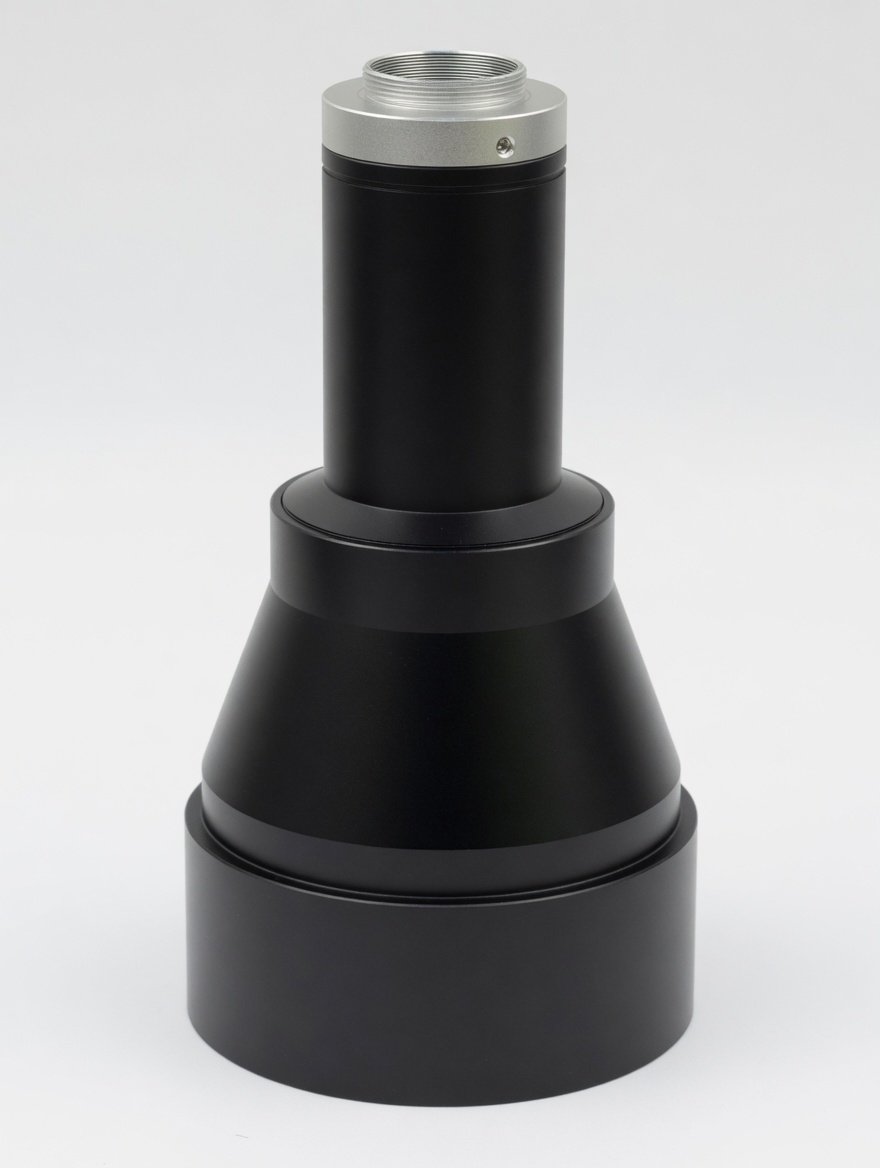
Edmund Optics’ telecentric design note is the sentence to paste into the RFQ template: when a machine vision lens is simply called telecentric, it is most likely object-space telecentric. Object-space puts the entrance pupil at infinity. Image-space puts the exit pupil at infinity. Doubly (bi-) telecentric does both. Three different drawings. One word on a purchase order is how you buy the long one.
Write: object-space / image-space / bi-telecentric, magnification, working distance, sensor format, coaxial or not. Then distortion method (geometric vs TV) and whether Z actually walks. That is an RFQ. “Telecentric, high-end” is not.
If you cannot name which pupil is at infinity, you are not ready to buy the barrel.
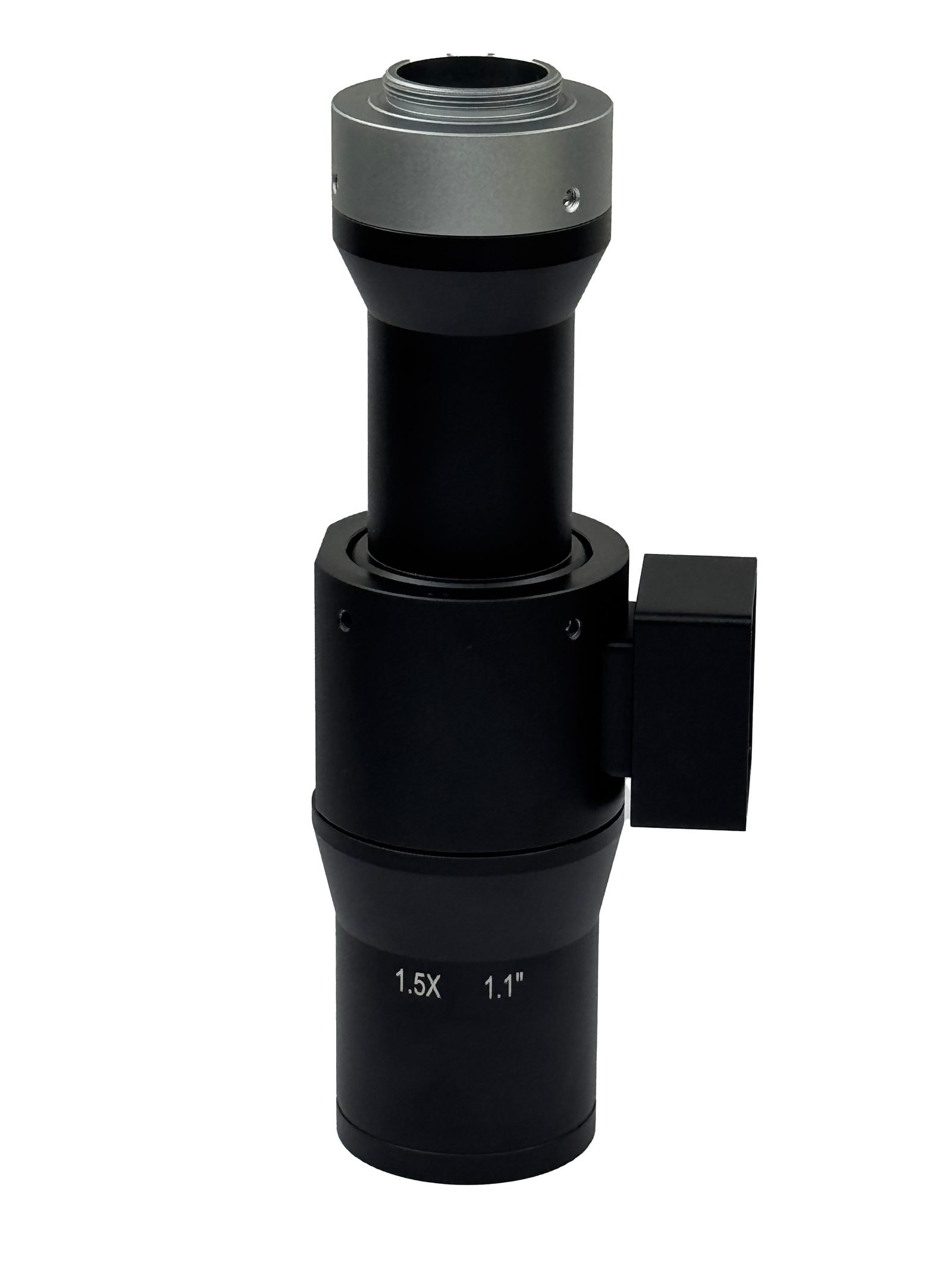
Object-space is the industrial default. The aperture stop sits at the front focal plane so chief rays in object space run parallel to the axis. A part that sits 8 mm closer does not grow in the image. Side walls of a thick bushing do not show the far rim smaller than the near rim. Opto Engineering’s tutorial and Sill Optics both rest the case on constant magnification versus depth — not on “sharper than FA.”
Use object-space when the gauge prints a millimetre and the nest is not perfect in Z, or the object is thick. Do not use it to decorate a 2D presence station. Lensmind TL (non-coaxial) and TC (coaxial) object-space families cover that job across 0.14X to 6X on C-mount.
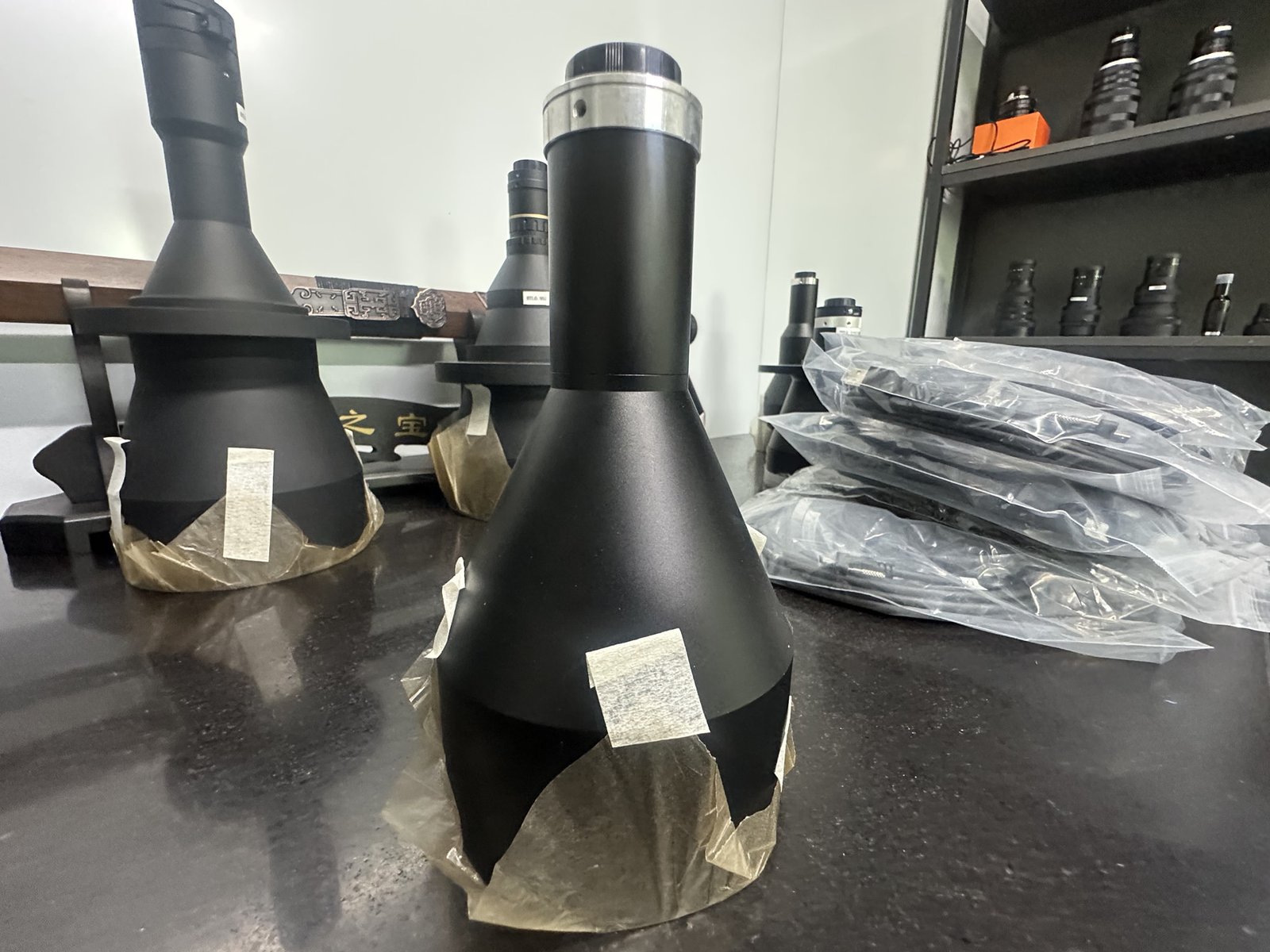
Image-space telecentricity is the less-quoted twin. Edmund: magnification does not change with sensor-plane placement the way it does on a non-image-telecentric optic, and cos⁴θ roll-off is tamed because the exit pupil is at infinity. You care when the camera’s back-focus is sloppy, the sensor is large, or illumination uniformity on the detector is in the error budget. You do not care when the body is a well-made 17.526 mm C-mount and the object-side error is the one that prints on the SPC chart.
Buying image-space alone for a conveyor gauge is the wrong pupil. The part is moving in object space. Put the entrance pupil at infinity first.
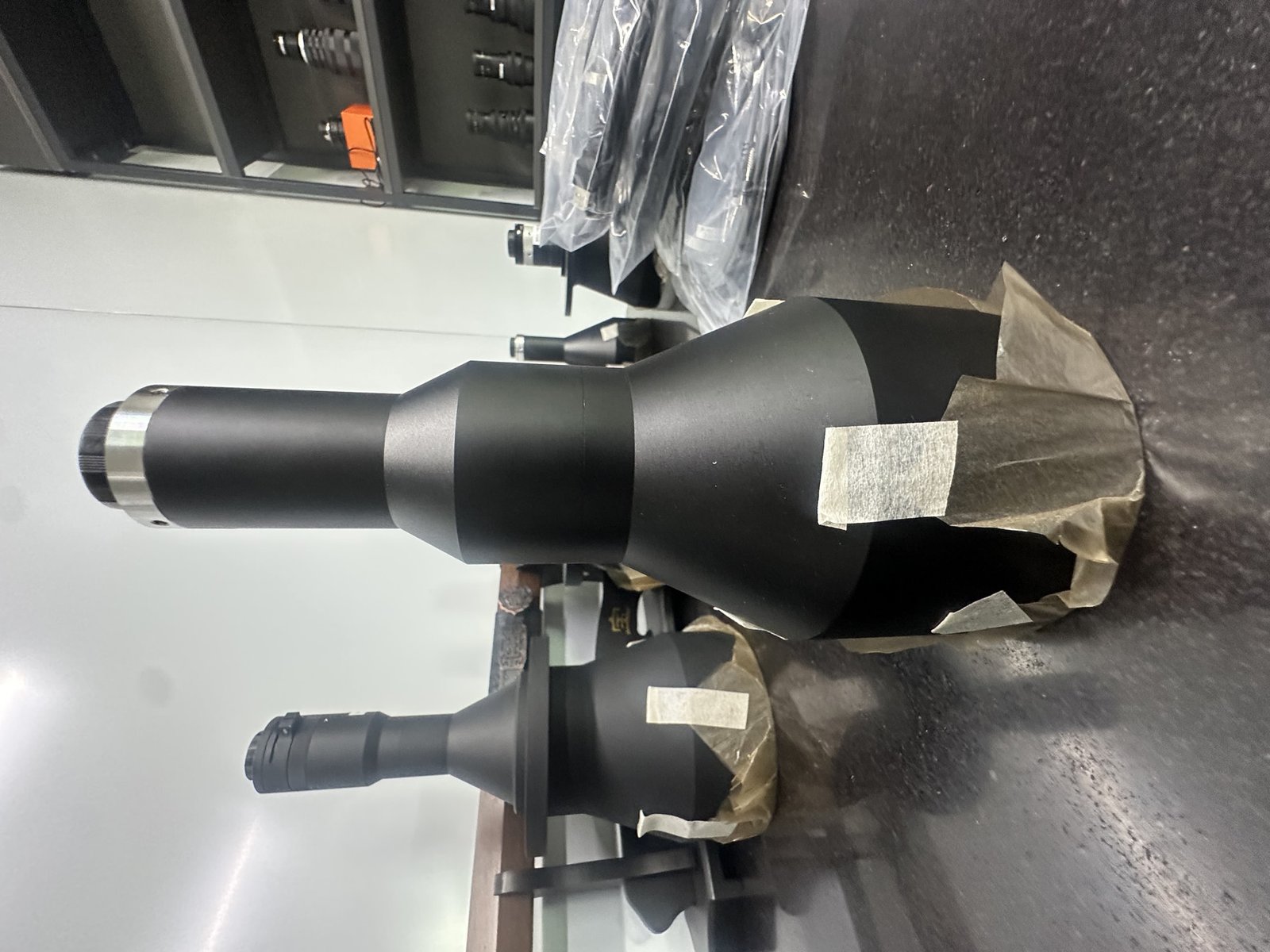
Thorlabs’ telecentric tutorial states the bi-telecentric case without poetry: neither object nor image location changes magnification. Opto Engineering’s bi-telecentric note adds contrast on thick objects and even detector fill. The barrel is longer. The price is higher. It is the right upgrade when the object is thick enough that image-side slope eats the far plane, or when you cannot trust the camera shim. It is the wrong default.
Lensmind BT cards exist so the quote can say bi-telecentric coaxial or bi-telecentric non-coaxial instead of “the expensive one.” Example: LMJJ-BTC0.3X110N23 is 0.3X, WD 110 mm, 2/3", bi-telecentric coaxial. The letters are the pupil and the light port. Read them.
| Family | Pupil at infinity | Buy it when |
|---|---|---|
| Object-space (TL/TC) | Entrance | Z walks or the part is thick — most gauges |
| Image-space | Exit | Sensor-plane error / even detector fill |
| Bi-telecentric (BT) | Both | Thick object + camera shim in the budget |

TC vs TL is the illumination port in the barrel. Specular bores, engraved marks, and recessed features often need coaxial light. A backlight or ring wants non-coaxial. Mixing “coaxial” with “bi-telecentric” as if they were one upgrade is how an RFQ grows two line items by accident. Pick the pupil (object / image / bi). Then pick the port (coax / non-coax).
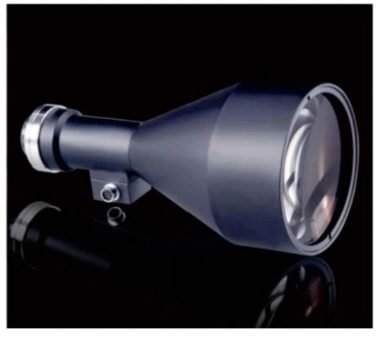
The object-side, image-side and bi-telecentric catalog splits 52 LMJJ models (0.14X to 6X) plus twelve YT liquid-focus models (0.23X to 4X, about 20 ms). C-mount register 17.526 mm. Distortion on cards such as LMJJ-TL0.23X200N1.1 is below 0.05% at 0.23X, WD 200 mm, 1.1". Batch reports cover MTF, distortion, BFL, DOF. 1 μm-class alignment on stacks that need it. Custom 60 working days.
If Z is locked and you only needed low distortion, stay on FA C-mount lenses at the FA-line 0.05% / 10K+ discipline. The machine vision lens selection guide still converts sensor and FOV before anyone types “bi.”

Illustrative inbox. A 2/3" C-mount camera, 40 mm field, nest repeatable to 0.1 mm, part thickness 2 mm, backlight. The buyer wrote “bi-telecentric if possible.” Object-space TL at ~0.3X / 110 mm WD class covers constant mag for 2 mm thickness. Bi-telecentric adds length the enclosure does not have. The audit reply is object-space non-coaxial, not BT, and a request to delete “if possible.” If thickness were 25 mm and the camera shim unknown, BT would be the letter that belongs on the PO.
What we check before a telecentric ships: magnification at stated WD, geometric distortion, BFL at 17.526 mm, MTF, telecentricity residual on units that claim it. Hangzhou, ISO 9001 (2024), reports default. Company registered 2019.
Object-space, image-space and bi-telecentric are three pupil layouts. Most gauges need the first. Bi-telecentric is the thick-part and shim-risk upgrade. Coaxial is lighting. FA at <0.05% distortion remains the path when Z does not walk.
Key takeaways
Revise the RFQ with those five fields. You will get a TL, TC or BT SKU, or an FA recommendation if constant mag is not in the error budget. “Bi if possible” will be sent back as a question, not as a default line item.
Written by Baker Zhao, Founder at Lensmind Optics
Hangzhou telecentric line. ISO 9001 (2024). Registered 2019.
A lens whose entrance pupil is at infinity, so chief rays in object space are parallel to the axis and magnification does not change with object depth.
The exit pupil is at infinity. Magnification is less sensitive to sensor-plane position, and detector illumination is more even.
When the object is thick enough that image-side slope hurts, or sensor-plane error must not change mag. Otherwise object-space is the default.
No. Coaxial is an illumination port in the barrel. Bi-telecentric is both pupils at infinity. They combine as separate choices (e.g. BTC).
52 LMJJ models from 0.14X to 6X, plus 12 YT liquid-focus models from 0.23X to 4X.

LED flicker after a power supply swap is an electrical-to-exposure matching miss. Lock lighting electrical specs to the camera exposure plan before the next...
read more…
A telecentricity bench proof pack is the acceptance file that turns a datasheet telecentric claim into measured magnification-versus-object-distance curves and written reject limits before...
read more…
An illumination pupil pack is the optical data set that tells a lighting designer where the lens aperture stop and entrance pupil sit before...
read more…