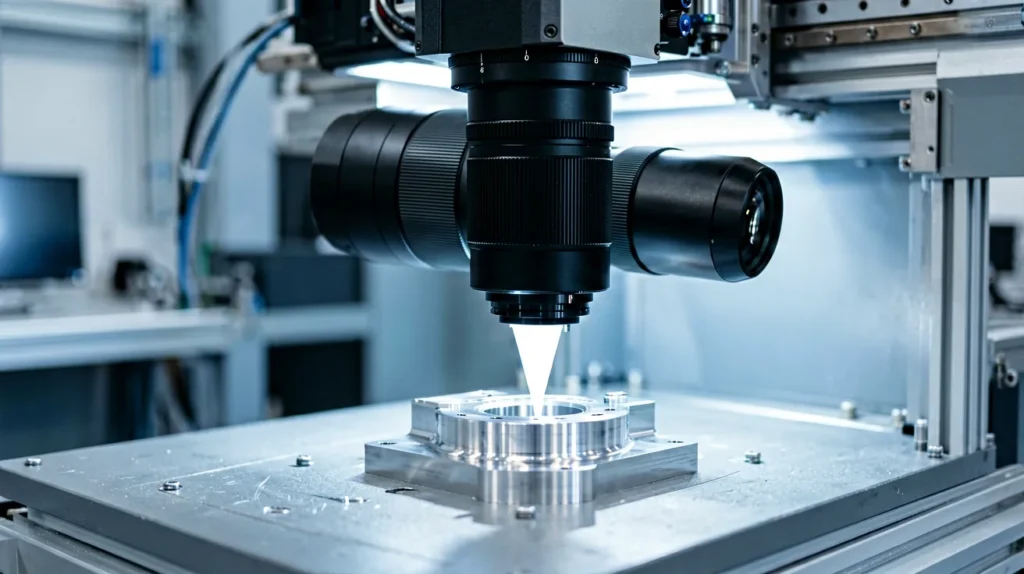
Most RFQs that ask what is a telecentric lens already assume the answer is “the sharp one.” That is the wrong test. Telecentricity is a pupil location, not a resolution grade. If the entrance pupil sits at infinity, chief rays in object space run parallel to the optical axis, so a part that sits 8 mm closer on a conveyor does not grow in the image. An FA C-mount lens can be sharper on-axis and still fail that job.
Key Takeaways
- A telecentric lens keeps magnification constant with object depth because the entrance pupil is at infinity — not because the glass is “premium.”
- Buy one when a measured dimension must not change with height, or when a thick object must not show perspective on its side walls.
- Skip it for 2D presence, OCR, and many gauging jobs an FA lens can hold: Lensmind’s FA line keeps distortion below 0.05% with 10K+ batch consistency.
- Object-space, image-space, and bi-telecentric are three different pupil layouts. “Telecentric” on a datasheet usually means object-space only.
- Lensmind’s LMJJ catalog covers 52 standard models from 0.14X to 6X (coaxial, non-coaxial, bi-telecentric), plus a 12-model YT series with about 20 ms electrowetting focus.
- Ask for the batch report: MTF, distortion, BFL and DOF ship as default, not as a paid extra. Custom builds run 60 working days from approved prototype.
If the drawing you sent last week listed “telecentric, high resolution, low distortion” as one bullet, the factory will quote the expensive family. Read the rest of this page before you lock that line. The decision is optical geometry, then money.
What a Telecentric Lens Actually Is
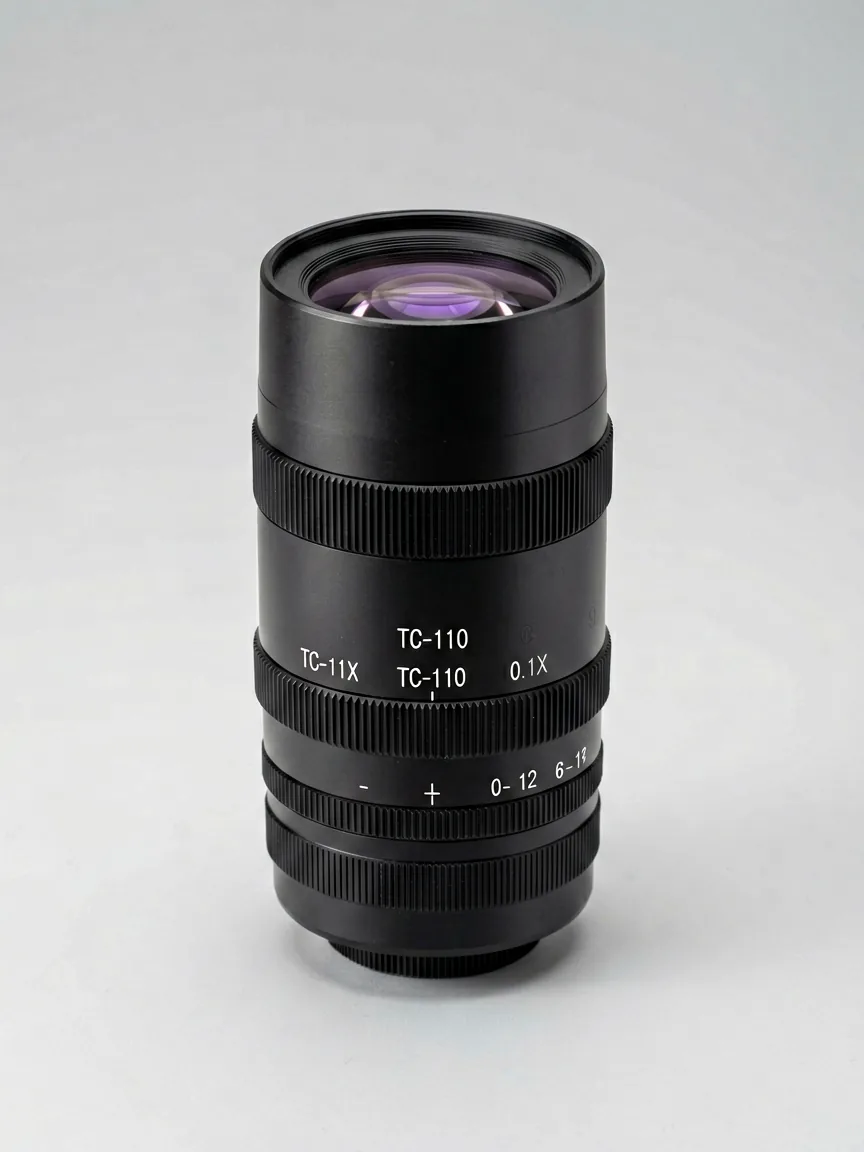
In object space, a telecentric optic places the entrance pupil at infinity. The aperture stop sits at the front focal plane, so the chief ray of every field bundle is parallel to the mechanical axis before it enters the glass. Field of view is a cylinder, not a cone. That is the whole definition. Sharpness, coating, and distortion are separate specifications that can be good or poor on either a telecentric or an entocentric (ordinary) lens.
Edmund Optics states the same geometry: when a machine vision lens is called telecentric with no qualifier, it is almost always object-space telecentric. Image-space telecentricity is a different pupil (the exit pupil at infinity). Bi-telecentric, or doubly telecentric, does both. Mixing those three words on an RFQ is how you buy a barrel you cannot mount, or a price you did not need.
Telecentric means the pupil is at infinity. It does not mean “our sharpest catalog SKU.”
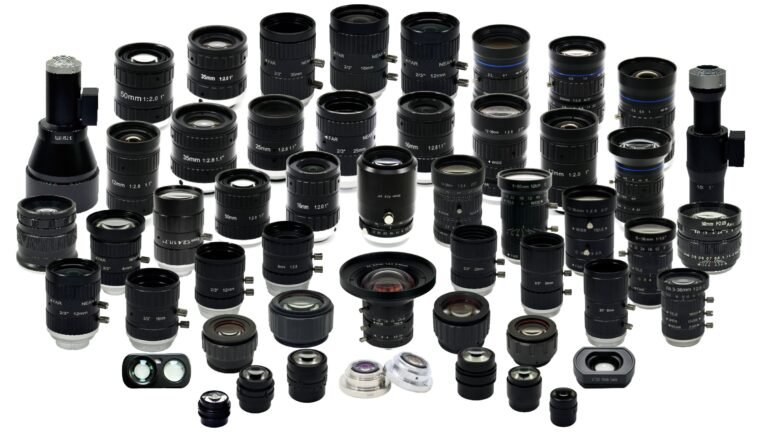
Lensmind builds the three families the site already names: object-side, image-side, and bi-telecentric, in coaxial and non-coaxial barrels. The LMJJ measurement line runs 52 standard models from 0.14X to 6X on C-mount. The YT line adds twelve models from 0.23X to 4X with an integrated electrowetting cell that shifts focus in about 20 ms. None of those numbers make a lens telecentric. The stop location does.
What the definition rules out
A long working distance is not telecentricity. A 75 mm FA macro with a tight distortion spec is not telecentricity. A collimated backlight is not telecentricity — it helps a telecentric system, but the lens still has to reject off-axis chief rays. If a supplier’s “telecentric” datasheet never states magnification, working distance, and a telecentricity angle (or an equivalent pupil spec), treat the label as marketing until a drawing arrives.
Why Magnification Walks on Ordinary Lenses
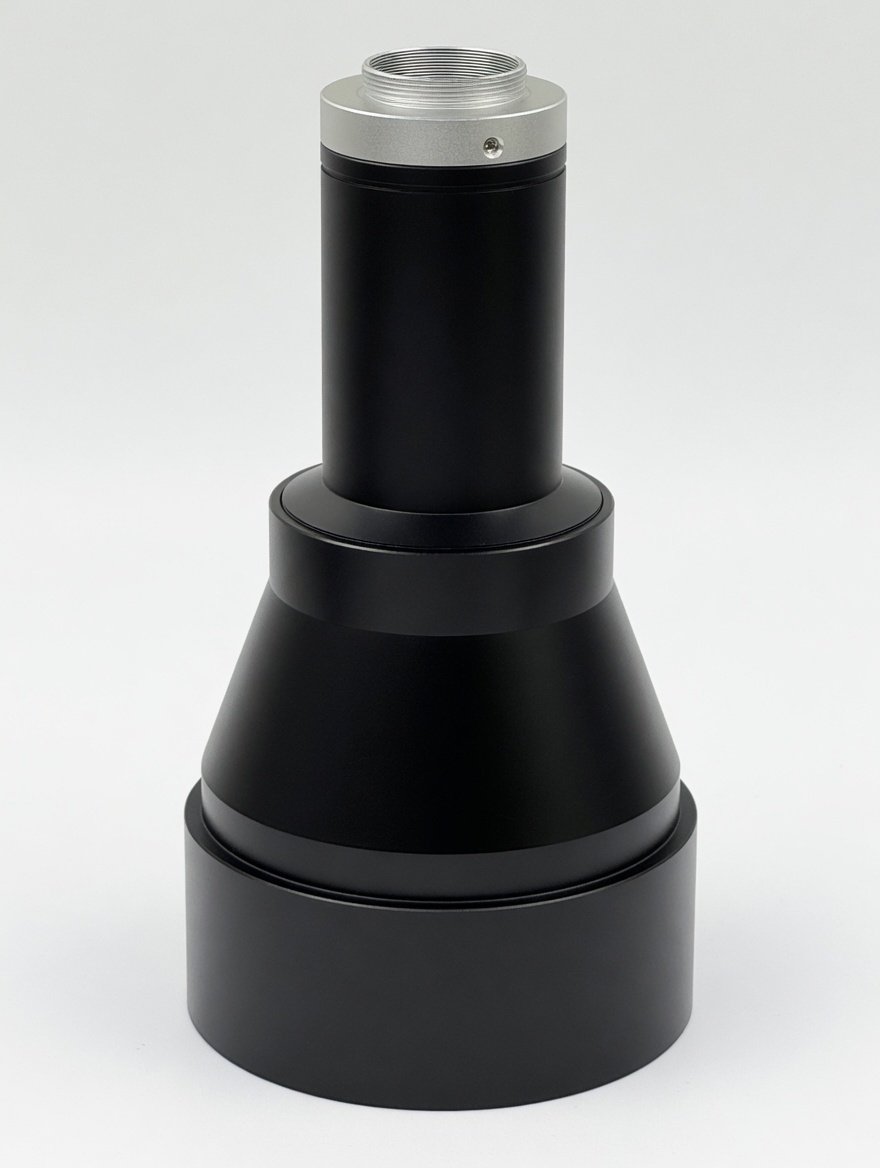
An ordinary (entocentric) lens has an angular field of view. Move the part toward the camera and it occupies more of the sensor. Move it away and it shrinks. On a 2D presence check you barely notice. On a diameter gauge you notice as a false reject, then as a heated argument about which station is “out of calibration.”
Opto Engineering’s telecentric tutorial puts the failure in one picture: two identical screws, one 10 mm closer to the lens. The conventional optic reports two sizes. The telecentric optic reports one. Sill Optics states the same rule in metrology language: magnification stays constant for the complete depth of field. That is the reason to pay for the long barrel — not “better glass.”
Perspective error is the sibling problem. A thick bushing imaged with an entocentric lens shows the far rim smaller than the near rim. Software can try to undo that. It cannot undo a chief-ray angle that changes with every millimetre of height. If the print calls a side-wall width, or a chamfer that sits 12 mm below the top face, object-space telecentricity is the optical fix. Calibration in software is the apology.
Where the error actually comes from
- Fixture float: a pallet that is not repeatable to a few tenths of a millimetre in Z.
- Part family mix: two heights on one recipe, one camera, one fixed focus.
- Thickness: a feature that is not in the same plane as the datum you focused on.
If none of those three exist, you are shopping the wrong family. Use the machine vision lens selection guide to convert sensor format, working distance and field of view into a focal length first, then decide whether constant magnification is even on the list.
Object-Space, Image-Space, and Bi-Telecentric
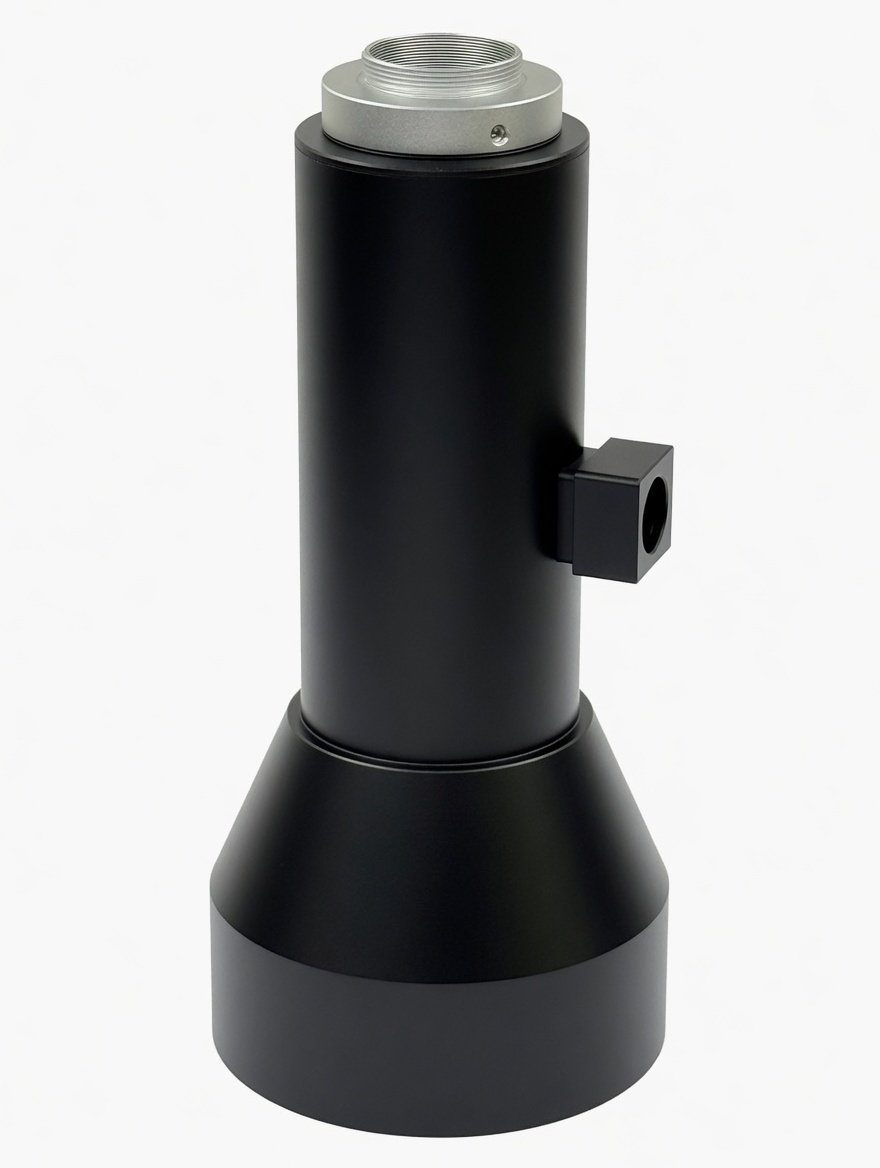
Auditors should force the RFQ to name the space. Object-space telecentricity freezes magnification against object depth. Image-space telecentricity freezes the ray bundle against small errors in sensor position and evens illumination on the detector. Bi-telecentric does both: entrance and exit pupils at infinity. Thorlabs’ telecentric tutorial is explicit — in a bi-telecentric design neither object location nor image location changes magnification inside the designed depth.
That last family is longer and costs more. It is the right buy when the gauge must stay honest if the camera shim is imperfect, or when the object is thick enough that image-side ray slope would eat contrast at the far plane. It is the wrong buy when a well-fixtured 2D outline is measured at one height. Lensmind’s catalog splits coaxial (TC), non-coaxial (TL) and bi-telecentric (BT) so the quote names the pupil, not a vibe.
| Family | Pupil | What stays constant | Typical use |
|---|---|---|---|
| Object-space (TL / TC) | Entrance at infinity | Magnification vs object depth | Most industrial gauges |
| Image-space | Exit at infinity | Mag vs sensor plane; even detector fill | Tight back-focus, large sensors |
| Bi-telecentric (BT) | Both pupils at infinity | Object and image shifts | Thick parts, highest metrology |
Coaxial is not a fourth pupil. It is an illumination port in the barrel for specular or recessed features. Non-coaxial wants an external backlight or ring. Pick the pupil first, the light port second. A coaxial bi-telecentric lens is two decisions, two line items.
When You Should Not Buy One
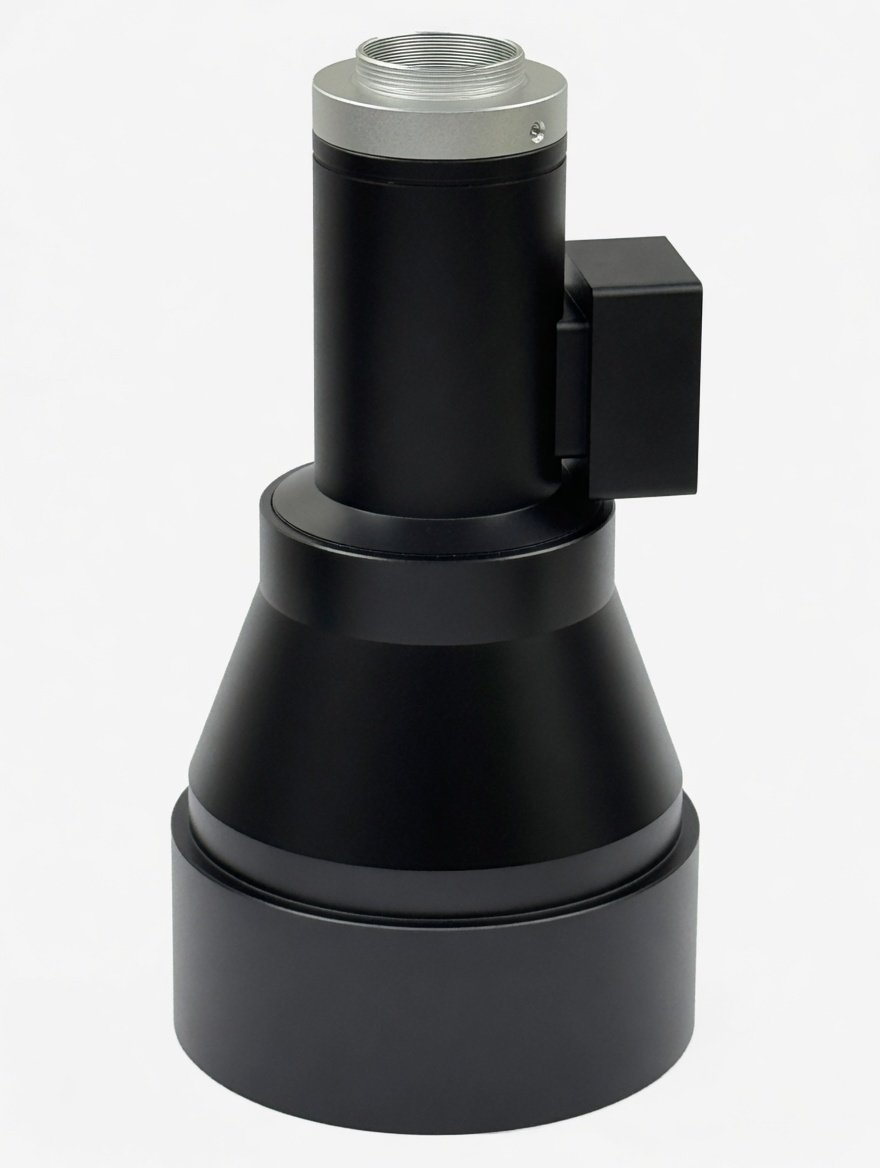
The honest audit is short. If the dimension you care about does not change when the part moves a few millimetres in Z, a telecentric barrel is wasted length, wasted working distance, and a slower RFQ. Lensmind’s FA C-mount line already holds series distortion below 0.05% with 10K+ batch consistency on 2/3" to 1.1" formats. That is enough for a large class of 2D inspections that get mis-labeled “metrology.”
| Best for | Not ideal for |
|---|---|
| Outer diameter, width, pitch on parts whose height varies | Presence/absence, barcode, OCR on a flat web |
| Thick objects that must not show side-wall perspective | Wide fields that a single telecentric FOV cannot cover |
| Gauges that share one camera across a height family | Tight envelopes where the long barrel will not fit |
A second trap: using telecentricity to hide a bad fixture. If Z-repeatability is 3 mm because the nest is worn, fix the nest. The lens will still need a designed working distance. It will not invent mechanical discipline. The third trap is buying bi-telecentric because the word sounds stricter. Object-space is the default industrial answer; bi-telecentric is the upgrade when image-side slope is in the error budget.
If the station is 2D defect detection on a board or a label, start with FA C-mount machine vision lenses. Save the telecentric RFQ for the gauge that prints a number your customer will dispute.
How to Specify Magnification and Working Distance
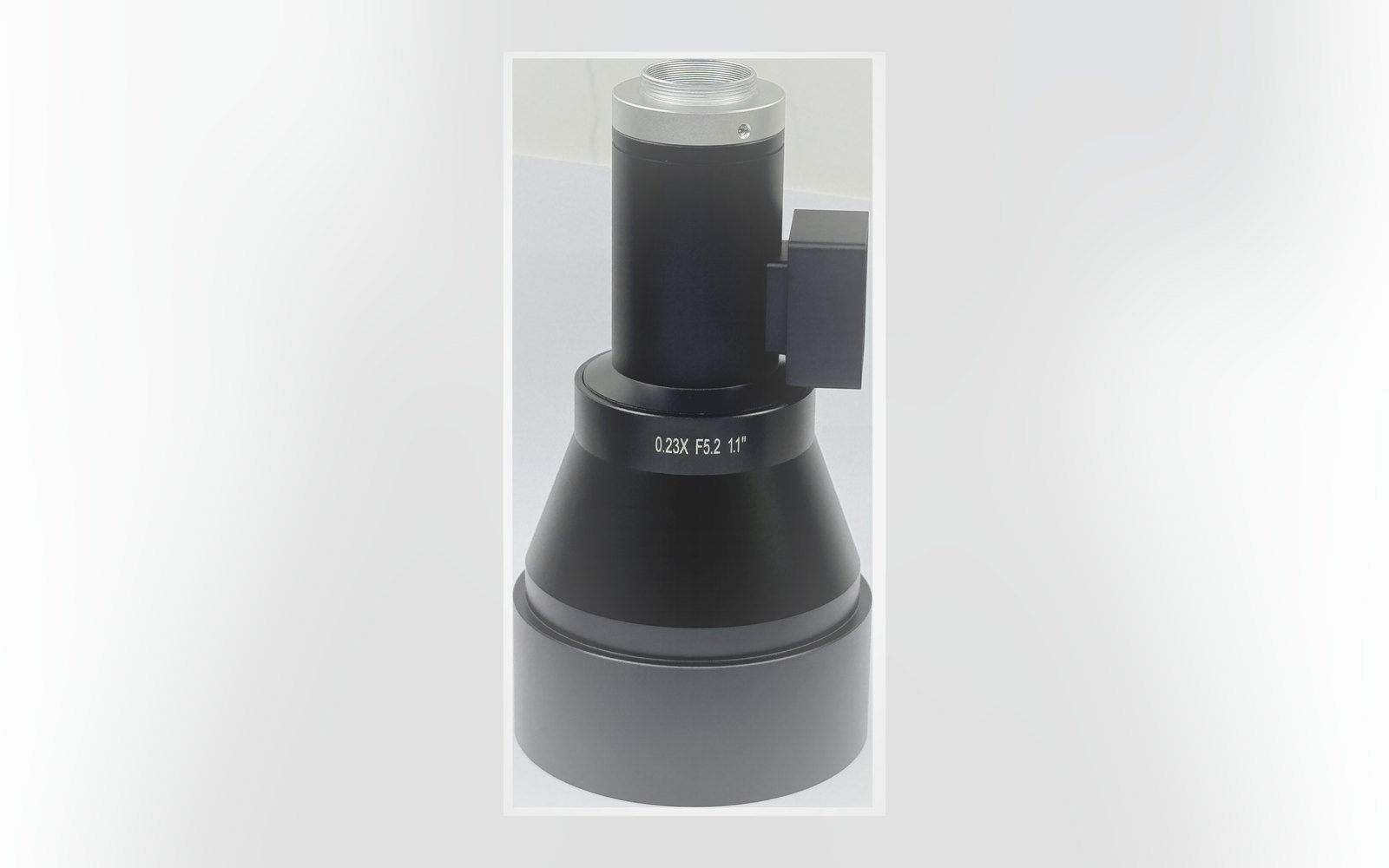
Telecentric catalogs are not focal-length catalogs. They are magnification × working distance × image-circle catalogs. Magnification is sensor-active-width divided by object-field-width (or the matching height pair). A 1.1" sensor looking at a 50 mm object field is not a 25 mm FA lens with a prayer. It is a 0.23X-class object-space optic if the numbers land there.
Worked from a live Lensmind card: LMJJ-TL0.23X200N1.1 is 0.23X, non-coaxial, working distance 200 mm, for 1.1" cameras, with distortion held below 0.05% on that datasheet. The name is the spec. YT models add the liquid-focus suffix when Z-stacking or mixed heights need a 20 ms focus shift on top of constant magnification. Do not order “a 200 mm telecentric.” Order the magnification that matches the field, then the working distance that matches the nest.
| Input | What it sets | If you omit it |
|---|---|---|
| Sensor format / image circle | Which N1.1 / N23 class | Corners vignette or you overbuy coverage |
| Object field (FOV) | Magnification | The quote is a guess |
| Working distance | Which WD family (65 / 110 / 200 mm…) | The nest will not close |
| Distortion / telecentricity budget | Object-space vs bi-telecentric | You pay for the wrong pupil |
C-mount flange focal distance is 17.526 mm on this factory’s FA and telecentric C-mount hardware — the same number Edmund Optics lists for C-mount. That does not make a CS camera compatible without the 5 mm ring. Mount is a fifth input, not a footnote. The object-side, image-side and bi-telecentric catalog is where those five inputs become a model number instead of a paragraph.
What a Factory Checks Before Shipment
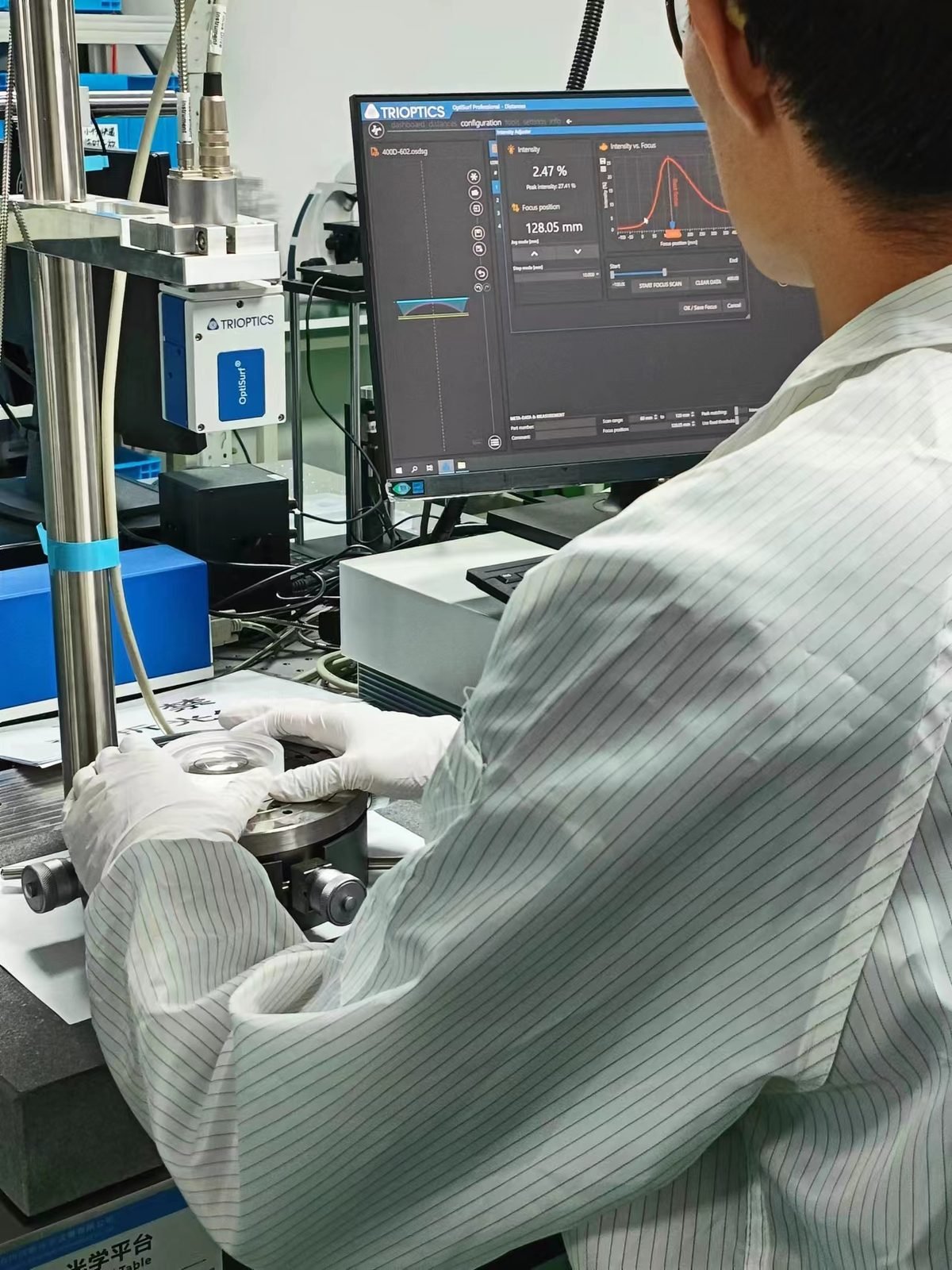
A telecentric drawing that never meets a metrology bench is a brochure. Hangzhou assembly for these barrels runs machining, coating, cementing, Class 10,000 (ISO Class 7 equivalent) cells, 1 μm-class active alignment where the stack demands it, and final test. Named instruments on the quality page include Trioptics centration / OptiSurf, a laser Fizeau interferometer, reflective centering, a precision air-bearing stage, a UV spectrophotometer, and collimation systems. The report is not a favor. Every production batch ships with the agreed family parameters — typically MTF, distortion, BFL, DOF — plus batch number, test conditions, inspection coverage and a pass/fail line.
What we check before a telecentric ships, in the order an auditor can walk:
- Magnification at the stated WD: not a design-file export.
- Distortion against a calibration target: grid deviation, not a single corner number taken on trust.
- BFL under the collimation reference: so your C-mount 17.526 mm camera actually focuses.
- MTF at the working frequency and field heights you named: measured curves, not Zemax screenshots.
- Telecentricity / perspective residual on the units that claim it.
ISO 9001 (certified 2024) is the quality system. It is not ISO 13485, IATF, CE or FDA — those badges are not claimed here. Company registration is 2019; the founding team’s 26 years of optics practice is not the company’s age. Custom work from approved prototype to mass production is 60 working days. Repeats are 30 days. First-pass RFQ feasibility is 48 hours. NDA before drawings move. If a supplier cannot name the bench, do not argue MTF percentages in email.
Worked Station: A Stepped Shaft on a Conveyor
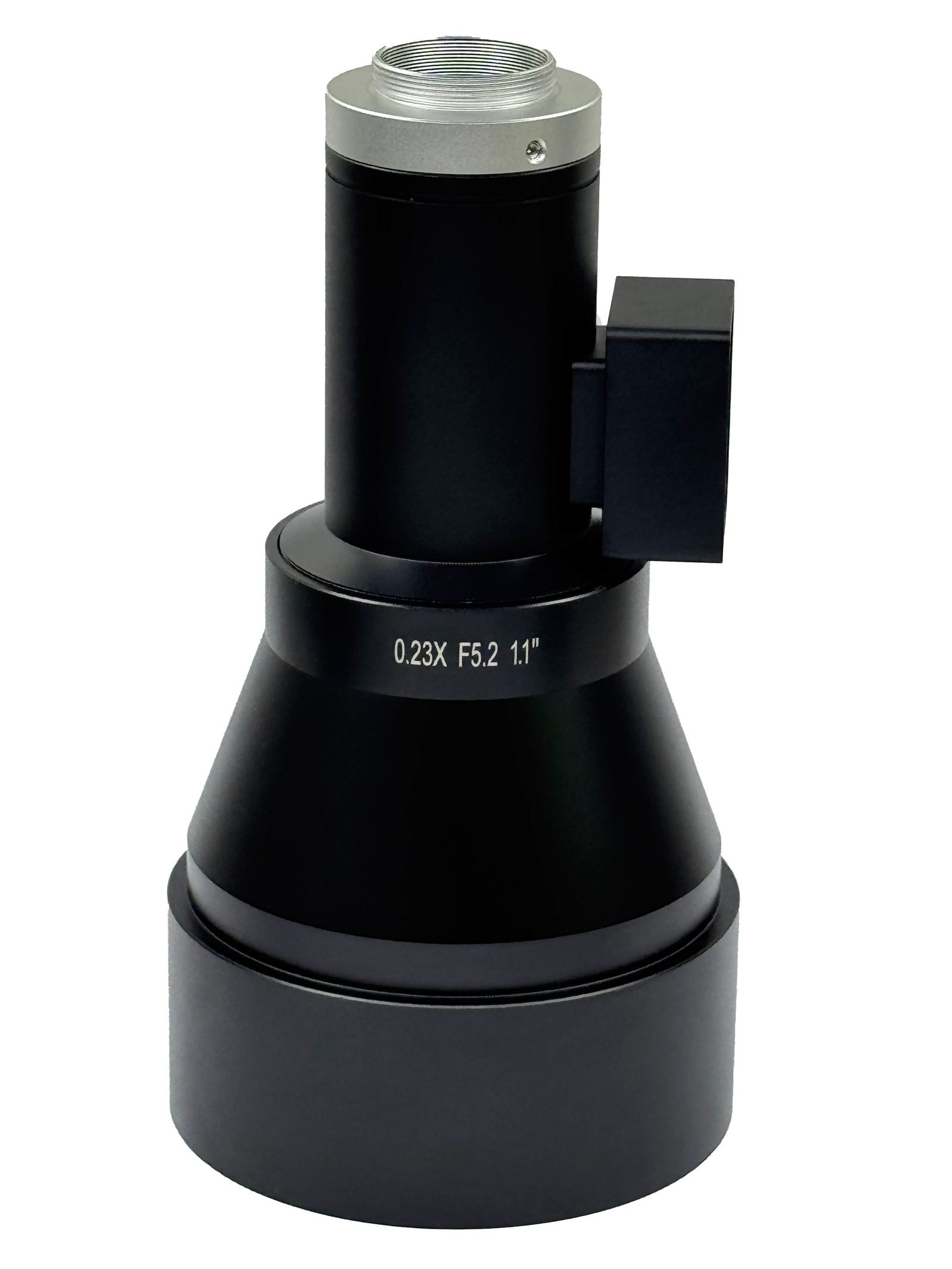
Illustrative station, not a named customer. A turned shaft has two diameters 14 mm apart in Z. The nest repeats to about 0.4 mm. The camera is a 1.1" C-mount. The field needed on the larger step is roughly 50 mm. An entocentric 25 mm FA lens will report a different pixel diameter on the upper step than on the lower step, and a different diameter again when the pallet sits 0.4 mm high. The algorithm will chase a threshold for a month.
The optical fix is object-space telecentricity at a magnification near 0.23X and a working distance that clears the nest — the same shape as LMJJ-TL0.23X200N1.1 if the 200 mm WD fits. Distortion on that card is below 0.05%. If the far step still loses contrast because the image-side bundle is steep, step up to a bi-telecentric BT model in the same magnification class. If heights jump more than the designed DOF, the YT liquid-focus variants add about 20 ms of electrowetting travel without turning the station into a mechanical focus motor.
If both diameters sit in one plane and the nest is stiff, do not buy this barrel. Put an FA lens on the C-mount, lock distortion in the batch report, and spend the money on lighting. That is the audit. The expensive option is correct only when magnification must not walk.
Conclusion
Telecentricity is a pupil at infinity, used so a millimetre of height does not become a millimetre of gauging error. Ordinary lenses can be sharp, low-distortion, and still change size with depth. The RFQ should name object-space, image-space or bi-telecentric, then magnification, working distance and sensor format — not a stack of adjectives.
Key takeaways
- Constant magnification is the reason to buy; “high-end” is not.
- Object-space covers most gauges; bi-telecentric is the thicker-part upgrade.
- Lensmind’s FA line at distortion below 0.05% is the correct cheaper path when Z does not matter.
- Batch MTF, distortion, BFL and DOF records should ship with the order; Hangzhou holds 1 μm-class alignment on stacks that need it.
If you are quoting a gauge whose number will be argued on the floor, send sensor format, object size, working distance and the height range. The Hangzhou team will say whether a catalog LMJJ or YT model fits, or whether a custom optic on a 60-working-day path is the honest answer. If the station is a flat 2D inspection, say that too — you will be told to stay on FA glass.
Written by Kitty, Optics Writer at Lensmind Optics
Hangzhou factory (Lin’an optics cluster) and Zhongshan office. Company registered 2019. ISO 9001 certified 2024. Founding-team optics practice is 26 years — not the company’s age.
Frequently Asked Questions
What is a telecentric lens in one sentence?
It is a lens whose entrance pupil is at infinity, so chief rays in object space are parallel to the axis and magnification does not change with object depth.
Is a telecentric lens always sharper than an FA lens?
No. Sharpness is MTF at your frequency and field. Telecentricity only freezes magnification versus depth. An FA lens can out-resolve a poorly specified telecentric barrel on-axis.
When do I need bi-telecentric instead of object-space?
When the object is thick enough that image-side ray slope hurts contrast, or when sensor-plane error must not change magnification. Otherwise object-space is the industrial default.
How many catalog telecentric models does Lensmind list?
The LMJJ measurement line lists 52 standard models from 0.14X to 6X. The YT liquid-focus series adds twelve models from 0.23X to 4X.
Do test reports ship with a telecentric order?
Yes. Agreed family parameters — typically MTF, distortion, BFL and DOF — ship with the batch, plus conditions and a pass/fail judgment. They are default, not a special request.
Can I use a telecentric lens on a CS-mount camera?
C-mount flange distance is 17.526 mm; CS is 5 mm shorter. A C-mount telecentric lens needs a 5 mm adapter on a CS camera. A CS lens will not reach focus on a C-mount body.