Wide Angle Machine Vision Lens Guide: FOV Without Unusable Distortion
Home - Lens Selection Guides - Wide Angle Machine Vision Lens Guide: FOV Without Unusable Distortion
Reading Time: 5 min ( Word Count: 1,170 )
The station covered the whole fixture. It also reported a 4 mm stretch on a 40 mm bar that the CMM said was straight. The wide angle machine vision lens did what wide glass does: it packed the field into the chip and spent the corners on mapping error. That is the failed line. FOV is free only until you measure.
Key Takeaways
Use wide angle for presence, codes, and awareness. Do not use it as a cheap substitute for a longer FA cell or a telecentric when the output is a millimetre.
Image circle still must cover the sensor. A 200° optic on 1″ (MJ7208B class, 3.7 mm F2.8, 20 MP) is a coverage and mapping problem, not only a FOV problem.
FA production distortion below 0.05% is the gauging number. Wide/fisheye mapping is often tens of percent of TV distortion — usable for detection, hostile for metrology.
M12 wide barrels (H05 ~72° on 1/1.8″) are the embedded path. C-mount 7208B/7209A-class is the large-sensor panoramic path.
If you must measure in a wide frame, budget calibration and expect residual error. Software cannot invent telecentricity.
The five inputs in the machine vision lens selection guide still apply. On wide glass the distortion budget is the input that gets skipped. Write it as millimetres of mapping error, not as “wide.”
When Wide FOV Wrecks Measurement
A short focal length increases field angle. Field angle is not magnification constancy. Edges of a wide frame sit on a different ray height than the centre. Pixel pitch on the object grows as you leave the axis. A bar that is 40 mm in the nest can read 42–44 mm at the corner after an uncalibrated undistort, or worse if the map was built on a different WD. That is a metrology fail, not a “camera resolution” fail.
FOV Versus Distortion: Two Different Specs
FOV is the angle or the object width you cover. Distortion is how that width is mapped. FA glass at Lensmind is held below 0.05% with 10K+ batch consistency — that is the gauging family. Wide and fisheye designs trade mapping for angle. Ask for the distortion plot at the working distance you will use. A plot at infinity is a different conjugate.
Fisheye mapping (equidistant, stereographic, and the rest) is a designed non-linearity. You can invert it if you know the model. You cannot invert a WD-dependent residual you never measured. If the output is pass/fail on a logo, wide is cheap. If the output is a millimetre, buy FA or telecentric.
7208B-Class 1 in Panoramic Glass
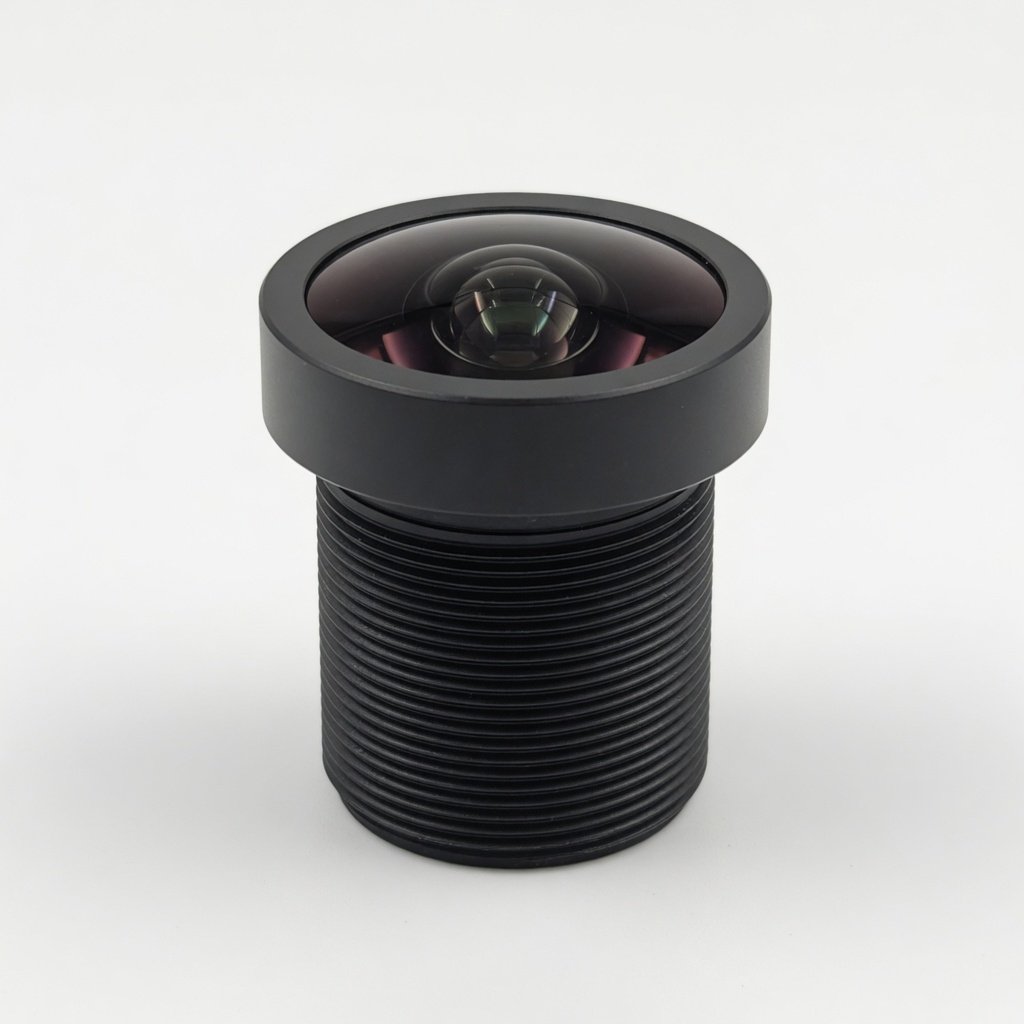
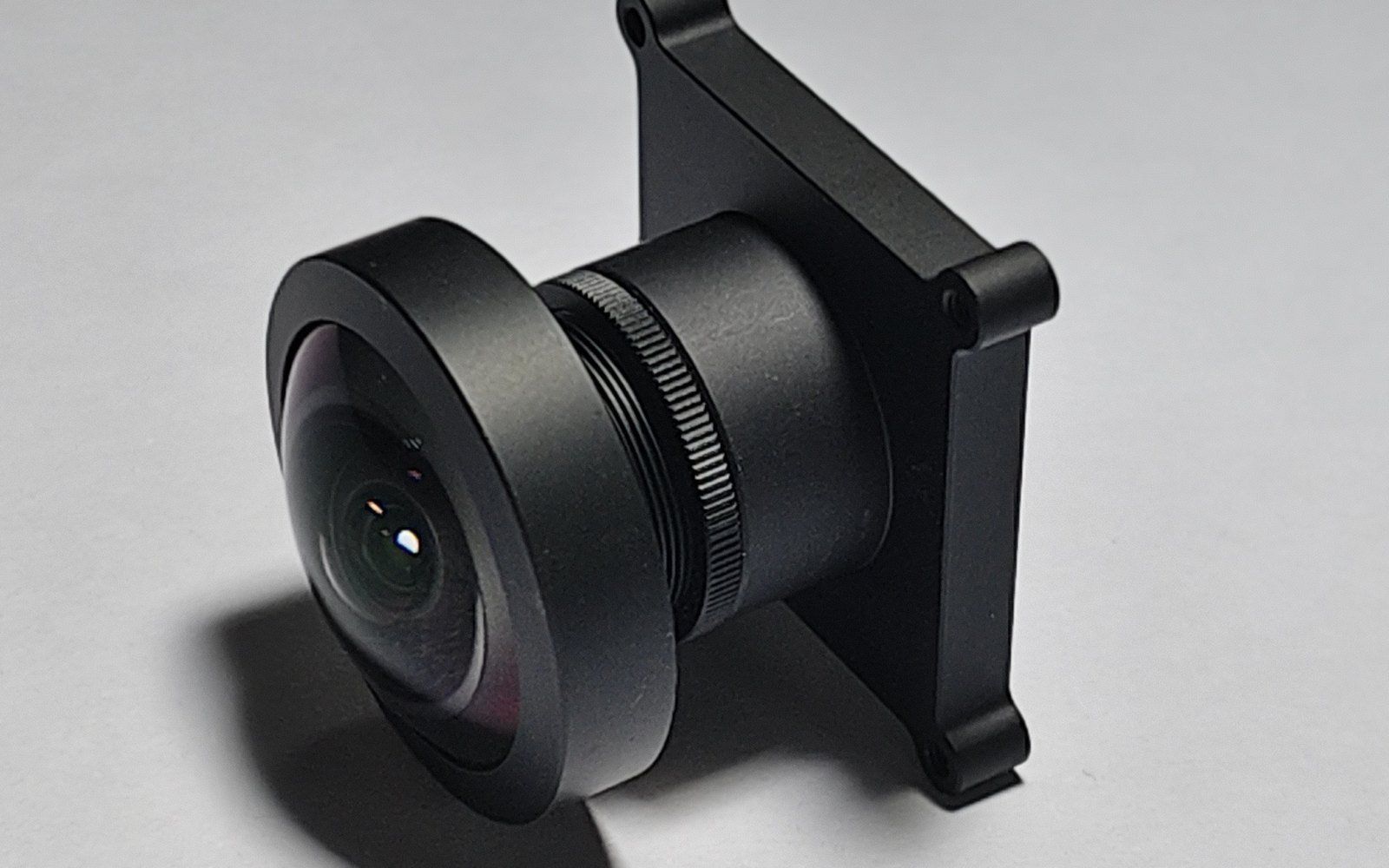
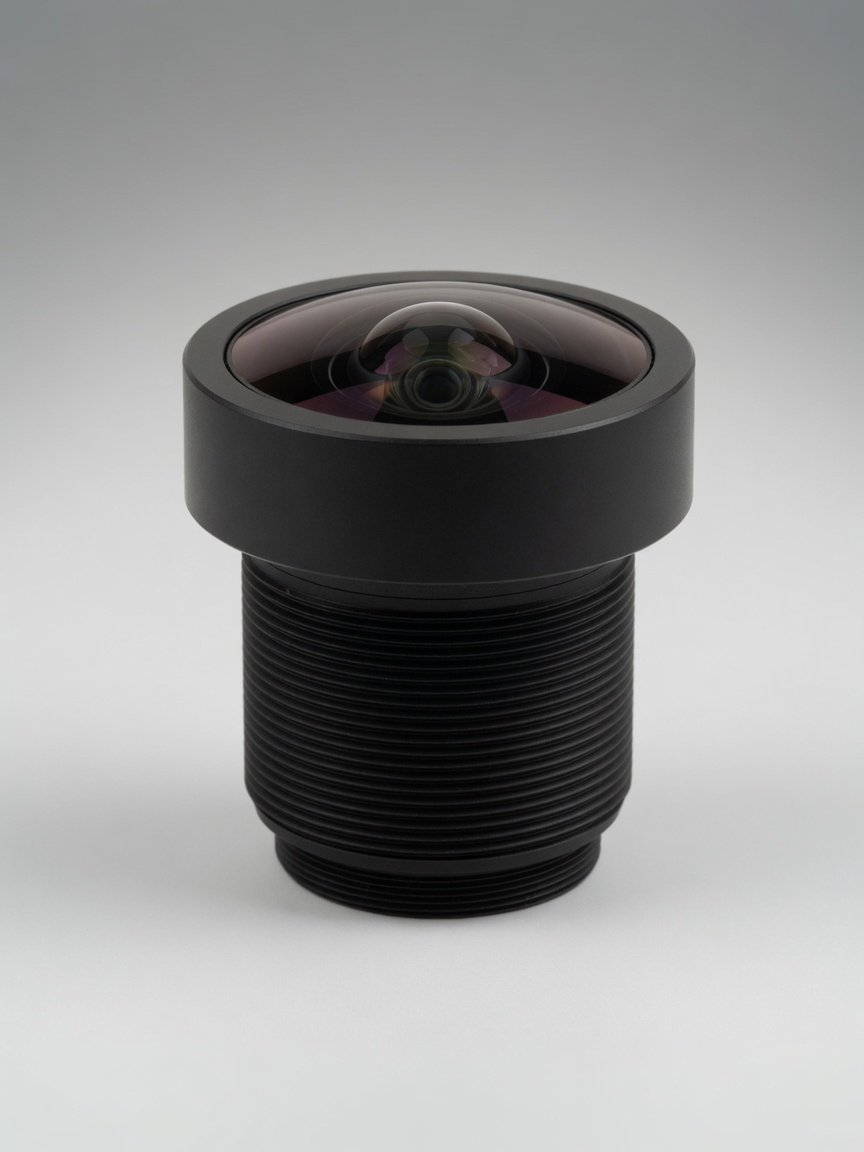
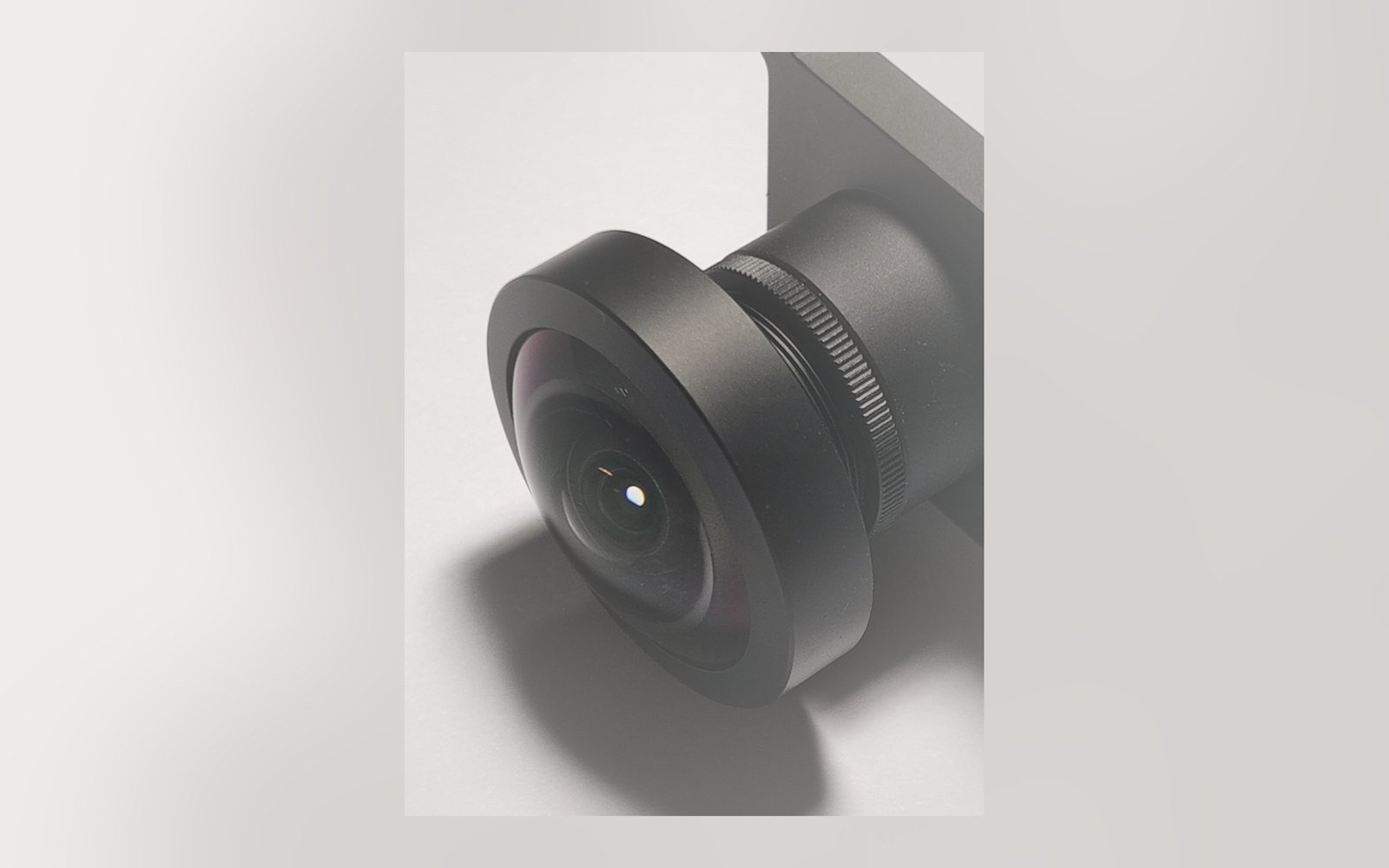
The live wide angle lens family includes 7208B-class optics: 3.7 mm, F2.8, 200° FOV, 20 MP on a 1″ sensor in the catalog photography. 7209A sits beside it. That is panoramic coverage for 1″-class chips, not a 2/3″ FA 8 mm with a wider iris. Confirm the circle against the actual diagonal (~16 mm on 1″ 4:3 per Opto Engineering’s 1″ row).
M12 Wide Angle for Embedded Cameras
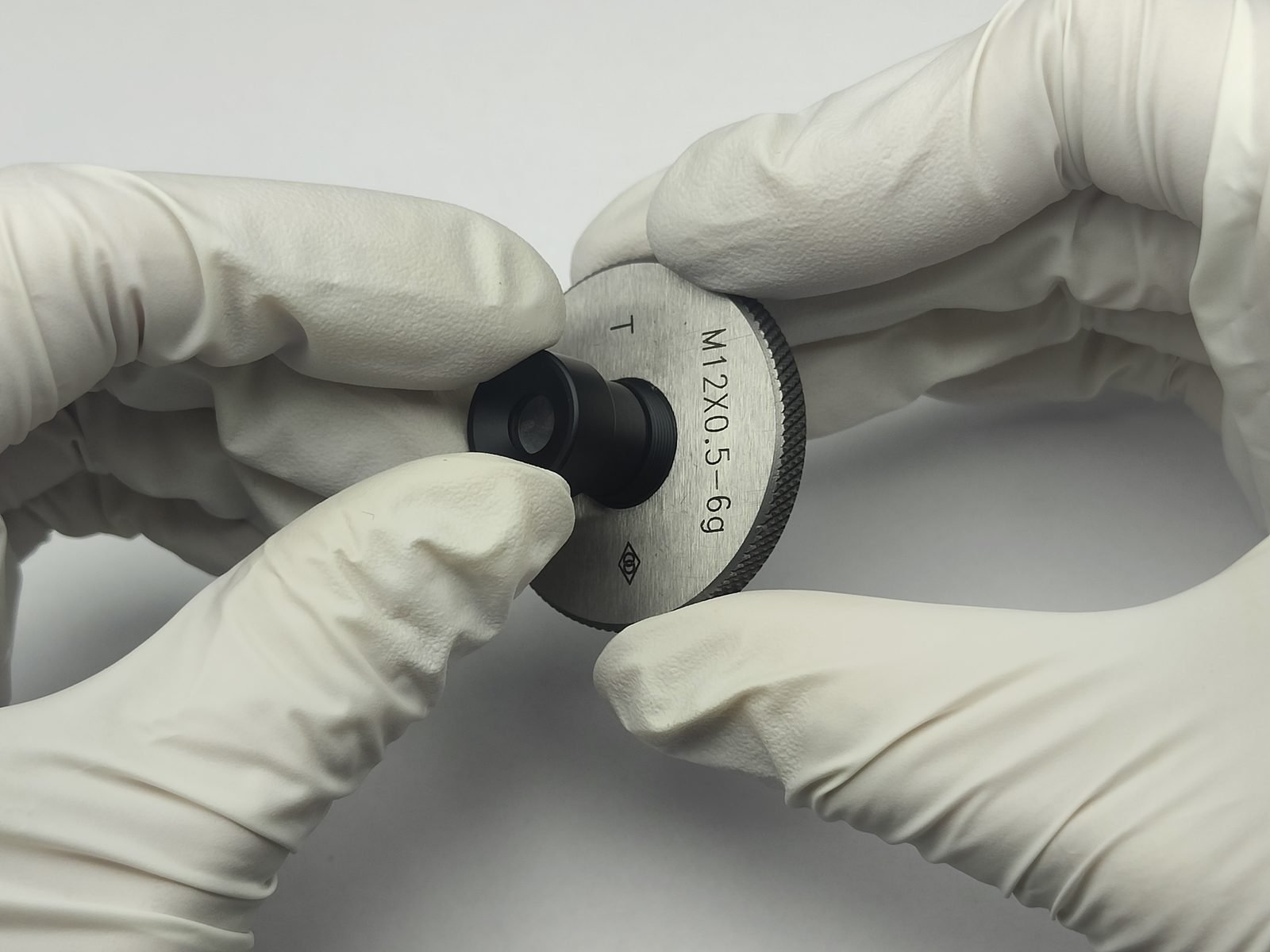
Board cameras use M12. H05 is the close-range wide H-series option, about 72° horizontal on 1/1.8″. T045 / T54 sit even shorter. LMMJ fisheye covers 144–220° class fronts. Lock is still FT/HT. A 200° M12 on a 1/3″ chip is not the same prescription as 7208B on 1″. Do not mix those RFQs.
Cover the fixture — without pretending the corners are a CMM
7208B-class 1″ panoramic glass and M12 wide/fisheye barrels, machined and tested in Hangzhou. Send sensor, FOV, and whether the output is a millimetre or a blob. First-pass feasibility in 48 hours.
“Wide angle” in machine vision often means a short FA or M12 cell with still-rectilinear intent and rising barrel distortion. “Fisheye” means a designed circular or diagonal map past 180°. 7208B at 200° is in the panoramic/fisheye class. H05 at ~72° is wide, not fisheye. If the algorithm expects a pinhole model, fisheye will look broken until you change the camera model. Say which map you need.
Best for / Not for Wide Angle
Best for
Not for
Presence, codes, cabin/robot awareness
OD, pitch, gap, coplanarity
Short WD, large fixture in one frame
Locked-magnification gauging
1″ panoramic (7208B class) or M12 H05/T/LMMJ
Pretending 0.05% FA distortion still holds
What We Check Before a Wide-Angle RFQ
Job: blob or millimetre. If millimetre, this family is probably wrong.
Sensor: format and diagonal. 1″ panoramic is not 1/2.7″ T045.
Map: rectilinear-ish wide vs fisheye model the software already has.
WD and FOV: the conjugate the distortion plot must match.
Process: 48-hour first pass, 60 working days to mass, 30-day repeats, ISO 9001 (2024).
Worked Example: Cover the Fixture Without Gauging It
Illustrative path: 1″ 20 MP camera, 150 mm WD, must see a 300 mm fixture, output is missing-screw detection. Short EFL panoramic (7208B class) is in play. A second station with 35 mm FA or telecentric measures the screw height. Do not ask the 200° barrel to print millimetres. If the camera is 1/1.8″ M12, start at H05 (~72°), not at 7208B.
Conclusion
Wide angle earns its keep when the job is coverage. It fails when the job is a millimetre. 7208B-class 200° glass on 1″ and M12 H05/T/LMMJ barrels are different prescriptions. Write the mapping model and the distortion budget, or the fixture-cover station will quietly become a bad CMM.
Key takeaways
FOV is not distortion. FA 0.05% is the gauging family, not the panoramic family.
MJ7208B class: 3.7 mm, F2.8, 200°, 20 MP on 1″.
H05 ~72° on 1/1.8″ is the embedded wide start. Fisheye LMMJ is a different map.
Split stations: wide for presence, FA/telecentric for size.
If you already know the sensor, the field, and whether the algorithm prints millimetres, send those three. Hangzhou will stay on wide glass or walk you to FA. First-pass feasibility is 48 hours.
Written by the Lensmind Optics team — Hangzhou factory (Lin’an) and Zhongshan office, company registered 2019, ISO 9001 certified 2024. Founder on this site: Baker Zhao.
Frequently Asked Questions
Can I measure with a wide angle machine vision lens?
Only with a calibrated map and a residual you can live with. For millimetre gauging, FA (distortion below 0.05%) or telecentric is the honest spend.
What is the 7208B class?
A Lensmind panoramic optic: 3.7 mm, F2.8, 200° FOV, 20 MP on a 1″ sensor class. Confirm image circle on the actual chip diagonal.
Is M12 H05 a fisheye?
No. H05 is about 72° horizontal on 1/1.8″. LMMJ fisheye SKUs cover 144–220° class fronts. Different maps, different algorithms.
Will undistort make wide glass telecentric?
No. Undistort can linearize a known map at one WD. It cannot hold magnification when object height changes.
Do I need 1 inch glass for a 2/3 inch camera?
No. A 1″ panoramic cell will cover 2/3″, but you are paying for unused circle and a different map. Match the format.
When is a second station cheaper?
When one camera is asked to cover a large fixture and also print millimetres. Split: wide for presence, FA or telecentric for size.
Baker Zhao
Founder, Lensmind Optics
Baker Zhao is the founder of Lensmind Optics, with 26 years of experience in the optical industry — including Vice President of Sales at Sunny Optical (Zhongshan) and earlier roles at Foxconn, LG and Sintai Optical. He leads Lensmind with a mission to help customers find reliable, application-specific optical solutions from development to volume production.
A short-working-distance large-FOV feasibility input pack is the maker-ready file that states part size, stand-off, pixel budget, and which image costs the buyer will...
Turning a 50 micrometre defect at 200 millimetres into a lens commitment means locking pixel pitch, image height, and a verification target before anyone...