LED Flicker After Power Supply Swap: Lighting Specs That Match Camera Exposure
LED flicker after a power supply swap is an electrical-to-exposure matching miss. Lock lighting electrical specs to the camera exposure plan before the next...
read more…
The robot-mounted board camera was sharp at 08:00 and soft by lunch. Nobody changed the working distance. The M12 barrel backed out a fraction of a turn under vibration, the same way an unlocked set screw always does. M12 lens mount systems have no standardized flange. Focus is thread-in depth. If you do not lock it, the line will unscrew it for you. Lensmind H05–H16 parts name that lock in the suffix: FT full-thread, HT half-thread.
Key Takeaways
If the last no-read was “intermittent softness,” look at the thread before you look at the ISP.
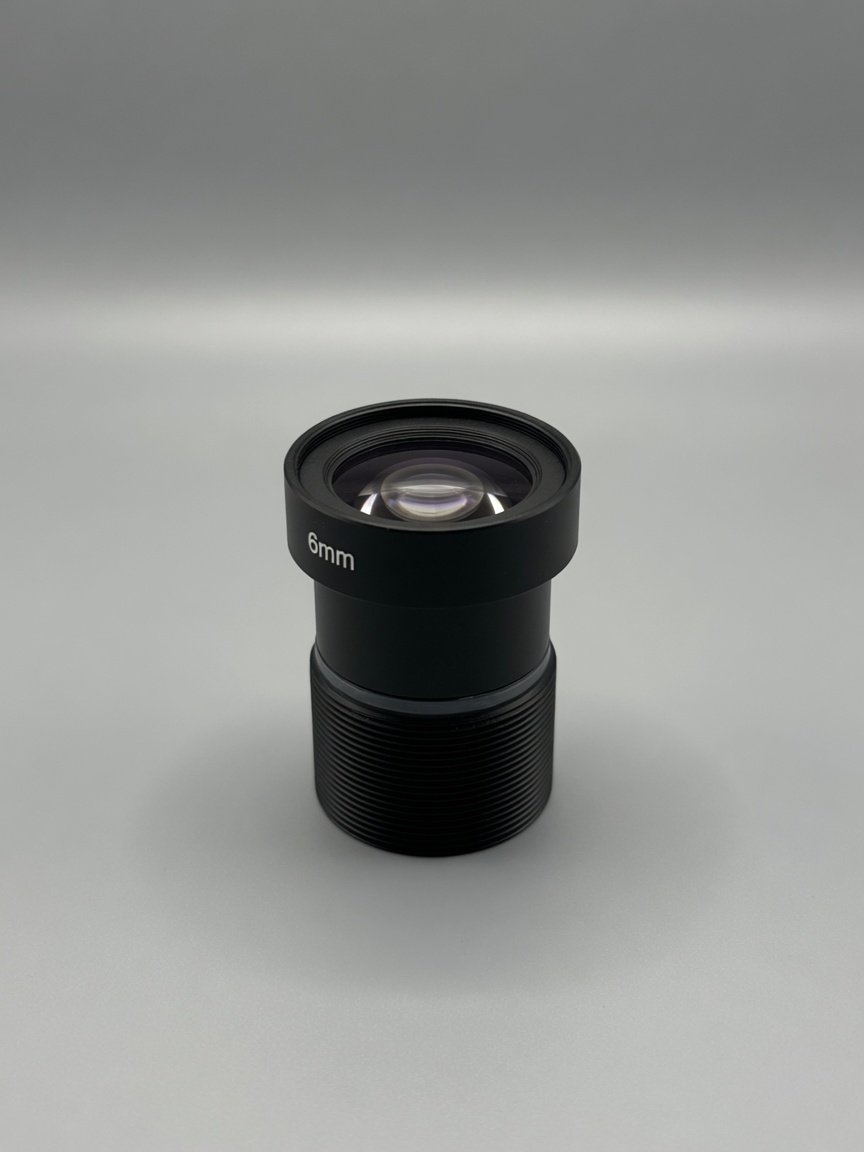
Edmund Optics and Wikipedia’s S-mount page agree: M12×0.5 has no standardized flange. The holder is usually a threaded hole on a PCB or a tiny tower. You screw the lens until the image is sharp, then something has to stop it moving. Vibration on a robot flange, an AGV deck, or a punch press is that something, in reverse.
A quarter-turn at M12×0.5 is 0.125 mm of axial travel. That is enough to walk a 1/1.8" module out of the MTF window on a short WD. Field-engineer habit: mark the barrel at FAT with a paint line. If the line has rotated at the first PM, the lock was theatre.
No flange standard means the lock is the focus design. Treat it that way on the BOM.

Lensmind part numbers put the lock in the suffix so receiving can see it without a drawing. Worked example from the catalog: H16-40-FT is 16 mm, F4.0 fixed stop, full-thread lock. FT is the high-vibration choice. HT is half-thread — shorter envelope, standard compact mount, less thread engagement to lock against.
| Code | Meaning | Use |
|---|---|---|
| FT | Full-thread focus lock | Robots, AGVs, presses |
| HT | Half-thread mount | Tight boards, lower vibration |
| H05–H16 | 5–16 mm, 1/1.8" class | Embedded heads |
The M12 S-mount catalog also carries T045, T54, and M12–M35 families. Same thread, same lock grammar. Order the suffix you will live with after 10,000 cycles, not the one that was in stock for the prototype.
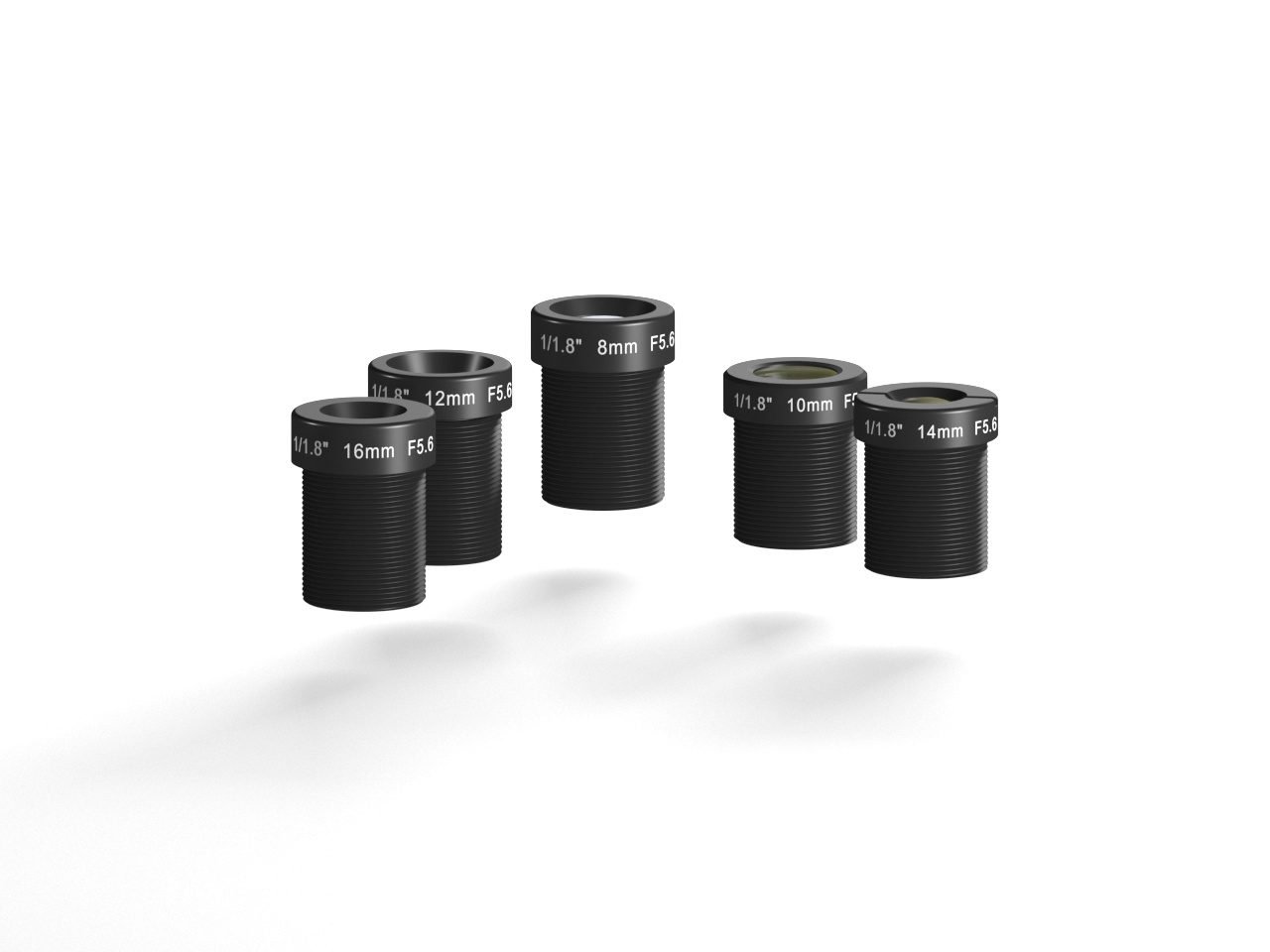
Iris rings walk too. That is why these SKUs use five fixed apertures — F4.0, F5.6, F7.0, F8.0, F11 — encoded as 40 / 56 / 70 / 80 / 11. You pick the stop at RFQ. You do not “close it a bit” on the line. H05 is the wide ~72° HFOV class on 1/1.8"; H16 is ~25°. Match FOV first, lock second, coating third (VIS vs no IR-cut).
164 official models sit on that naming grid. You do not need all of them. You need one EFL, one stop, one lock, one coating. The rest is inventory noise.
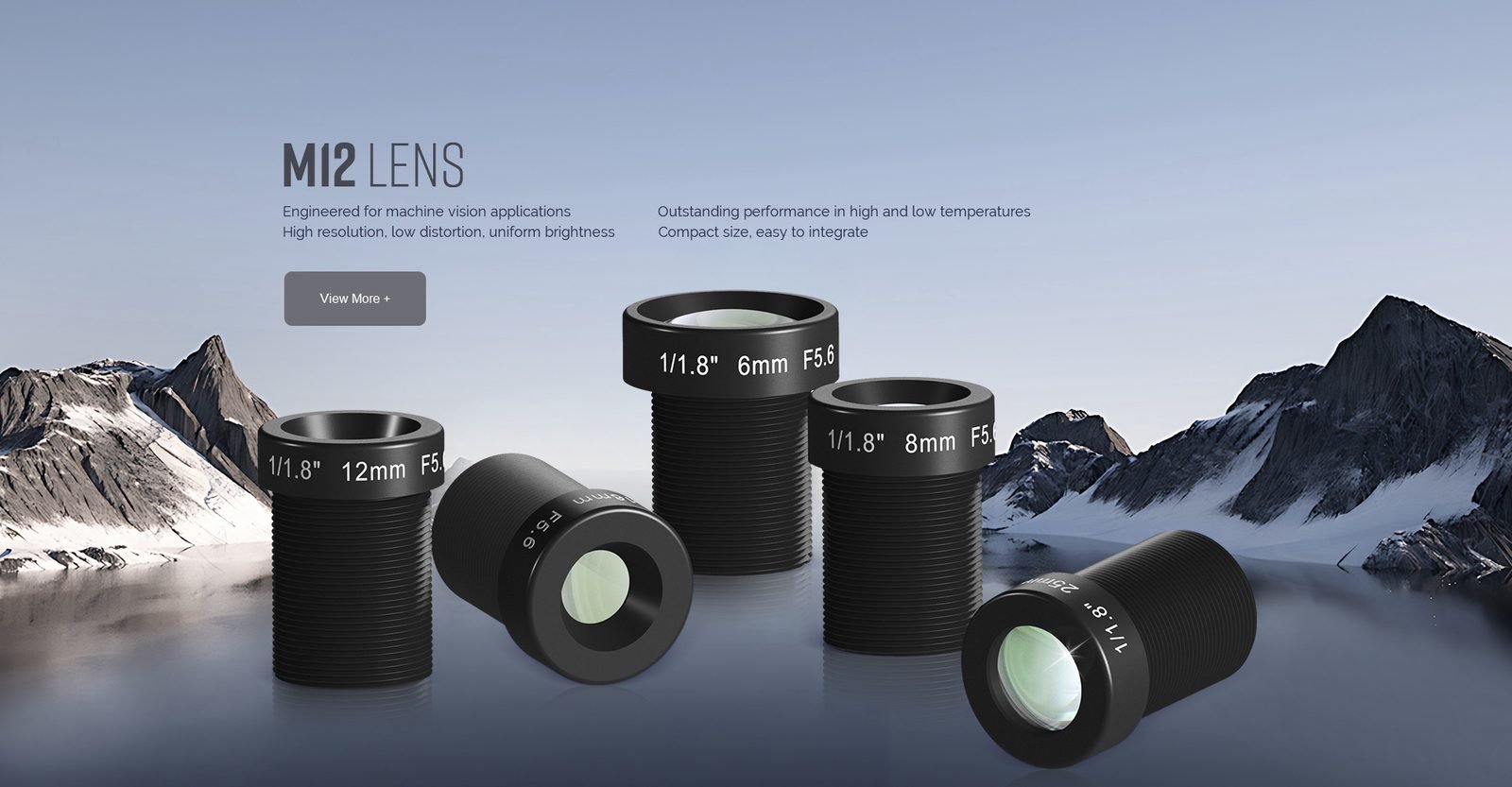
Thread-locker on a barrel that was never designed to clamp is a rework step. It contaminates the holder, fights the next focus adjustment, and still shears on a bad vibe axis. FT is a mechanical lock in the product. Specify it when the camera moves. Use a drop of approved locker only as a secondary, and write the process so service can break it without destroying the PCB tower.
If the module is potted, you have one chance to set focus. Do that on a collimator or a live target at the production WD, then engage FT. Do not pot first and pray.
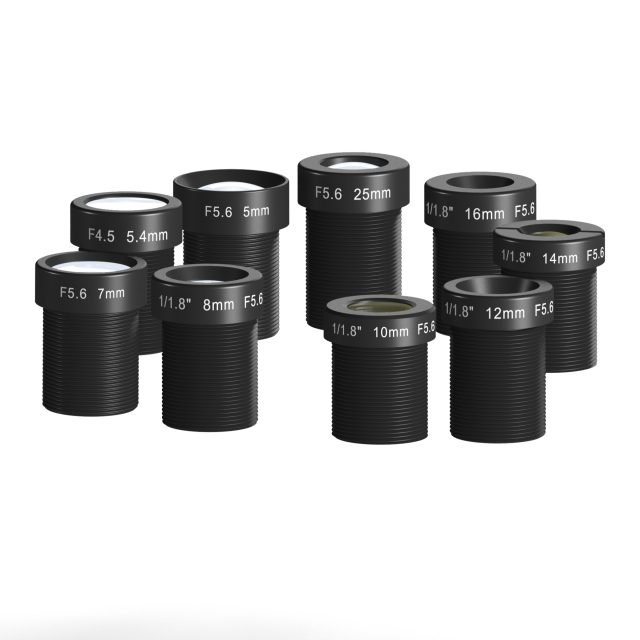
C-mount’s 17.526 mm register is a gift when the camera is bolted to a frame. It is dead weight on a 25 mm board camera. Site guidance: vibration and embedded → M12 with thread-locked focus; 2/3" to 1.1" and accessories → C-mount. Upgrading a walking M12 to C-mount because “C-mount is industrial” usually means a bigger camera you cannot fit. Put FT on the M12 instead.
Use the machine vision lens selection guide for format and FOV. This page only keeps the thread from unscrewing.

Hangzhou assembly, Class 10,000 cells, 1 μm-class alignment where the stack needs it. Custom 60 working days, repeats 30, RFQ 48 hours. If your vibe profile is unknown, start FT. HT is the space-saver when the arm is quiet.
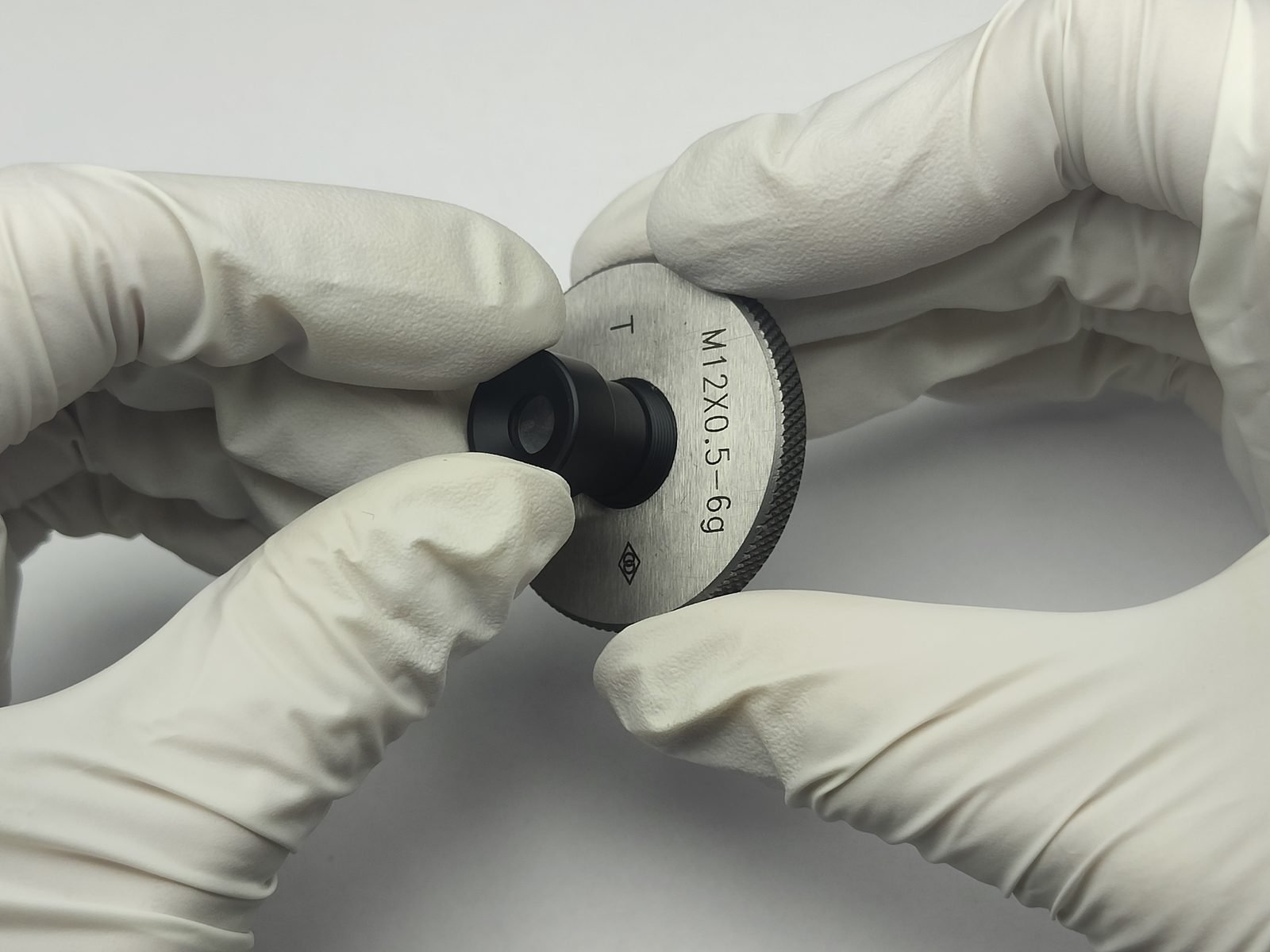
Illustrative. A 1/1.8" board camera on an AGV reads cartons at ~400 mm. H08-56-HT was sharp at FAT. After two weeks of deck vibration the paint line had rotated and no-reads clustered after lunch. Swap to H08-56-FT, reset focus, lock. The algorithm did not change. The thread did.
If WD also jumps with mixed pallets, that is a ZWA liquid-cell problem, not an FT problem. Do not stack two misdiagnoses on one head.
M12 has no flange standard. Focus is a thread. FT is how that thread survives a robot. H05–H16 plus a fixed stop plus VIS/NIR is the rest of the name. Glue is not a design.
Key takeaways
Send sensor format, WD, and whether the head moves. You will get an H-series suffix with FT or HT already chosen. If the camera is bolted to a 2/3" C-mount body, you will be sent to FA glass instead.
Written by Baker Zhao, Founder at Lensmind Optics
Hangzhou M12 line. ISO 9001 (2024). Company registered 2019.
No. S-mount is M12×0.5 with no standardized FFD. Focus is set by thread-in depth, then locked.
FT is full-thread focus lock for high vibration. HT is half-thread, a shorter compact mount for quieter boards.
H16 is 16 mm in the 1/1.8" series, 40 is F4.0, FT is full-thread lock.
Glue is rework. On a moving camera specify FT. Locker may be a secondary process, not the lock design.
So the stop cannot walk. F4.0 through F11 are ordered as 40/56/70/80/11, not adjusted on the line.

LED flicker after a power supply swap is an electrical-to-exposure matching miss. Lock lighting electrical specs to the camera exposure plan before the next...
read more…
A telecentricity bench proof pack is the acceptance file that turns a datasheet telecentric claim into measured magnification-versus-object-distance curves and written reject limits before...
read more…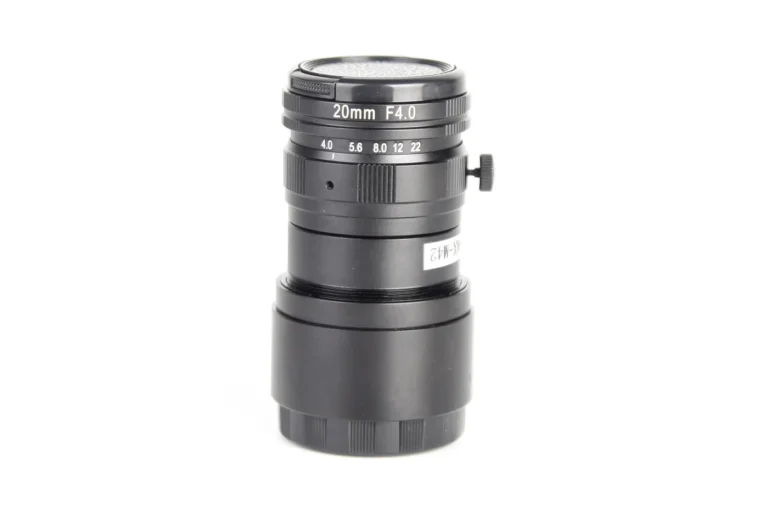
An illumination pupil pack is the optical data set that tells a lighting designer where the lens aperture stop and entrance pupil sit before...
read more…