A machine vision lens calculator does not pick the lens. It estimates a focal length from sensor width, working distance, and field width. The misconception is that the number it prints is a purchase. It is a thin-lens first pass. Image circle, principal-plane offset, distortion, and mount still have to survive a drawing. Treat the calculator as a filter, then open a family.
Key Takeaways
f ≈ (sensor width × working distance) / (field width + sensor width). Use active width, not the format nickname, and object-to-lens distance, not object-to-camera-back.
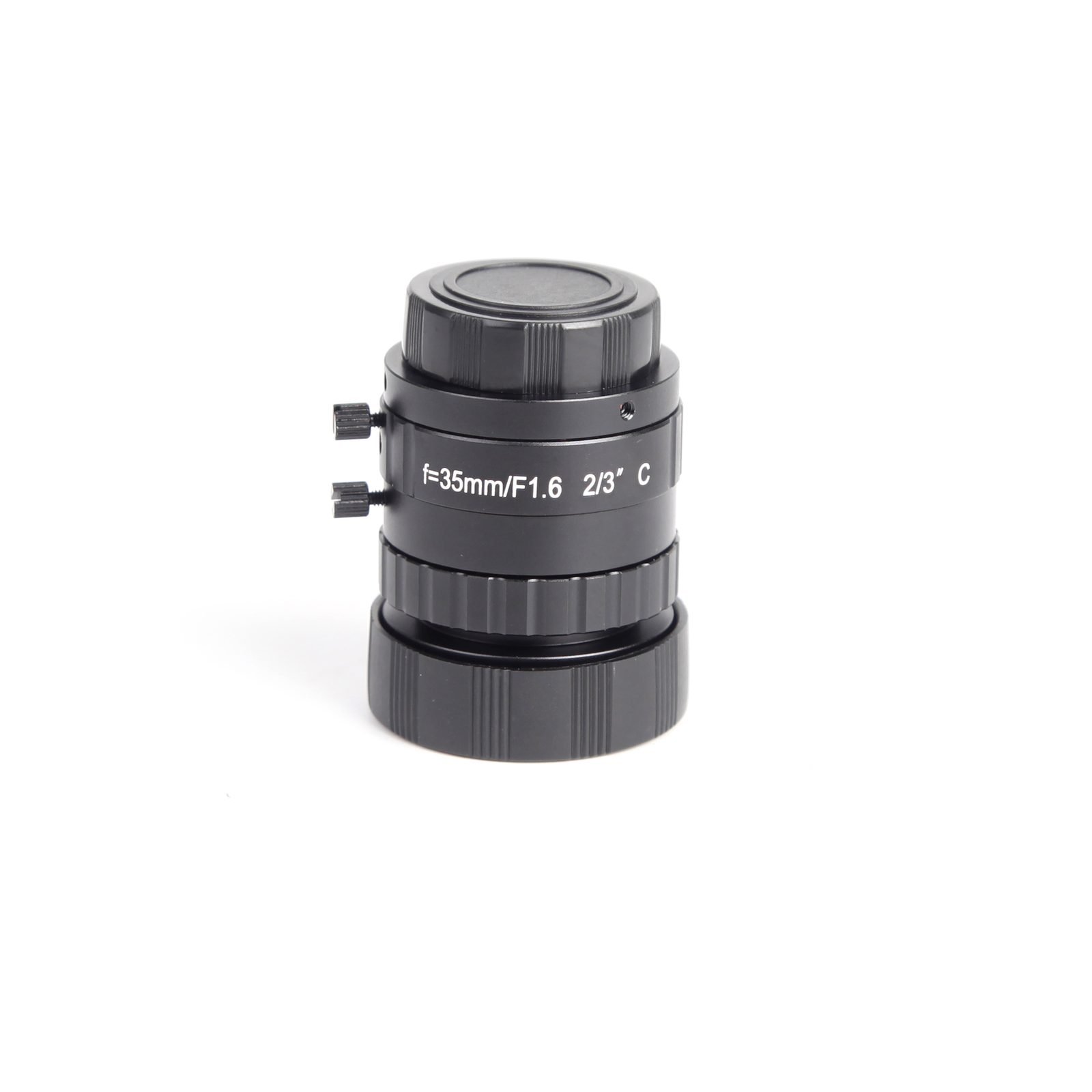
Worked 2/3″ example: 8.8 mm width, 200 mm WD, 44 mm field → f ≈ 33.3 mm. Nearest catalog: 25 mm or 35 mm.
Then check image circle ≥ sensor diagonal (2/3″ = 11.000 mm; 1/1.8″ = 8.933 mm; 1″ ≈ 16 mm).
C-mount flange is 17.526 mm. M12 has no flange standard. The calculator does not know your mount.
If object height changes measured size, stop calculating FA focal length and look at telecentric magnification instead.
This is the how-to behind the five-input method in the machine vision lens selection guide. Do the arithmetic, then pick a family: FA C-mount, M12, telecentric, or line-scan. The calculator never names a SKU.
What the Calculator Is Not
Online calculators assume a thin lens, a centred object, and a sensor width you typed correctly. They do not know principal-plane offset, distortion, relative illumination, or whether you typed 2/3″ when the chip is 1.1″. If the first prototype is soft or cropped, the calculator was not “wrong” — it was unfinished.
The Thin-Lens Formula, With Units
f ≈ (Wsensor × WD) / (Wfield + Wsensor)
All lengths in millimetres. W_sensor is the active width from the datasheet. WD is object to front of lens. W_field is the object width you must cover, plus placement margin. Horizontal and vertical can be run separately; the longer demand wins. Do not use diagonal unless the object is circular and you mean it.
Worked Example: 2/3 in at 200 mm
2/3″ active 8.8 mm × 6.6 mm (11.000 mm diagonal). WD 200 mm. Object 40 mm wide, use 44 mm with margin. f ≈ (8.8 × 200) / (44 + 8.8) = 1760 / 52.8 ≈ 33.3 mm. Catalog neighbours: 25 mm (more margin, fewer pixels on the part) and 35 mm (tighter field, more sampling). If the smallest feature is 0.1 mm on a 5 MP 2/3″ chip, 35 mm is the better first sample. If the nest walks a few millimetres, 25 mm is safer.
Check Image Circle After Focal Length
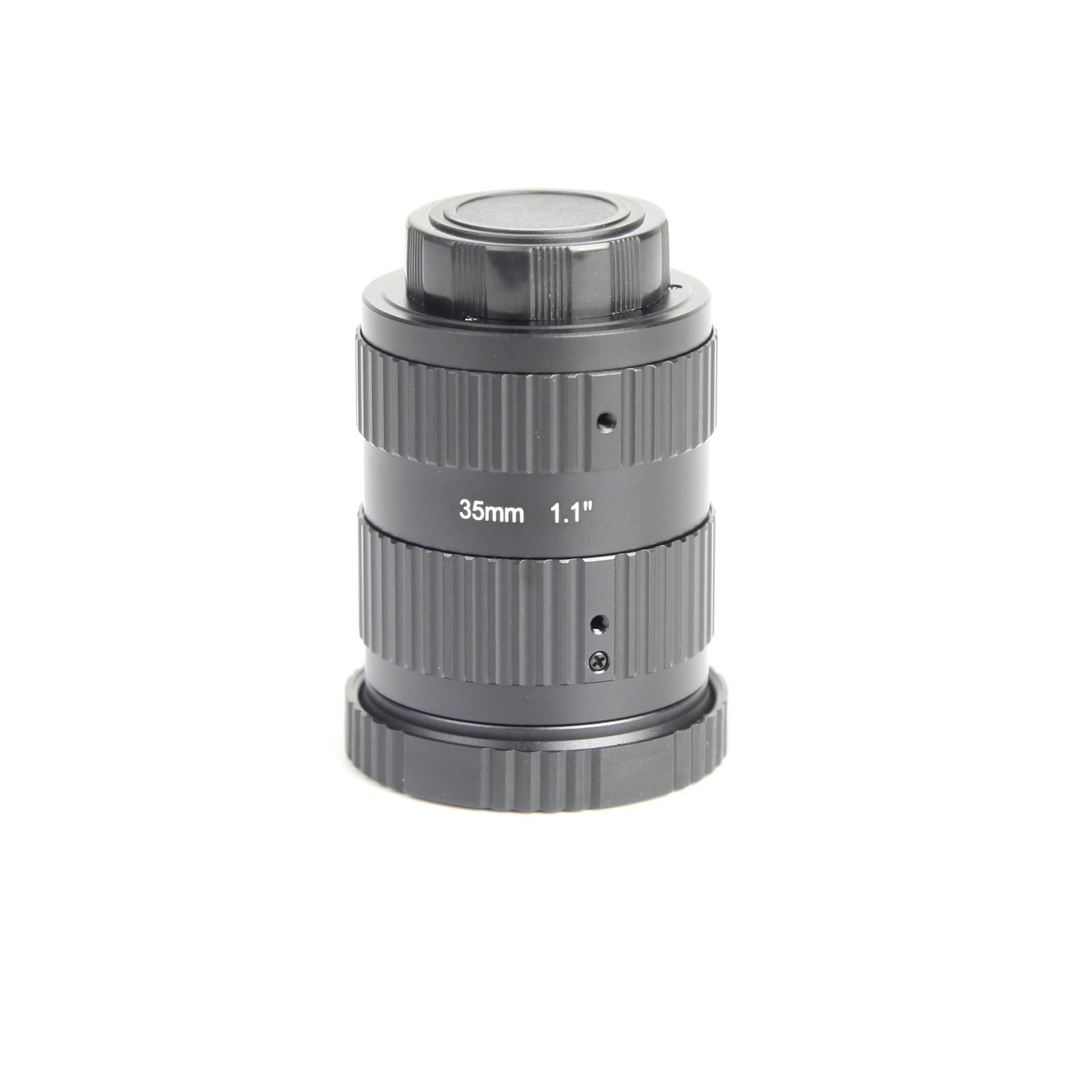
The calculator can output 35 mm for a 1.1″ camera and still be optically illegal if the barrel is a 2/3″ design. Diagonal for 1.1″ class is around 17.5 mm. 2/3″ is 11.000 mm. Run the circle check as a second line in the same spreadsheet: circle ≥ diagonal, or the corners go dark no matter how perfect f is.
The Mount the Calculator Ignores
C-mount is 17.526 mm. CS is 5 mm closer. M12×0.5 has no flange. Line-scan M72 is a different throat. A 35 mm estimate on the wrong mount is a mechanical dead end. Write the mount before you write the PO.
Send sensor width, working distance, and field. Hangzhou maps the thin-lens f onto 2/3″–1.1″ C-mount FA glass with distortion below 0.05% and batch reports. First-pass feasibility in 48 hours.
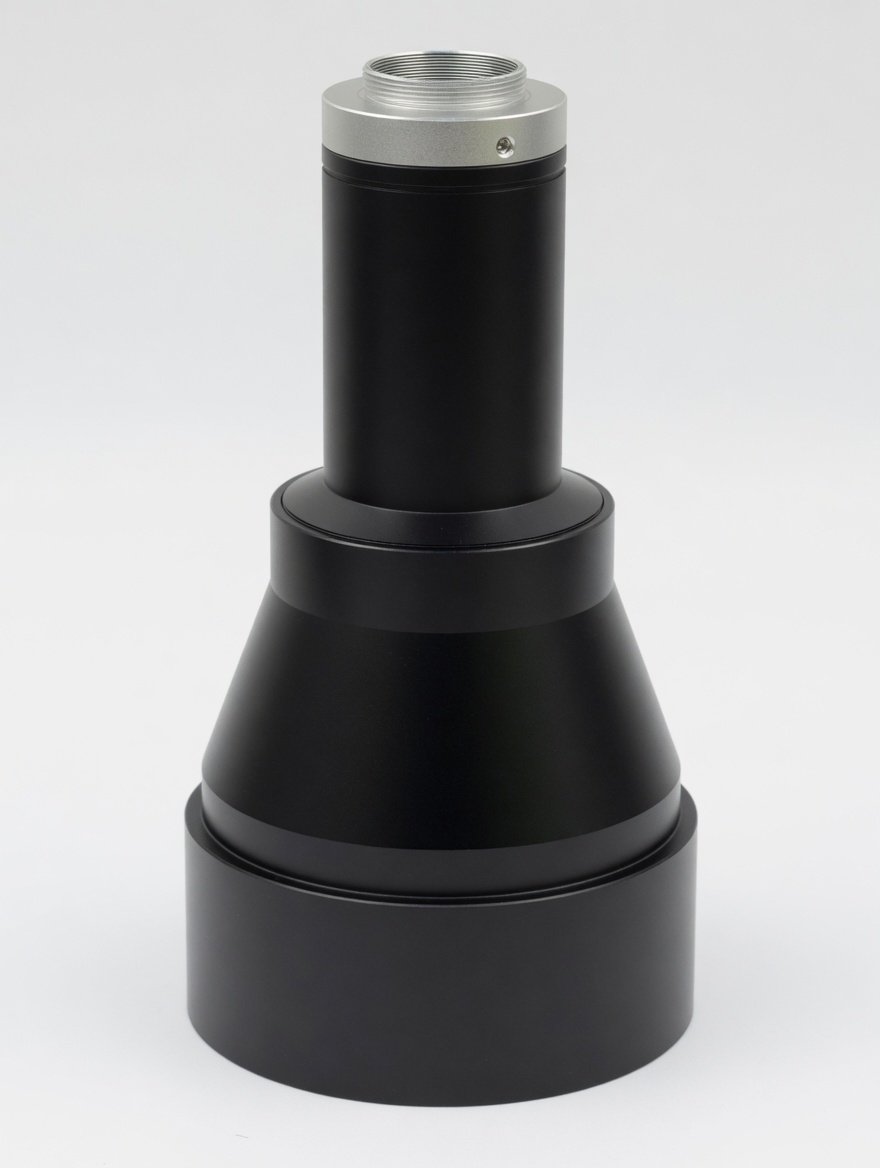
If ΔWD/WD already exceeds the size tolerance, a better f will not save you. Telecentric magnification is the next tool, not a 50 mm instead of a 35 mm. If the sensor is a 41 mm 8K line, stop using area-scan width in the formula and compute line length × pitch. If the camera is a board module, the answer is an M12 EFL, not a C-mount catalog value through an adapter.
From Estimated f to a Named SKU
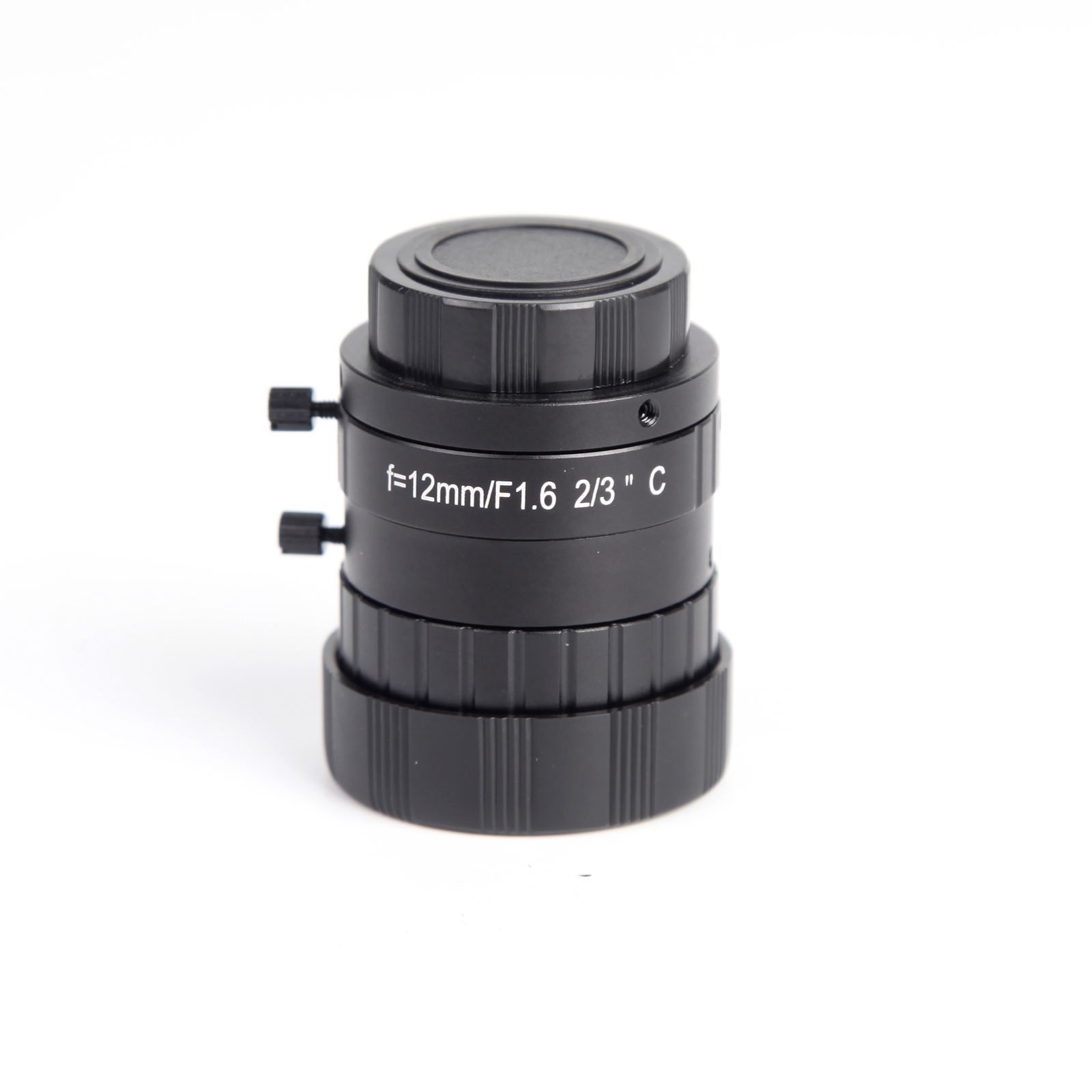
Round to the nearest catalog EFL, then read the datasheet working distance and circle. The FA C-mount family is the usual landing for discrete industrial bodies. Distortion below 0.05% with 10K+ batch consistency is the FA production claim — it is not in the calculator. Macro SKUs (FA3505W–FA7520W) apply when the conjugate is close and a standard 25–50 mm cell cannot reach it.
What We Check When You Send the Numbers
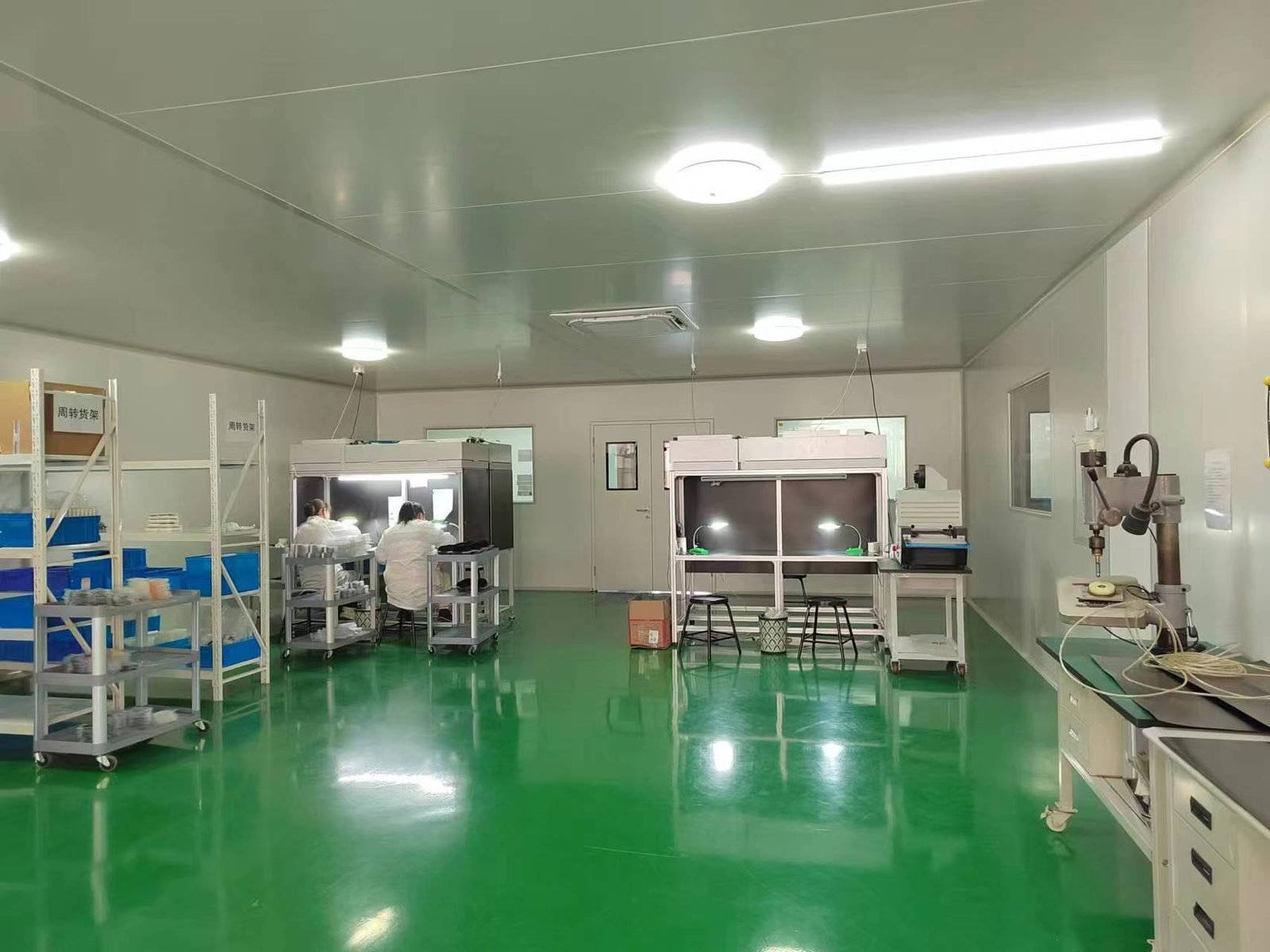
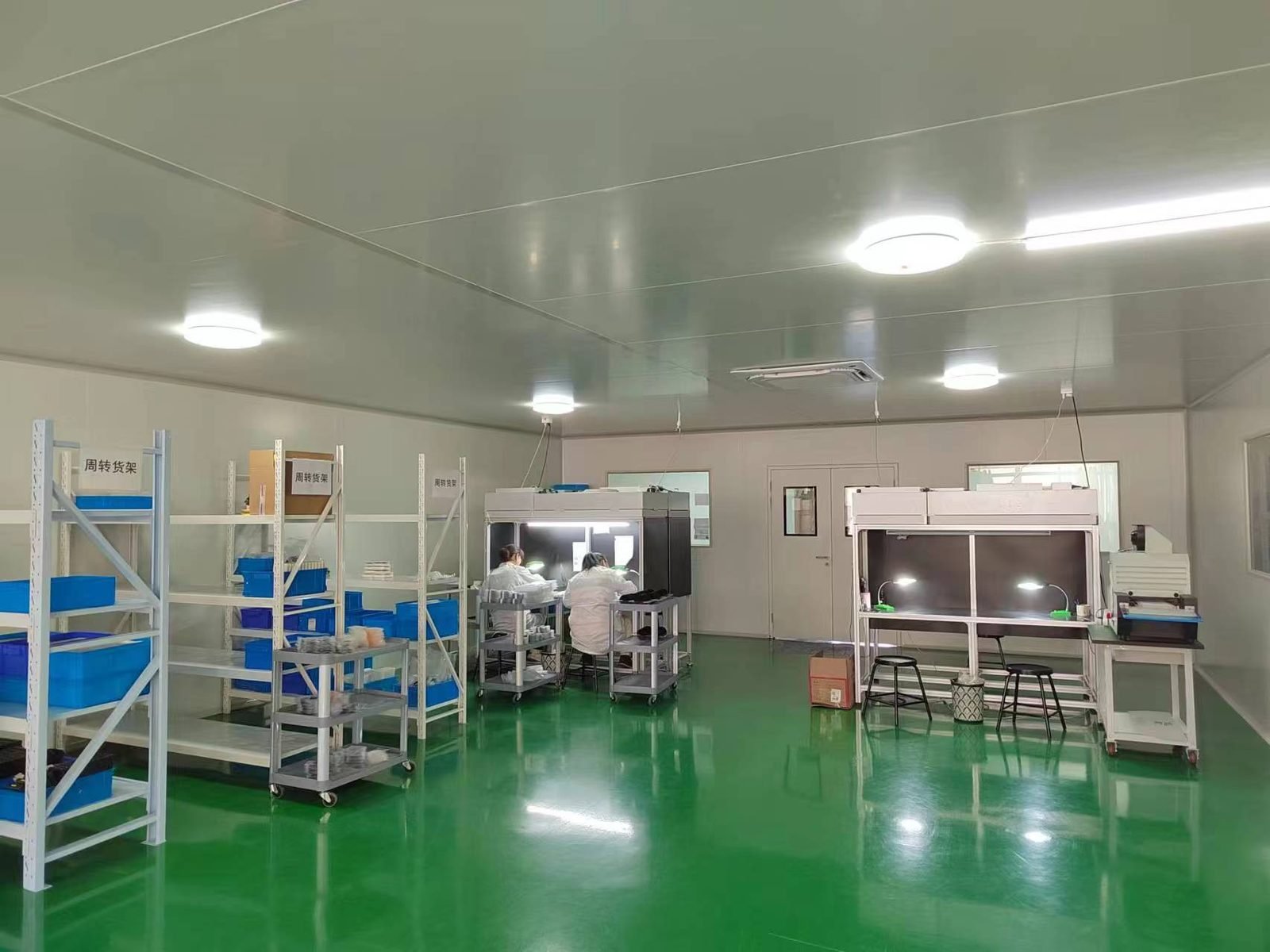
Send W_sensor, WD, W_field, format, and mount. Hangzhou runs the same thin-lens pass, then circle, then family. First-pass feasibility is 48 hours. Prototype to mass production is 60 working days. Repeat orders are 30 days. Payment 50/50. ISO 9001 certified 2024.
Illustrative numbers: 8.8 mm sensor, 200 mm WD, 44 mm field → 33.3 mm → sample 25 mm and 35 mm FA, 2/3″ circle, C-mount 17.526 mm. If the email adds “1.1″ IMX,” the circle check fails and the estimate is rebuilt on 14 mm-class width, not 8.8 mm.
Conclusion
The calculator is a first pass: f from sensor width, working distance, and field. Then circle, then mount, then family. 33.3 mm is not a SKU. 25 mm or 35 mm on a 2/3″ C-mount with a distortion report is a sample plan.
Key takeaways
f ≈ (W_sensor × WD) / (W_field + W_sensor). Active width only.
2/3″, 200 mm, 44 mm field → 33.3 mm. Neighbours 25 mm and 35 mm.
Circle must cover 11.000 mm on 2/3″. A 1.1″ chip fails that glass.
C-mount 17.526 mm. M12 has no flange. Telecentric when Z changes size.
If you already have the three lengths and the mount, send them. Hangzhou will not pretend the calculator is a purchase order. You will get a named FA SKU or a reason to change family. First-pass feasibility is 48 hours.
Written by the Lensmind Optics team — Hangzhou factory (Lin’an) and Zhongshan office, company registered 2019, ISO 9001 certified 2024. Founder on this site: Baker Zhao.
Frequently Asked Questions
What formula does a machine vision lens calculator use?
Thin-lens: f ≈ (sensor width × working distance) / (field width + sensor width). It ignores principal-plane offset. Confirm on a drawing.
Should I use sensor diagonal in the calculator?
Use active width for horizontal field, height for vertical. Diagonal is for image-circle checks, not for focal length unless the object is circular.
Why did my calculated 35 mm lens vignette?
The circle was smaller than the sensor diagonal. Focal length can be right and coverage still wrong. Check format next.
Does the calculator work for telecentric lenses?
No. Telecentric selection is magnification = sensor size / object size, at a fixed working-distance band. Do not use the FA focal-length formula.
What working distance do I type?
Object to the front of the lens, in millimetres. Object-to-camera-back includes the body and is the usual first-prototype error.
How do I turn 33.3 mm into a part number?
Pick the nearest catalog EFL (25 mm or 35 mm on that example), confirm circle and WD on the sheet, then quote the SKU — not the estimate.
Baker Zhao
Founder, Lensmind Optics
Baker Zhao is the founder of Lensmind Optics, with 26 years of experience in the optical industry — including Vice President of Sales at Sunny Optical (Zhongshan) and earlier roles at Foxconn, LG and Sintai Optical. He leads Lensmind with a mission to help customers find reliable, application-specific optical solutions from development to volume production.
A short-working-distance large-FOV feasibility input pack is the maker-ready file that states part size, stand-off, pixel budget, and which image costs the buyer will...
Turning a 50 micrometre defect at 200 millimetres into a lens commitment means locking pixel pitch, image height, and a verification target before anyone...