Before you commit a two-year lens program to one maker, the datasheets tell you what every bidder can do on a good day. What separates the maker you can trust for twenty-four months is a set of documents that already exist in their office: batch test reports that carry test conditions, inspection coverage and an explicit pass or fail judgment; drawings that carry revision dates; serial numbers that lead back to a batch you can read. A shortlist review can collect all of that on paper, under an NDA, before anyone builds a single prototype. Ask three things in this order: what the maker can show you from programs already running, how quickly and specifically they answer a controlled technical package, and which processes they actually own in-house. Makers who measure what they ship will produce the first class of evidence in days, because producing it is their habit. Makers who assemble catalog parts and relay quotes will stall, and the stall is itself the answer.
The Five-Gate Shortlist Path
Treat the shortlist as five gates, each one cheap for the right maker and expensive for the wrong one. You can run the first three gates by email. You only pay real money at gate four, and by then the field should be down to two.
- Gate 1, the evidence request. Under NDA, ask each maker for a sample batch test report from a comparable custom program, one drawing revision sheet, one traceability sample, and a declaration of which processes are in-house.
- Gate 2, the controlled technical package. Send every shortlisted maker the same requirements package and request a written feasibility response with stated assumptions.
- Gate 3, the response review. Read the responses side by side on evidence, not on tone.
- Gate 4, the paid prototype. One representative part, built with production-intent processes, with a full data package.
- Gate 5, the pilot and the award. A small pilot lot against agreed acceptance lines, then a two-year award with performance gates written in.
Gate 1: Request Records From Programs Already Running
The most revealing question in the whole shortlist is also the cheapest: show me the paperwork an existing customer already receives. A maker whose batches ship with test documentation covering the agreed family parameters, typically MTF, distortion, BFL and DOF, plus batch number, test conditions, inspection coverage and an explicit pass or fail judgment, can redact a customer name and send a sample the same week. Reports like that are a default at a factory that runs its own metrology, not a special favor. If the answer is that batch reports are available on request, ask what the request triggers and who signs it. If the answer is that no such report exists, you have learned what quality visibility you would be buying.
Gate 2: Judge the Response, Not the Brochure
Send the same package to everyone: your field of view, working distance, sensor format, band, envelope, environment and the two or three characteristics that would actually fail your product. Then read what comes back as evidence of process, not as a price sheet. A serious feasibility reply names its assumptions, flags the requirement most likely to drive yield loss, and separates what is catalog from what is custom. Turnaround discipline is part of the signal. Our own commitment, for example, is a feasibility first-pass within 48 hours, with an NDA signed first if the buyer prefers. The number matters less than the habit behind it: a maker who answers a hard question in two days with named assumptions will keep answering for two years.
Gate 3: Pay for One Prototype With Production Intent
When the field is down to two, buy one prototype from each and demand production intent: the same glass, the same coating run, the same machining and cementing and assembly cells that a real order would use. A hand-polished show sample proves an engineer can make one good lens. It proves nothing about the two thousand units that follow. The prototype package should include the measured results against your agreed lines, not just a verdict, and it should state which processes will change between prototype and mass production. Our written commitment runs from drawing or sample to mass production in 60 working days, and a repeat order in 30; if a bidder cannot put a number of that kind in writing, the missing number is the finding.
Reading a Sample Batch Report Like an Auditor
One document does more work in a shortlist review than ten meetings: the batch test report. Learn to read it in the right order, because the order is where weak reports give themselves away.
Conditions and Coverage Come Before the Numbers
First look for the conditions block: wavelength, image heights, sensor format, working distance, aperture. Numbers mean nothing without them, and a report that cannot say at which image height an MTF value was measured has handed you marketing, not metrology. When your team reviews quotations by comparing figures at named image heights, a report without a conditions block cannot even enter that comparison. Then look for the coverage statement: which parameters were measured on every unit and which were sampled. Those are different claims about every lens in the box, and the report should never blur them.
The Pass-Fail Judgment Is the Spine of the Document
Last, find the judgment line. A report that ends in a table of values and stops there is a data dump; somebody at the maker still has to decide, batch by batch, whether the values pass the agreed limits, and that decision should be printed, named and dated. This is the same discipline measurement professionals apply everywhere: measurement results carry meaning only with stated conditions, stated uncertainty and a stated criterion. If you want a deeper framework for judging measurement evidence, the NIST and SEMATECH e-Handbook of Statistical Methods has a section on process monitoring and measurement process characterization that maps neatly onto what a lens batch report should contain. When a maker shows you a report where conditions, coverage and judgment are all present, you are looking at a quality system that runs whether or not a customer is watching.

In-House Depth: The Process Declaration
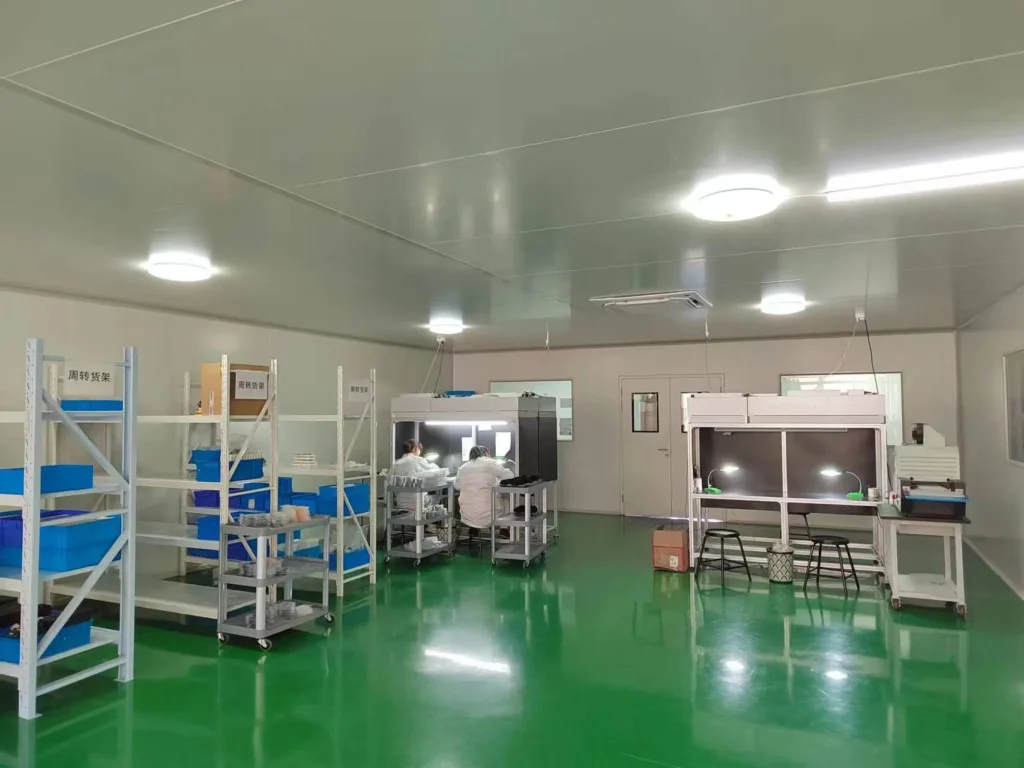
Ask each bidder for a one-page declaration of which steps are in-house and which are bought in: machining, coating, cementing, assembly, final metrology. The declaration does two jobs. First, it tells you where the risk actually sits when a program hits trouble, because a maker who controls coating and cementing can re-run a process, while a maker who buys those steps can only place another order. Second, it tells you whether the measurements that matter are theirs or somebody else’s. Our own line, for instance, runs from machining through coating, cementing and cleanroom assembly, in Class 10,000 cells, to final metrology on named instruments: Trioptics centration and OptiSurf for focus, a laser Fizeau interferometer, reflective centering instruments, a precision air-bearing stage, a UV spectrophotometer and collimation systems. On units that demand it, assembly closes with 1 μm-class active alignment. On the FA line, distortion is held below 0.05% with batch consistency measured across production runs of ten thousand and more. You do not need those exact numbers from every bidder; you need the same shape of answer, with instrument names, from everyone on your list.
The Evidence Pack: Eight Items and What Each One Proves
Collect the same eight items from every shortlisted maker. The table is your review sheet: the middle column is what the item proves, and the right column is the answer that should end that maker’s run.
| Evidence item |
What it proves |
Automatic fail if |
| Sample batch test report (MTF, distortion, BFL, DOF) |
The maker measures what it ships, batch by batch |
No such report exists for current production |
| Conditions block in that report |
Data is reproducible at your wavelength, image heights and format |
Values appear with no wavelength, image height or distance stated |
| Inspection coverage statement |
You know what was measured on every unit versus sampled |
Coverage is not stated or changes between batches |
| Pass-fail judgment with signature and date |
Somebody owns the decision, batch by batch |
Report ends at a table of values with no verdict |
| Named metrology equipment list |
The specs you care about can be measured in-house |
No instrument names for the parameters that drive your product |
| In-house versus outsourced process declaration |
You know who controls coating, cementing and assembly |
Critical steps are outsourced and undisclosed |
| Drawing revision sheet |
Configuration control exists and changes are traceable |
Revisions carry no dates or change notes |
| ISO 9001 certificate with scope and date |
An audited floor to build contractual terms on |
Claims of badges the certificate does not carry |
On that last row, keep the claim and the certificate in separate pockets. The only certification we claim on site is ISO 9001, certified in 2024, and we say so plainly; when a bidder hints at medical or automotive badges without a certificate number and scope, the shortlist does not need another week to decide.
Scoring the Shortlist Before You Fly
You can score the whole field on paper. Weight repeatable batch evidence heaviest, because it predicts what will arrive at your dock. Weight the process declaration and metrology list next, because they predict what happens when a batch misses. Weight certificates lowest, as a floor rather than a differentiator. A video factory tour, which we run on request and schedule like an on-site visit, sits between paper and plane tickets: use it to verify that the test stations in the report photographs exist and are busy. Save the physical audit for the final two, and go with a checklist, because an audit proves capability only when you know which records to pull. We keep a separate walkthrough of what to look for on the floor and on paper in our two-year lens factory audit guide, and the same document discipline applies if your legal team later needs a second qualified source for the same lens.
What This Stage Costs in Time and Money
Be honest with your program plan about the cost stack. Gates 1 to 3 cost engineering hours: one week to assemble the technical package, one week for the responses, a few days for side-by-side review. Gate 4 is real money, but one prototype per finalist is the cheapest insurance a two-year program can buy against a wrong award. Gate 5’s pilot lot is priced into the program you were going to build anyway. Compare that stack against the alternative, which is discovering at month eight that your maker never measured the parameter your product fails on. Our calendar, for reference: feasibility first-pass within 48 hours, sampling at project stage, 60 working days from drawing to mass production, 30 days on repeats, payment split 50% advance and 50% before shipment, and custom tooling stored free for five years. Every one of those is a number a serious bidder should be willing to put in writing, and the willingness itself is evidence.
Four Answers That Should End the Conversation
Some replies are not negotiation positions; they are findings. End a candidacy when you hear them.
- “Every tolerance is achievable.” Yield is a curve, not a slogan; a maker who will not name the hard requirement has not read your package.
- “Our curves are typical values.” Typical values with no conditions block cannot be compared, quoted against, or defended in a claim.
- “Batch reports are available if you insist.” Documentation that arrives only when demanded is marketing wearing a lab coat.
- “We hold every certification you need.” Certifications are listed, scoped and numbered, or they are not held.
Conclusion: Award Two Years to Predictability
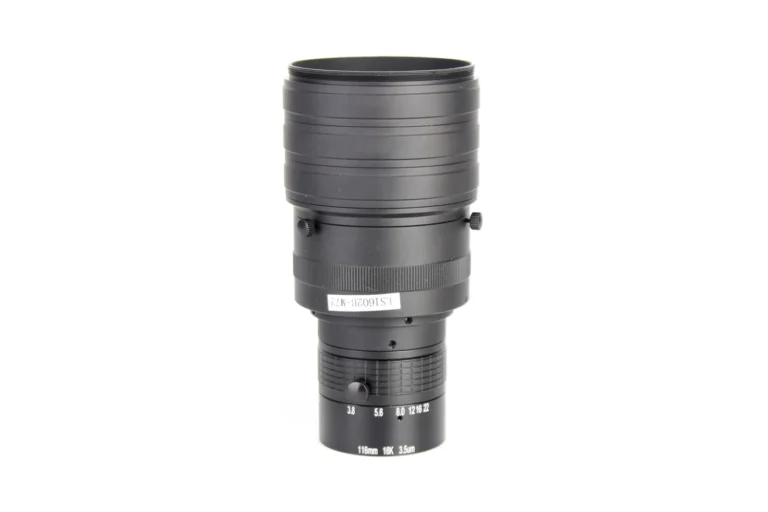
Two years is long enough for a process to drift, a coating run to change, and a product to succeed or fail on the consistency of one part. The maker who deserves the award is the one whose ordinary paperwork already answers your hardest questions: what was measured, at what conditions, on how many units, and who decided it passed. That maker exists, and the way to find them costs a week of email and one honest prototype. If your program is heading toward a custom build, start from the custom optics overview, or compare documented per-batch parameters across the FA C-mount machine vision lens family before you shortlist anyone. When the paperwork is this complete before you ask, capability is not a promise. It is a record.
Written by Baker Zhao, Founder at Lensmind Optics