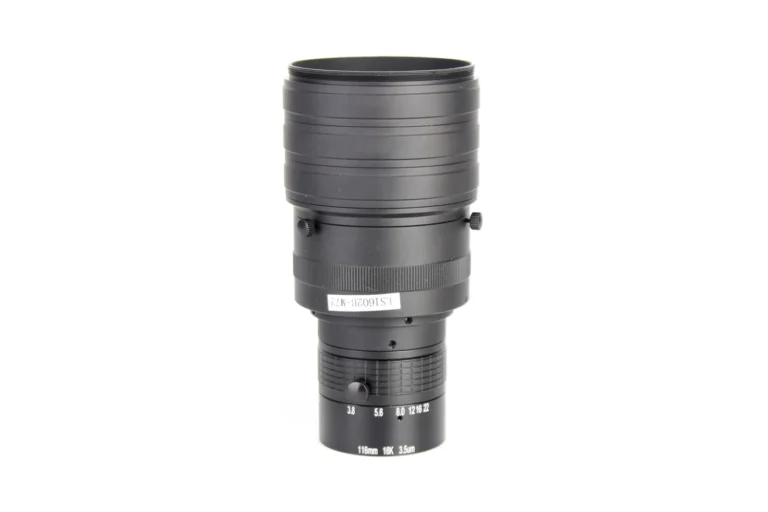
Put it in writing that every fixture, gauge, drawing, and process record you paid for, funded, or that was created specifically for your lens program is your property, and that the factory holds those items only as your custodian. A tooling line on a quotation is a price, not a transfer of title. Four clauses make ownership portable: title that vests in you upon payment or funding; a bailment clause covering custody and permitted use; an assignment of product-specific technical data and process records, plus a license to any supplier background know-how the process needs; and a transfer mechanism that runs on request, not only at termination. Attach a register that maps every tooling charge to a named item, and the drawings, fixtures, and records move with you when the factory changes.
If this is close to your build but not exact, custom optics design at Lensmind is how we turn a spec sheet into a production design.
What Tooling Actually Is in a Lens Program
Most advice on tooling ownership talks about molds and dies, because that vocabulary comes from plastic and metal forming. A precision lens program rarely has a mold. What it has instead is a set of small, program-specific assets that a quotation line marked “tooling” may or may not include: cementing fixtures that hold a bonded pair square while the adhesive cures, centering chucks matched to your barrel diameter, alignment nests for the active alignment station, go and no-go thread gauges cut to your mount thread, test carriers that present the lens to the MTF bench at the correct flange distance, and golden samples kept as the physical reference for the approved build. Ownership questions start with naming these items, because four lump-sum amounts on a quote tell you nothing about what exists.

Ask the supplier to split the quotation into physical items and data deliverables. Physical: fixtures, chucks, gauges, carriers, masters, and spare inserts. Data: optical drawings with revision history, CAD models, acceptance test programs, station settings, and the build recipe for your part. Buyers who skip this split usually get the steel in a dispute and lose the data, and the data is the harder loss to rebuild. A thread gauge can be recut in a week; six months of alignment settings for your barrel geometry cannot.
Three Buckets: Hardware, Technical Data, Process Records
The hardware bucket is what people picture: fixtures, chucks, gauges, carriers, and golden samples. It is the easiest to negotiate because the items can be photographed, numbered, and marked. Marking matters more than buyers expect. A fixture engraved with your company name and part number cannot quietly migrate to another customer’s line, and an auditor can verify the register against the floor in an afternoon.
The technical data bucket holds drawings with their revision history, CAD models in native and neutral formats, bills of material, acceptance test programs, and station settings. Insist on editable copies, not PDFs of drawings and screenshots of programs. A drawing revision you cannot edit is a souvenir. The contract should also state that engineering changes during the program update your copies, because data that drifts from the parts being shipped is worse than no data at all.
Process records are the third bucket and the one procurement teams forget until they leave. These are the running proof of your program: batch test reports, centering measurement results, active alignment station settings, gauge calibration certificates, and fixture maintenance logs. In our factory every production batch ships with test documentation covering the agreed family parameters, typically MTF, distortion, BFL, and DOF, plus batch number, test conditions, inspection coverage, and an explicit pass or fail judgment. That stream, collected by batch number, is the history a replacement factory reads to see what has been proven. Contract language on process records ownership should name these documents, because “all related records” invites the argument that process data was never yours.
Ownership of drawings and fixtures does not extend to the maker’s general craft. Coating recipe libraries, polishing cycle tables, and generic workmanship standards stay on the supplier side, and any factory will resist handing over the know-how that serves its other customers. The contract should therefore grant you a license to any background know-how embedded in the items you own, so a know-how reservation cannot freeze the package in place. The test is simple: could another qualified factory make and inspect your part from what you hold? If not, the package is incomplete.
Fix the Quotation Before the Purchase Order
A tooling ownership clause does its real work at the quotation stage. Every tooling charge should map to a register entry: item number, description, the drawing revision it produces or checks, the amount, and its location. Send your RFQ with that requirement stated and the quote becomes auditable. Our RFQ checklist asks buyers to declare tooling expectations up front, because a quote that cannot name its fixtures is a quote that has not decided who owns them. A short register attached to the purchase order costs an afternoon; reconstructing one after a breakup costs months.
Watch the quotation that folds tooling into unit price with no line at all. The charge is real and you are paying it across thousands of units, but without a register the factory can treat the fixture as its own asset, move it, lend it, or hold it when you leave. Ask what physical items exist for your part, who owns them under the current paperwork, and what it would cost to put your name on them. Some suppliers will amortize and still assign title if you ask; the ones who will not answer the question have answered it.
Custody terms belong in the same pass. Items should be marked as your property, used only for your products, not relocated or placed with a subcontractor without your written consent, and open to inspection on reasonable notice. These are ordinary requests. We welcome on-site audits and scheduled video factory tours, and we store custom tooling free for five years, so the register has a fixed address for the life of a typical platform. A custody clause is not distrust; it is what lets both sides prove, years later, where every gauge spent its working life.
The Clauses That Make Ownership Portable
Title language should vest ownership on the earlier of your payment, the item’s fabrication, or the charge being booked to your program, and it should state that the supplier holds the item as custodian from that moment. Payment structure gives you natural anchor points. We invoice 50 percent advance and 50 percent before shipment, and many buyers key title confirmation and register updates to those same milestones. Whatever structure you agree, write the vesting sentence into the contract rather than letting the invoice imply it.
Custody itself is a bailment: the factory possesses property it does not own, owes a duty of care over it, and must return it on demand. Saying so in the contract prevents the most common drift, where a fixture bought for your part becomes part of the factory’s furniture and gets used for whoever is on the schedule. The bailment clause should carry the permitted use restriction and the consent requirement for relocation or subcontracting, with the supplier liable for items held by its subcontractors.
Two clauses keep a bad parting from becoming a hostage situation. First, no lien: the supplier may not withhold your hardware or data over a disputed or unrelated invoice, and must segregate and preserve the items while any dispute runs. Second, a transfer window: delivery of the hardware and editable data copies within a stated number of business days of request, in native and neutral formats, with revision histories and calibration records included. When buyers describe recovering tooling from a supplier, these two clauses are what the story was missing. Add remedies that bite: failure to release is a material breach, with the cost of replacement or requalification recoverable.
Complete the set with an assignment of work product. Drawings, revisions, fixture designs, test programs, and records created specifically for your program become your property, and the supplier collects the same assignment from employees and subcontractors. Pair the assignment with the background know-how license described above and flow both obligations down in writing. The package a receiving factory needs is then defined by contract, not by negotiation from scratch during an exit.
A Transfer You Can Test
Ownership on paper is not reproduction at a new address. Portability you can test looks like this: fixtures and gauges arrive with calibration certificates; the receiving factory builds a first article against your drawing revision; that first article is measured on the same family parameters your batch records used; and correlation runs between the old and new test stations settle any offset before volume starts. A supplier who has kept the register current and shipped the record stream makes this sequence routine. A supplier who has not turns switching manufacturers into archaeology, where the new factory guesses at settings the old one never wrote down.
Treat the first article gate as the acceptance test for the transfer itself. The discipline is the same one that separates a good prototype from a good production run: freeze the drawing revision, measure against it, and do not start volume until the numbers close. A transfer that passes a first article against your controlled revision, with your gauges and your golden samples as references, has proven the contract clauses did their job.
Keep golden samples on your side of the fence from the start of the program. They are small, cheap to store, and they anchor every later argument about what the approved build looked like. When the day comes to move, samples plus batch records plus a calibrated fixture set give the receiving factory a starting line instead of a blank page.
What a Cooperative Maker Puts in Writing
The answers a lens maker gives before the purchase order predict how the exit will behave, so put the questions in the RFQ. Who owns the fixtures the quote charges for? Which records leave with each batch? What happens to the package if we move? Ours are stated rather than implied: an NDA is signed before drawings move; every production batch ships with test documentation covering the agreed family parameters, batch number, test conditions, inspection coverage, and a pass or fail judgment; custom tooling is stored free for five years; audits and video tours are welcome; and repeat orders turn around in 30 days because the drawings, fixtures, and records are already in place and in use.
Run the same questions past any candidate factory and read the answers for shape. A maker who responds with a register, a title clause, and a list of file formats is safe to scale with, because the paperwork that protects you also describes how they already work. A maker who responds with a shrug has told you what the last week of the relationship will look like. The contract clause is the backstop; the maker’s habits are the plan.