LED Flicker After Power Supply Swap: Lighting Specs That Match Camera Exposure
LED flicker after a power supply swap is an electrical-to-exposure matching miss. Lock lighting electrical specs to the camera exposure plan before the next...
read more…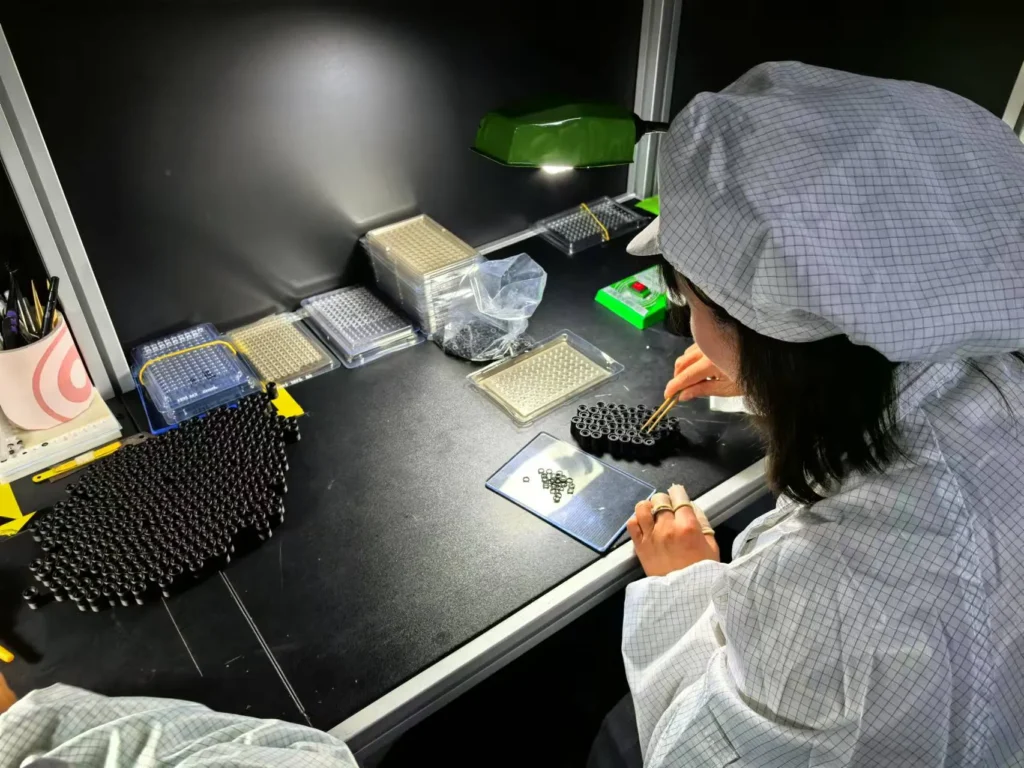
Ask for three records before the rest of the order ships, and do one thing yourself. The records: the packaging photographed as it was opened, with the lens still in place, so the fibre’s origin can be judged before anything is disturbed; the final inspection record for that serial, showing the method used and who signed it; and a written statement of where the lenses are capped and bagged, whether that is inside the controlled assembly area or somewhere else. What you do yourself is keep the lens exactly as it arrived and photograph the particle where it sits. A cleaned lens has lost the only evidence about where the fibre entered.
A fibre on the inner surface of a lens, or inside the sealed assembly, tells you it entered during assembly or during the application of the caps. A fibre on the outer surface of the front element, under a cap or inside the bag, points at the packaging instead. That distinction decides who has to change something, so the first photograph is taken with the lens in the packaging it came in: the open bag or box, the caps, the foam, the lens in position, and the fibre visible in the frame. Then take a second photograph with the lens out and the particle close up, and a third with the light at a low angle, which is how a fibre actually shows on a coated surface.
Ask the maker to say what the particle is as well as where it is. A fibre, a speck of dust and a fragment of glass are three different findings, and the third one is serious: a glass fragment means something broke in the production line and the question becomes the whole batch rather than one assembly. Photograph the particle at the highest magnification you can manage, and keep the lens, uncleaned, until the maker has seen the picture. The site’s note on custom optics work describes the in-house assembly and metrology steps that exist to keep particles out of exactly this kind of build, and the check here is whether those steps happened on this unit.
A fibre on a lens face is a large defect, not a marginal one. Under a lamp at a low angle against a dark background, a fibre is visible immediately, which is why the question is not whether the defect is acceptable but whether the inspection happened. Ask what the final inspection consists of, what light and what magnification, and who signs for the unit, and ask for the record for the serial in your hand. Then ask a harder version of the same question: what does the record look like for a unit that fails. If there is no failure record anywhere in the process, the inspection is a habit rather than a step.
Ask for the inspection to be photographed once, during the next run, as proof of the method rather than of the result: the lamp, the angle, the lens on the bench. It is a single photograph and it tells you more than a procedure document, because a light that is too diffuse will pass a lens with a fibre on it, and the photograph shows which light is actually in use. This is the difference between a process that is documented and a process that is performed.
Some of the materials that make a lens feel well packed are the materials that leave fibres. Foam that crumbles, paper and cardboard dust, and gloves made from natural fibres are all classic sources, and the general reference on a cleanroom makes the point directly: natural fibres are excluded from controlled areas because they shed particulates, which is why the same logic applies to wherever a lens is capped and bagged. Ask for the list of materials that touch each lens in packing, from the cap to the outer carton, and photograph the materials laid out. Then ask which of them is inside the bag with the lens, because that is the material whose fibres can reach the surface.
The second question is where the capping and bagging happen. If the assembly is completed in a controlled area and then carried to a general packing hall to be capped, the last two metres of the process undo the first two hours of it. Ask for the packing bench to be photographed, with the capping done in the same area as the final inspection, and for the lenses to be bagged before they leave that area. A bagging step moved into the controlled space is a change that costs a table and a lamp.
Before the rest ships, ask for three things in writing. First, the packaging materials list, with the answer on which materials are inside the barrier bag. Second, a photograph of one opened bag per carton from the lot, taken at the packing bench, with the lens, its caps and the particle-free surface visible in the frame; one unit per carton is a sample that catches a habit. Third, the final inspection record format for the lot, showing what is recorded per serial, so that when a unit fails at your end you can name its record. If the maker changes a bag or a foam supplier for this reason, ask for the change to appear in the packing note for the order.
Then write your own receiving check into your process. A clean bench with a low-angle lamp, a bag opened over a clean surface, and the first unit of each carton inspected before the carton is put into stock. Photograph what you find, keep the packaging with the unit, and record the serial. A buyer who inspects the first lens of every carton finds the pattern in one delivery; a buyer who inspects nothing finds it at the customer, which on a machine vision build means a false reject in production or a service call at a site.
One question reveals more about the process than any specification: what happens to a unit that fails the final inspection. If the answer is a short walk through the rework bench and back into the line, the particle risk is systemic and the records will be thin. If the answer is a disposition sheet with a serial, a reason code and a signature, then a fibre that reached you is an escape rather than a habit, and the escape is what the maker has to explain. Ask for the disposition record for the last three failed units, with the serials removed if the maker prefers, so you can see the shape of the record without seeing customer data.
Ask also whether the rework step happens in the same controlled area as assembly. A lens that is opened for cleaning on a general bench, next to cardboard and paper, is a lens that collects new particles while the old ones are being removed, and the fibre you found may be the second one that entered rather than the first. Where rework happens matters as much as where assembly happens, and it costs the maker nothing to answer.
On this site’s medical and borescope family, the assemblies are built to sit inside instruments where a particle on the surface is not a cosmetic matter, as the range under endoscope lenses shows, and the same discipline is the reason a fibre is worth stopping a shipment for. A particle that sits on a lens face inside a sealed module can also migrate with temperature and vibration: a fibre that is outside the field of view on the bench can end up in the image after a week in a machine. That is why the check belongs at packing and at goods-in rather than at the customer’s commissioning.
Where the modular assemblies are concerned, ask whether the particle appeared before or after the final seal was made, because a particle inside a sealed unit is a repair or a replacement rather than a clean. For a unit that is still open on the maker’s bench, cleaning is normal work; for one that has been sealed, the answer has to come from the maker, and it should come with the disposition of the unit in writing rather than as a suggestion.
Send one message to the person who controls assembly and packing. Name the order and the serial. Say the first unit opened carried a fibre on the inner surface, and state the hold in one sentence: no further units shipped until the origin is established and the records exist. Name what you need. First, the packaging photographed as it was opened, with the lens in place and the particle visible. Second, the final inspection record for that serial, with the light and method used and the name of the person who signed it. Third, the answer on where capping and bagging happen, with a photograph of that bench and the list of materials that touch the lens. Fourth, a photograph of one opened bag per carton from the lot before the rest ships.
A release is your note that the particle has been attributed, that the inspection that should have caught it is being performed and photographed, and that the remaining units are bagged in the controlled area with materials that do not shed. A cleanliness specification, a promise to inspect more carefully, and a note that a single fibre is within normal limits do not release the hold.
Keep the uncleaned unit, the packaging, the photographs and the serial record in the order folder. A particle is the easiest defect to argue about and the easiest to photograph, and the unit you kept from this delivery is what makes the next conversation a comparison rather than a claim.

LED flicker after a power supply swap is an electrical-to-exposure matching miss. Lock lighting electrical specs to the camera exposure plan before the next...
read more…
A telecentricity bench proof pack is the acceptance file that turns a datasheet telecentric claim into measured magnification-versus-object-distance curves and written reject limits before...
read more…
An illumination pupil pack is the optical data set that tells a lighting designer where the lens aperture stop and entrance pupil sit before...
read more…