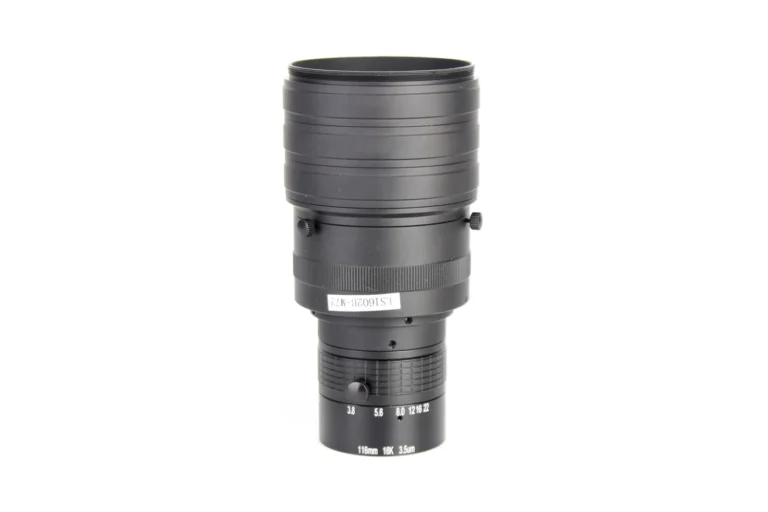
A stiff focus ring is a mechanism symptom, not a verdict, and the replacement decision belongs to measurements rather than to how the ring feels. If the lens still repeats its focus position, still meets its resolution at the image heights you use, and the flange focal distance has not moved, the stiffness is a service item: clean the thread, restore the specified lubricant, re-set the focus lock and re-run the acceptance test. If the ring shows backlash, if the barrel has deformed, or if the acceptance test cannot be restored after service, it is a replacement. What the maker owes you is the mechanism description, the service procedure and the re-qualification criteria, written down before the first ring stiffens.
If you are comparing suppliers for this kind of optic, the Lensmind machine vision lens catalog is the hub for our standard models and custom options.
The Mechanism Behind the Stiffness
A focus ring is a screw thread with a deliberately controlled drag. The drag comes from a lubricant film, a seal, a lock screw or a wave washer, depending on the design, and each of those fails in a different way. Lubricant can migrate away from the loaded flank and leave the thread running dry, or it can thicken with age and airborne contamination until the torque needed to turn the ring has doubled. A seal can swell or take a set. A thread can pick up fine debris from a machining environment, and a barrel can be distorted by a clamp or a crash until the thread is no longer round.
Operators compensate without telling anyone. When the ring needs more torque, they push harder, and the extra force produces overshoot: the ring jumps past the intended position and the image goes soft, so they correct back and the station settles into a hunting habit. The overshoot is therefore not a separate fault. It is the visible consequence of the drag, which is why measuring the ring’s behaviour matters more than arguing about how stiff is too stiff. The idea of backlash is useful here: a mechanism that has lost its preload can feel tight and still move unpredictably under load.
The Four Measurements That Decide Service or Replace
The first measurement is focus repeatability. Move the ring away and back to the marked position several times and measure where the image actually lands, rather than where the ring points. A ring that returns to the same image position within your station tolerance is still doing its job, whatever it feels like. A ring that lands in a different place each time has lost the ability to hold a setting, and no amount of cleaning fixes that.
The second is backlash. Turn the ring past the position and come back to it from one direction only, then repeat from the other direction. The difference between the two landings is the play in the mechanism. The third is image quality at the working aperture and at the image heights you actually inspect: if the lens can no longer produce the resolution it did when the station was qualified, the problem has moved from drag to optics, and service is unlikely to recover it. The fourth is the flange focal distance or the measured back focal length, compared with the value recorded when the lens was accepted. A back focus that has moved means something in the assembly has shifted, and that is a different conversation from a dry thread.
What the Maker Should Publish About the Adjustment Mechanism
Ask for the mechanism in enough detail that your own technician can service it without guessing. Which thread, what pitch, and whether it is a plain thread or a preloaded one. What the drag is designed to be, and whether that figure is a torque range or a feel specification, because only one of those can be checked. What lubricant is specified, and what substitutes are acceptable, since the wrong grease can attack a coating or migrate onto an optical surface. Whether the ring is held by a lock screw, a lock ring or a thread adhesive, and what torque that fastening takes.
The M12 family on this site is a useful example of the design difference: the focus lock variants exist precisely because a plain thread plus a lock screw and a thread plus a positive lock behave differently in service. For a lens that is adjusted often, the lock design decides whether servicing means a clean and a re-grease or a replacement. Ask the maker for the service procedure in the same language they use for production: sequence, tools, torque, cleaning agents, and the check that proves the adjustment is back within specification.
Re-Qualification After Service
Servicing a focus mechanism is a change to the lens, so it has to be followed by a check that is strong enough to catch a bad service. At minimum, re-measure the focus positions that the station recipe uses, re-run the resolution check at the image heights in the recipe, and re-record the back focus. If the service involved opening the barrel or disturbing a retaining ring, add a centring check, because an element that is a few micrometres off centre will show as an asymmetric corner that the operator will otherwise blame on lighting.
The acceptance criteria should be the ones from the original qualification, not a new set invented on the day. That is why the as-installed record matters: without the original values, the service technician has nothing to restore the lens to, and the station quietly drifts into a new normal. The batch test documentation that ships with a production lens, covering parameters such as MTF, distortion, back focal length and depth of field, is a starting reference, but the figure that governs a station is the one measured on that station with that camera and that window stack.
A Maintenance Regime That Slows the Next Stiffening
The regime that works is boring and short. Define a cleaning interval based on the environment rather than the calendar: a machining cell with aerosolised coolant needs a shorter interval than a clean assembly room. Specify the cleaning method, because a solvent that strips the lubricant is worse than no cleaning at all. Specify the re-lubrication point and the lubricant, and make the technician record the drag or the torque before and after, so the trend is visible rather than discovered by an operator’s wrist.
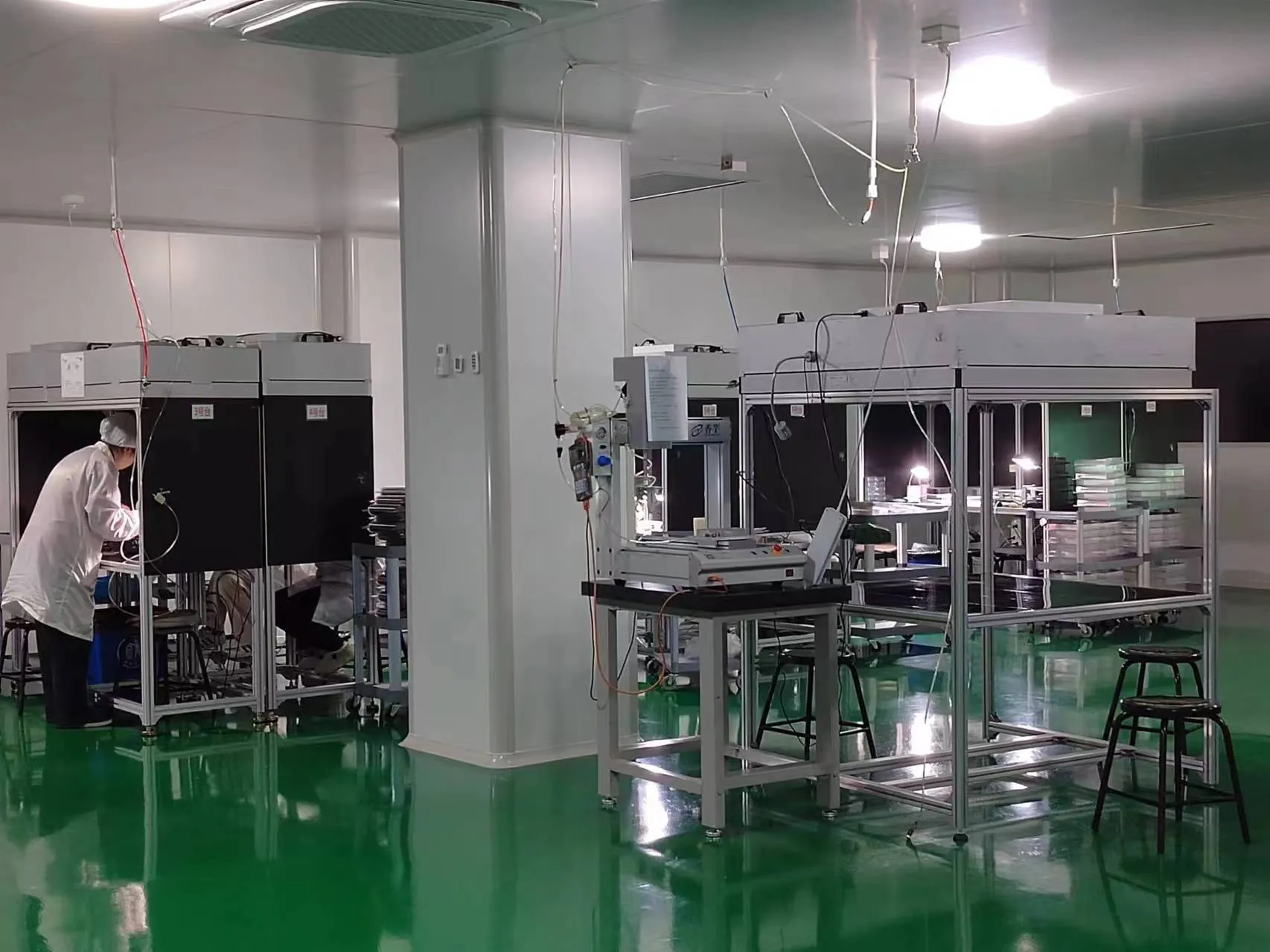
The interval also depends on how the lens is handled between adjustments. A station where operators wear gloves and never touch the barrel will keep its lubricant far longer than one where the ring is turned with a bare hand after handling coolant. Write the handling rule into the work instruction, because the cheapest maintenance improvement available to most plants is not a new lens, it is a technician who stops wiping the barrel with a rag that has solvent on it.
Then set the trigger for service. A ring whose measured drag has risen by a defined amount, or whose repeatability has fallen outside a defined band, goes to service at the next planned stop rather than after it fails in production. That converts a nuisance into a scheduled task, and it stops the overshoot habit before it becomes the way the station is operated.
The Log Fields That Make the Call Repeatable
Keep a line per lens in the maintenance log: lens model and serial, the station it lives on, the date and the drag or torque measurement, the repeatability result, the back focus, and the decision taken. Add a field for the reason, chosen from a short list such as dry thread, contaminated thread, seal drag, lock screw loose, or barrel deformation, so that ten lines later you can see whether one cause dominates and whether the maker’s mechanism is the source of it.
The log is also the commercial document. A pattern of the same failure across a batch is a design or process question for the maker, and a pattern of failures that follows one operator or one environment is a training or housekeeping question on your side. Without the fields, both look like an unlucky lens, and the maker will treat the claim accordingly. The same logic of recording as-installed state is set out in the as-installed record for a machine vision lens, and the maintenance log is simply its continuation over the lens’s life.
When Replacement Is the Cheaper Decision
Replacement wins when the mechanism cannot be restored, when the cost of the service plus the re-qualification exceeds the cost of a new lens, or when the lens is old enough that the next failure is already visible in the trend. It also wins when the station’s accuracy depends on a feature the stiff lens no longer has, such as a repeatable marked position that operators can return to by touch. A lens that has to be measured every time it is adjusted has already stopped being a production tool.
Decide the rule before the first failure and write it into the maintenance procedure: repeatability inside band and resolution intact means service; backlash present or resolution lost means replace; two services inside a defined period means replace. That rule turns a judgement call made under production pressure into a decision anyone on the team can apply, and it gives the maker a clear specification to design against: a mechanism that can be serviced, and a lens that stays qualified after it is serviced. The wider question of whether a lens is wearing out or simply out of adjustment is covered in wear versus misadjustment at end of life, and this procedure is the part that runs before you get there.
Written by Baker Zhao, Founder at Lensmind Optics.