Spacer Rings, Varifocal or Custom Focal Length: Choosing and Documenting an Exact FOV
Answer the field of view question with the error budget, not with whichever option is easiest to buy. If a catalog lens already produces...
read more…
The RFQ landed with “telecentric lens” already typed. No thickness. No depth budget. No statement that size must stay constant as the part rocks. That line item is how buyers over-specify. An entocentric FA lens with distortion held below 0.05% will often close the gauge. A telecentric cell will close it too, at more glass, more length, and more money.
Key Takeaways
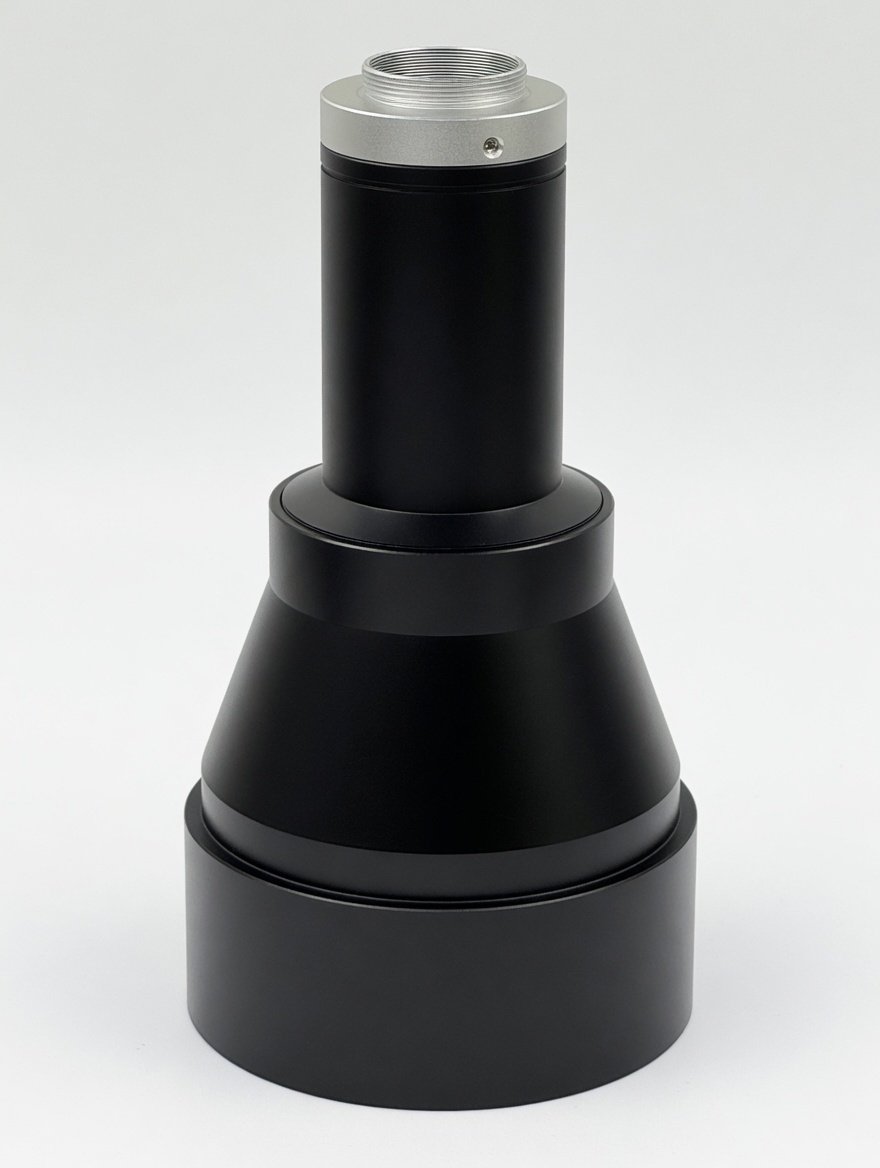
Buyer-advocate rule: if the part is flat, the nest is repeatable, and nobody can name a millimetre of Z travel that changes the reading, start from FA. Telecentric is a mechanism, not a quality badge. Opto Engineering frames it as constant magnification versus depth. That is the sentence to paste into the RFQ if you truly need it.
Sill Optics says the same: magnification stays constant for the complete depth of field. If your gauge never uses that depth, you are paying for a property you will not measure.
“Telecentric” on a template is not a spec. Thickness plus allowed magnification change is a spec.
| Parameter | Telecentric | FA (entocentric) |
|---|---|---|
| Magnification vs depth | Constant in the design range | Changes with Z |
| Perspective | Object-side rays parallel | Converging / diverging |
| Lensmind distortion | Quote the drawing | FA line held below 0.05% |
| Size / cost | Larger cell, higher NRE if custom | Catalog FA, 2/3″ to 1.1″ |
| Best job | Gauging through thickness | 2D inspect, OCR, many gauges |
Verdict — telecentric: Buy it when a millimetre of Z would change the reading enough to fail the gauge. That is the only honest trigger.
Verdict — FA: Buy it when the nest is flat enough and distortion below 0.05% meets the drawing. Most RFQs that say telecentric are actually this job.
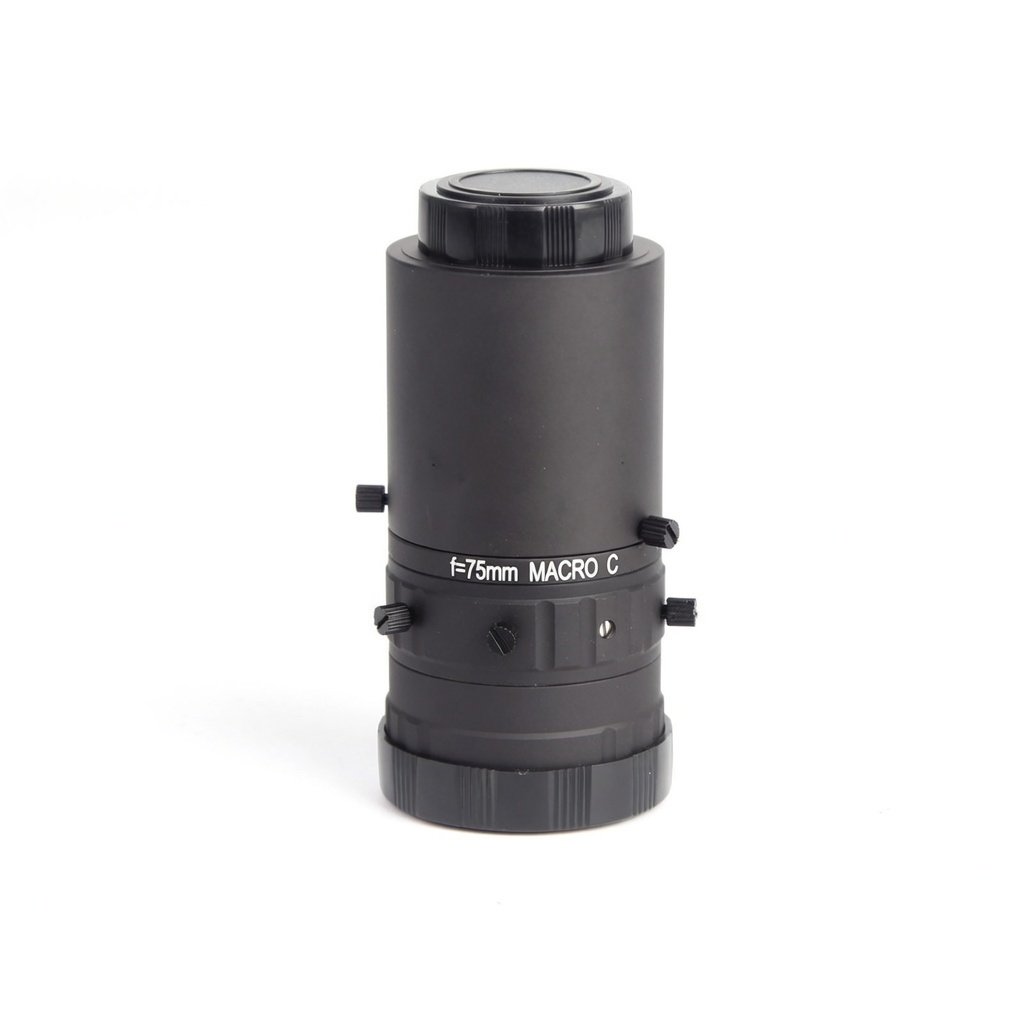
Distortion is a mapping error in the plane. Telecentricity is a depth property. You can have low distortion and still change size as the part lifts. You can have telecentricity and still need a distortion number. The FA line’s below-0.05% figure with 10K+ batch consistency is the plane number. It is enough when Z travel is small compared with the tolerance.
The machine vision lens selection guide still converts sensor format and FOV into focal length, then filters by distortion budget. Add one more filter: does magnification have permission to change with depth? If the answer is yes, stay on FA. If the answer is no, move to telecentric.
| Best for | Not ideal for |
|---|---|
| FA on flat 2D gauges, OCR, presence | FA on a thick pin whose diameter is the spec |
| Telecentric on stepped parts, turned diameters | Telecentric as a default on every metrology RFQ |
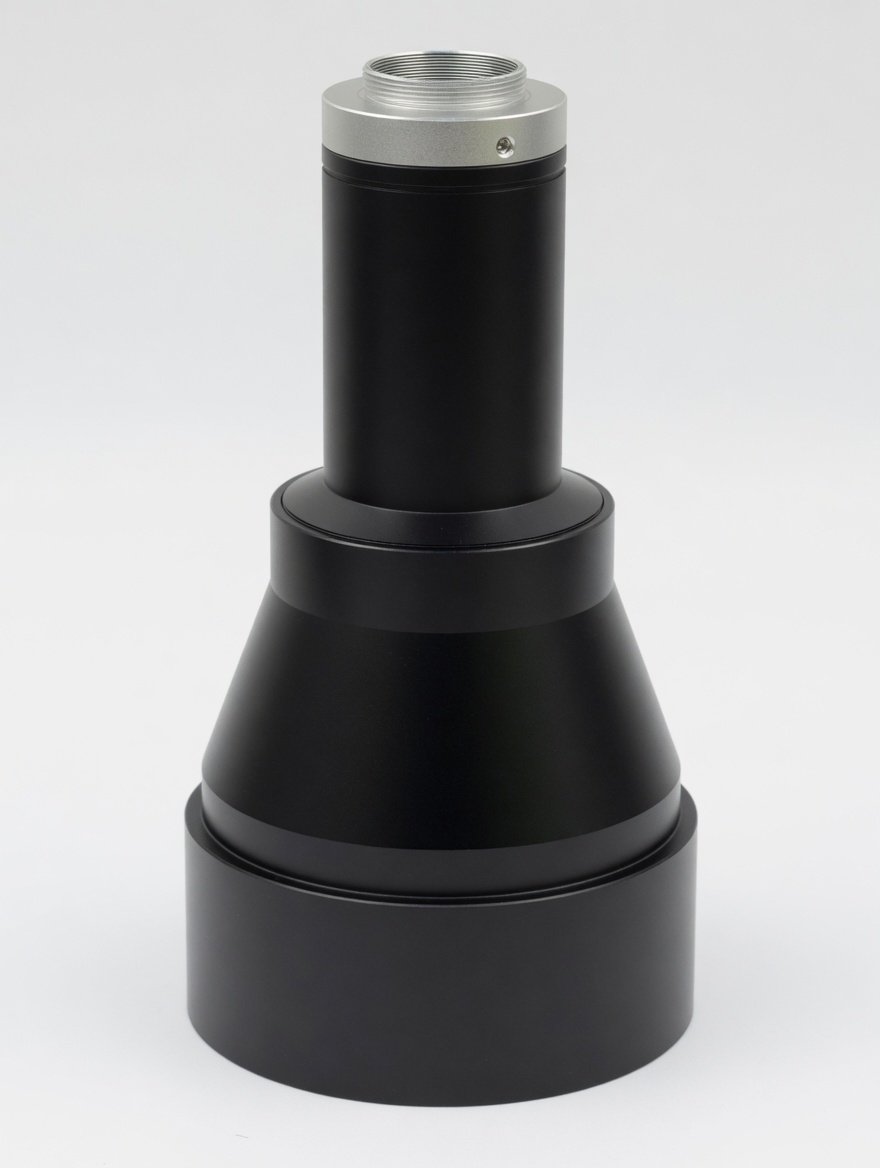
Object-side telecentric: chief rays in object space are parallel. Size does not grow as the part recedes inside the designed range. Image-side telecentric: rays hit the sensor more uniformly; useful with some sensors and tube systems. Bi-telecentric: both. Thorlabs states bi-telecentric magnification is independent of object location. That is the family to name when both ends of the path matter.
Coaxial versus non-coaxial is illumination, not telecentricity. A coaxial telecentric cell has a beamsplitter path. A non-coaxial cell does not. Pick coaxial when you need on-axis light on a shiny bore. Do not treat coaxial as a synonym for “more accurate.”
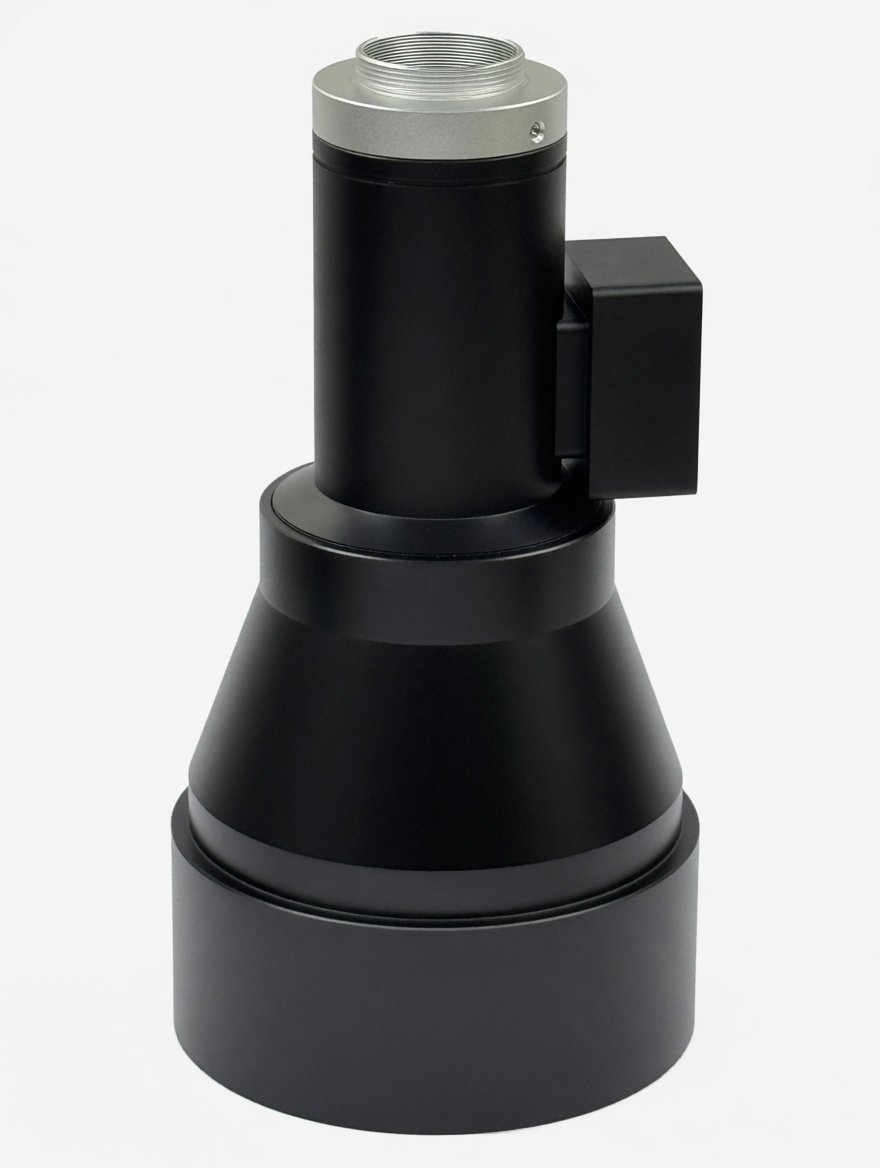
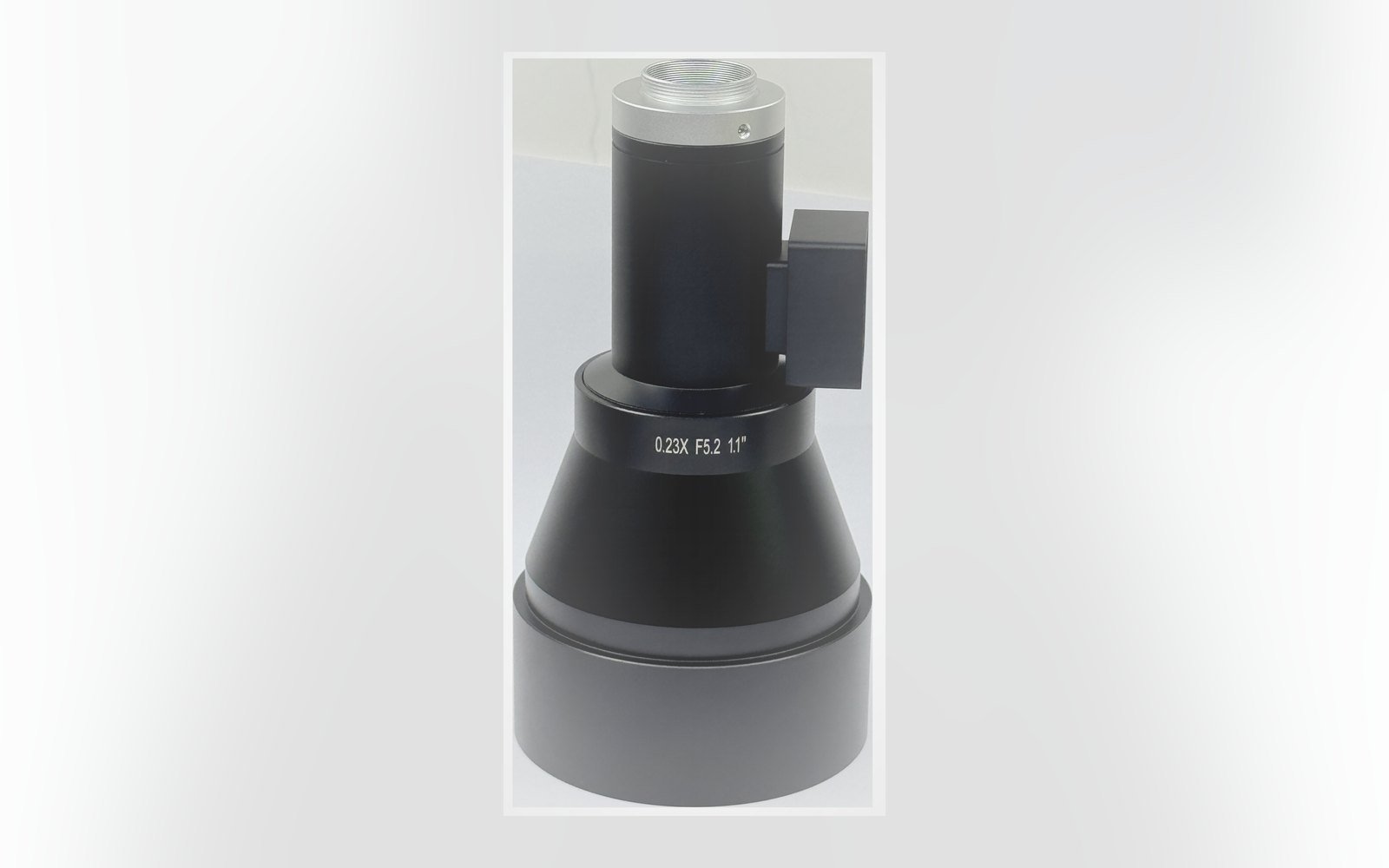
If the camera is already C-mount and the job is constant magnification, start from telecentric lenses and name object-side or bi. MH0088 is a 0.23× example on a 1.1″ class sensor. If the job is FA, stay on the FA catalog.
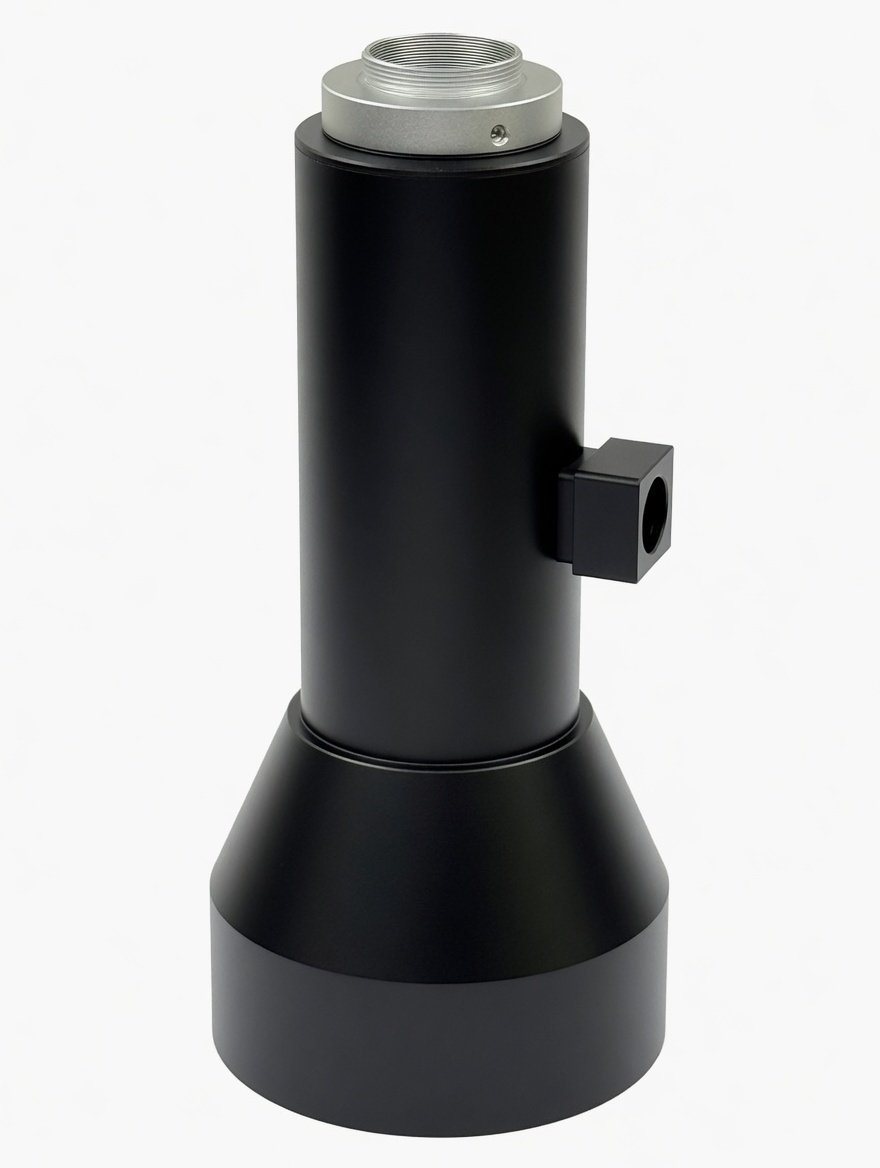
Custom telecentric still follows 60 working days prototype to mass production, 30-day repeats, 48-hour first-pass after NDA. Those dates do not make a wrong family into a right one.
Illustrative RFQ. A connector height spec was ±0.15 mm. The nest held the part to a fraction of that. The template still said telecentric. An FA 25 mm with distortion below 0.05% met the plane error. The extra telecentric length would have hit the light bar. The honest quote was FA, with a sentence that telecentric is available if Z travel grows.
The opposite RFQ is a turned diameter on a pin that sits at two heights. Size must not change. That is object-side or bi-telecentric. Do not “try FA first” on that one to save a line item.
Telecentric is constant magnification with depth. FA is a catalog 2/3″ to 1.1″ cell with distortion held below 0.05%. Use the first when Z would change the reading. Use the second when it would not. Templates that always say telecentric waste both money and space.
Key Takeaways
If measured size must not move with depth, send thickness and sensor format and stay on the telecentric family. First-pass feasibility still returns within 48 hours. If you cannot name the Z travel, take “telecentric” off the template before you send it.
Written by Baker Zhao, Founder at Lensmind Optics. Hangzhou factory in the Lin’an optics cluster; ISO 9001 certified 2024. Company registered 2019.
When measured size must stay constant as the part moves in depth, or a thick object must keep one magnification through its height.
For many flat 2D gauges, it is enough. Distortion is a plane error. Telecentricity is a depth property. They are not the same spec.
Object-side and image-side telecentricity together. Magnification stays constant independent of object location in the designed range.
No. Presence, OCR and many 2D gauges run on FA. Specify telecentric only when magnification must not change with depth.
No. Coaxial is an illumination path through a beamsplitter. Telecentric is a ray-angle property. You can have either, both, or neither.

Answer the field of view question with the error budget, not with whichever option is easiest to buy. If a catalog lens already produces...
read more…
Settle one question before you touch the CAD template: who moves focus, the camera or the lens. If each of the eight positions must...
read more…
C-mount is 17.526 mm. CS-mount is 12.526 mm. Same 1-32 UN thread. The 5 mm ring is one-way.
read more…